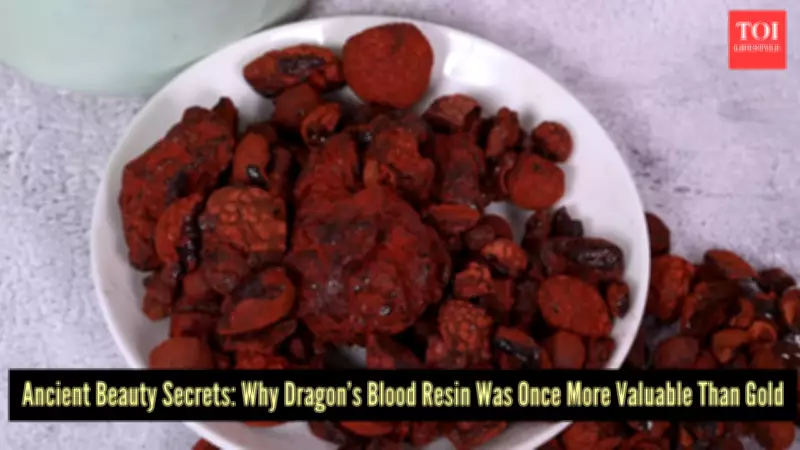
The Fascinating History of Dragon's Blood Resin
Dragon's blood resin is a natural sap collected from Dracaena trees, which were native to the island of Socotra in present-day Yemen. When harvested, the resin hardens into dark red crystals, which are then crushed into powder, infused into oils, and mixed into skincare preparations. Its unique crimson colour contributed to its legendary status throughout history, earning it the name 'dragon's blood resin'. This ancient ingredient has been used for over 2,000 years, with its origins tracing back to ancient Roman and Arabian civilizations.
Used in Ancient Rome
The Romans were known for their elaborate beauty and wellness routines, which were facilitated by trade networks stretching across the Mediterranean, Africa, and Arabia. Roman women incorporated botanical ingredients like dragon's blood resin into unique beauty treatments. They created protective skin balms, improved skin texture, and blended the resin into perfumes and cosmetic preparations. Due to the complexity of long trade routes, the resin was considered an exotic luxury, making it highly coveted among the elite.
The Arabian Connection
Dragon's blood resin held significant importance in Arabian culture, where it was prized not only for beauty but also for medicine and incense. Arabian women used it to calm inflamed skin, protect themselves from harsh desert conditions, and improve the appearance of scars and blemishes. It was also used to create fragrant beauty preparations, further establishing its reputation as one of the era's most coveted natural substances. The resin's versatility made it a staple in traditional Arabian remedies and cosmetic practices.

Why Did It Become So Valuable?
Dragon's blood resin has always been highly valuable due to its rarity and the difficulty in obtaining it. The resin was transported via many ancient trade routes encompassing Africa, India, Europe, and Arabia, which increased its price due to long-distance transportation and the time required to acquire it. Beyond its use in the beauty industry, dragon's blood resin was also used for traditional medicine, ceremonial purposes, incense creation, dye production, and making artistic pigments. This wide range of applications contributed to its great utility and high value.
What Does Modern Science Say?
Dragon's blood resin is gaining popularity among cosmetic companies and scientists as they discover its unusual chemical structure. Its chemical makeup includes polyphenols, flavonoids, proanthocyanidins, and taspine, which are linked to skin-soothing and antioxidant benefits. Research has begun to confirm these benefits, with one study published in the Journal of Traditional & Complementary Medicine in 2015 finding that a dragon's blood cream accelerated wound healing significantly faster than a placebo control. Researchers hypothesize that natural compounds like taspine and polyphenols may promote skin repair and regeneration. Modern science is thus validating the ancient wisdom behind this forgotten ingredient.