A Nostalgic Look Back: The Literary Landscape of 2016 Revisited in 2026
In 2026, social media algorithms and cultural trends have sparked a widespread throwback to 2016, bringing the year's literary milestones back into the spotlight. From groundbreaking prize decisions to bestselling books and ambitious adaptations, 2016 was a pivotal period that challenged conventions and expanded the boundaries of literature.
Nobel Prize Controversy and Literary Expansion
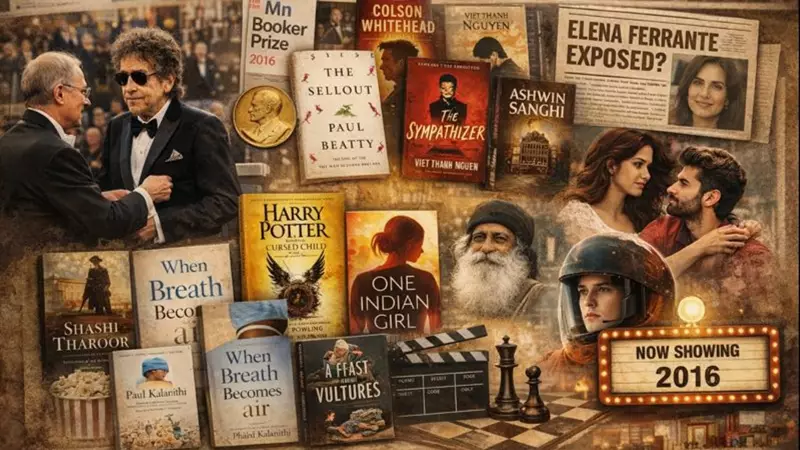
The year 2016 will forever be etched in literary history due to the Nobel Prize in Literature being awarded to Bob Dylan, a musician. This unprecedented decision by the Nobel committee broadened the definition of literature to include song lyrics, igniting intense debates across publishing, academia, and the media. Dylan's delayed response and absence from the ceremony kept the conversation alive long after the announcement, making literature a mainstream topic once again.
Meanwhile, other prestigious awards reinforced a trend toward innovation. The Man Booker Prize went to Paul Beatty for The Sellout, marking the first American win after rule changes. In the United States, Colson Whitehead's The Underground Railroad won the National Book Award, and Viet Thanh Nguyen received the Pulitzer Prize for The Sympathizer. These selections highlighted a preference for satire, formal experimentation, and unconventional historical narratives.

Indian Publishing: Bestsellers and Cultural Impact
In India, 2016 was a year of significant literary achievements. Shashi Tharoor's An Era of Darkness became one of the most discussed books, expanding on his Oxford Union speech about British reparations to former colonies. Fiction dominated bestseller lists, with authors like Chetan Bhagat, Ravinder Singh, Savi Sharma, and Devdutt Pattanaik reaching massive readerships through genres such as romance, mythology-based nonfiction, and fast-paced historical fiction.
Chetan Bhagat's One Indian Girl solidified his position as a commercial powerhouse, while Savi Sharma's debut Everyone Has a Story achieved record sales driven by word of mouth. Preeti Shenoy's It's All in the Planets and Ashwin Sanghi's The Sialkot Saga further demonstrated the appetite for engaging narratives. The release of Harry Potter and the Cursed Child was the year's biggest publishing event, boosting sales across markets.
Nonfiction also thrived, with Paul Kalanithi's When Breath Becomes Air becoming a widely read medical memoir. In self-help and spirituality, Sadhguru's Inner Engineering performed strongly globally, and Devdutt Pattanaik's mythology books maintained high sales. Short fiction collections like Twinkle Khanna's The Legend of Lakshmi Prasad and investigative works such as Josy Joseph's A Feast of Vultures found large audiences.
Literary Controversies and Privacy Breaches
2016 was also marked by controversy, notably the breach of literary privacy involving pseudonymous author Elena Ferrante. Italian journalist Claudio Gatti published findings alleging Ferrante's identity as Anita Raja, based on financial records. This sparked backlash from writers and readers, who argued that Ferrante's anonymity was an artistic right, making it one of the year's most contentious literary debates.
Ambitious Adaptations to Film and Television
Literary adaptations in 2016 saw written narratives successfully transition to film and TV, often through creative reinterpretation. Park Chan-wook's The Handmaiden, adapted from Sarah Waters' Fingersmith, was praised for its focus on power and desire. In India, Abhishek Kapoor's Fitoor, loosely based on Great Expectations, relocated Dickens' story to contemporary settings.
Other notable adaptations included Arrival from Ted Chiang's Story of Your Life, which proved that complex sci-fi could succeed commercially, and Love & Friendship based on Jane Austen's work. Television entered the fray with the pilot of I Love Dick, adapted from Chris Kraus' novel. Books like Max Porter's Grief Is the Thing with Feathers and Karan Mahajan's The Association of Small Bombs were widely discussed as future adaptation candidates.

As 2016 resurfaces in 2026, its literary legacy continues to influence contemporary culture, reminding us of a year that redefined what literature could be.