5 Trailblazing Indian Women Painters Who Redefined Modern Art
India's rich modern art narrative has often been dominated by celebrated male artists, yet a parallel story of remarkable women painters has been unfolding for decades. These visionary creators navigated structural barriers, political shifts, and cultural transformations to forge bold, original visual languages that questioned norms and expanded the very definition of Indian art. Their work, rooted in diverse influences from local traditions to global movements, did not merely supplement the canon but actively reshaped it. Here, we spotlight five Indian women painters whose profound impact deserves far greater recognition and appreciation in art history.
Amrita Sher-Gil: The Pioneering Modernist
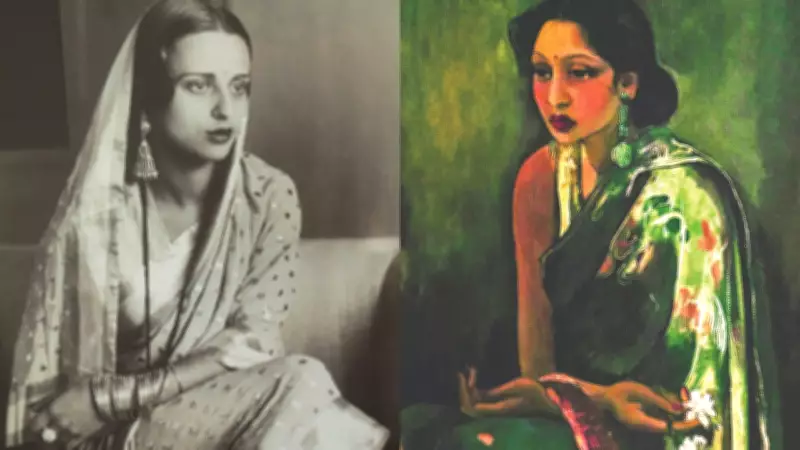
Often hailed as India's first great modernist, Amrita Sher-Gil masterfully blended European academic training with a deep engagement with Indian life. Educated in Paris and influenced by post-Impressionist masters, she returned to India in the 1930s with a mission to portray rural communities, women at rest, and everyday intimacy with dignity rather than exoticism. Her palette evolved to incorporate warmer, more grounded tones inspired by Indian miniature painting and mural traditions.
Iconic works like Three Girls and Bride's Toilet exude a quiet intensity, capturing social realities with a steady, unsentimental gaze. Despite her tragic death at just 28, Sher-Gil's determination to depict Indian subjects through a modern, international visual language irrevocably altered the course of twentieth-century Indian art, leaving a legacy that far surpasses her brief career.

Arpita Singh: The Visual Storyteller
Arpita Singh emerged in the 1960s with canvases that resemble dense visual diaries, teeming with floating figures, handwritten text, maps, weapons, domestic objects, and mythic references. Resisting neat stylistic categorization, she borrowed from folk idioms, miniatures, surrealism, and political cartoons to craft a uniquely layered visual language.
What distinguishes Singh is her unflinching portrayal of vulnerability and violence in everyday life, particularly through female protagonists. Her women are depicted as anxious, amused, defiant, and fearful, rarely idealized. Over decades, Singh has developed an intimate yet politically alert visual language that has significantly expanded the communicative potential of figurative painting in India.
Nalini Malani: The Political Visionary
While widely recognized today for immersive installations and shadow plays, Nalini Malani began as a painter and draftswoman, and her painterly sensibility remains central to her practice. Trained in Bombay during the charged post-Independence era, she embraced themes of myth, memory, and feminist critique long before they became fashionable in Indian galleries.
Her imagery, featuring fragmented bodies, goddesses in revolt, and ghostly faces, draws powerful connections between ancient epics and modern traumas such as Partition, war, displacement, and gendered violence. Malani's work propelled Indian modernism beyond formal experimentation into urgent political territory, demonstrating that art could be both visually lyrical and socially confrontational.
Anjolie Ela Menon: The Contemplative Narrator
Anjolie Ela Menon carved a distinct path with her haunting, fresco-like surfaces and contemplative figures. Inspired by Byzantine icons and European mural traditions, she developed a muted, layered style that feels timeless yet unmistakably modern.
Her subjects, including nuns, women by windows, and anonymous city dwellers, often appear withdrawn, captured in moments of deep introspection. At a time when abstraction dominated elite art circles, Menon persisted with figurative storytelling, proving that narrative painting could evolve formally. Her quiet emotional intensity has influenced generations of artists seeking alternatives to overt spectacle.

Gogi Saroj Pal: The Bold Innovator
Gogi Saroj Pal stands out for her courageous exploration of female desire, rage, aging, and transformation, themes rarely addressed openly in Indian painting when she began in the 1970s. Drawing from mythology, she reimagined figures like Kamadhenu or Kinnari as symbols of autonomy rather than obedience.
Her muscular brushwork and surreal hybrids favored complexity over sentimentality, placing women's inner lives at the forefront of modern Indian visual culture. Pal's legacy extends beyond her paintings to the space she created for women artists to discuss the body, identity, and power on their own terms.
These five artists collectively represent a powerful, often overlooked chapter in India's art history. Their contributions have not only enriched the visual landscape but also challenged societal norms and expanded artistic boundaries. By bringing their stories into the spotlight, we acknowledge the diverse voices that have shaped and continue to influence modern Indian art.