In the heart of forests, rivers, and grasslands, nature occasionally crafts living masterpieces that seem dipped in gold. These creatures, radiating shades of effulgent yellow, amber, and shiny gold, are impossible to ignore. However, their stunning appearance is far more than a simple aesthetic marvel. The golden colouration plays a critical role in their survival, aiding in everything from camouflage and mating to issuing deadly warnings.
Birds of a Golden Feather: Masters of Adaptation
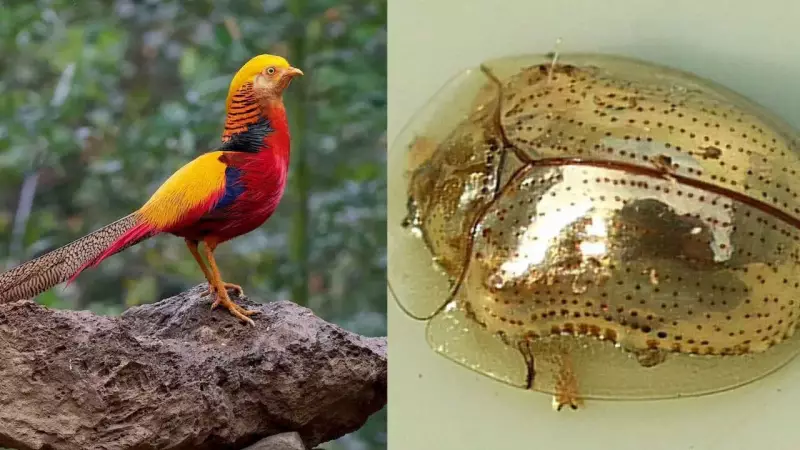
The Golden Pheasant, native to central China's dense forests, is celebrated as one of the world's most colourful birds. Its golden crest creates a stunning contrast against the red, blue, and green of its body. Interestingly, this vibrant bird is remarkably elusive. Its golden hues are crucial for attracting mates in the dim forest light. When threatened, it prefers to run rather than fly, using the diffused light of the undergrowth to mute its brilliant colours and avoid detection.
Soaring across the skies of Europe, Asia, and North America, the Golden Eagle commands respect. It gets its name from the golden-brown plumage on its head and neck, which glows warmly in sunlight. This majestic colour scheme is not just for show; it helps the eagle blend seamlessly with rocky landscapes and open plains, aiding its role as a formidable predator.

The American Goldfinch presents a fascinating case of temporary colour change. During breeding season, the male transforms into a spectacular bright yellow, signalling health and genetic fitness to potential mates. When breeding ends, its plumage turns dull, providing efficient camouflage against predators and conserving energy—a brilliant, practical use of colour in nature.
Mammals, Fish, and Amphibians: The Golden Strategy
Deep within Brazil's Atlantic forests, the Golden Lion Tamarin sports a magnificent mane of what looks like liquid gold. This bright fur helps individuals spot each other in the dense, shadowy forest, strengthening social bonds. Sadly, this very beauty has made it a target for humans, threatening its population and sparking vital conservation efforts.
Employing gold for stealth, the Asian Golden Cat uses its golden-brown coat as perfect camouflage in the forests of South and Southeast Asia. Its colour blends ideally with dry leaves, tree bark, and dappled sunlight, helping it both hunt prey and hide from larger predators. Its exact shade can even vary based on its surroundings.
In the rivers of South America, the Golden Dorado is famed for its strength and beauty. Its metallic yellow scales shimmer as it moves, a dazzle that may confuse prey, deter competitors, and establish dominance. For anglers, its golden colour is as iconic as its fighting spirit.
The aquatic world also hosts the Golden Koi Fish, a product of expert breeding in Japan and China where it symbolises luck and wealth. Its ability to reflect light makes it appear as if swimming in liquid gold. Practically, the bright colour allows breeders to easily monitor the fish's health and movements.
Golden Warnings and Optical Illusions
Few creatures use gold as boldly as the Golden Poison Dart Frog. Its radiant, glowing skin acts as a blatant warning signal—a phenomenon known as aposematic or warning colouration. The message is clear: "I am toxic, do not touch." Here, gold is a matter of life and death, preventing attacks before they happen.
In coral reefs, the Golden Zebra Seahorse uses its gold and striped pattern to vanish among the corals. Unlike fish that rely on speed, seahorses depend on stillness and camouflage. Its golden pigments allow it to hide in plain sight from predators.
Perhaps one of the most surreal is the Golden Tortoise Beetle. Its shell shines like polished metal, creating a mirror-like effect that can change when the beetle is wet or in motion. This gold isn't from pigment but from microscopic structures, showcasing how biology employs physics to create breathtaking beauty.

From the forests of China to the rivers of South America, golden animals demonstrate that in nature, brilliance is rarely just for show. Their radiant colours are sophisticated tools for survival, communication, and continuation of their species, proving that sometimes, the most dazzling sights have the most practical purposes.