Ai Weiwei: Art as a Tool for Dissent and Dialogue in Delhi Show
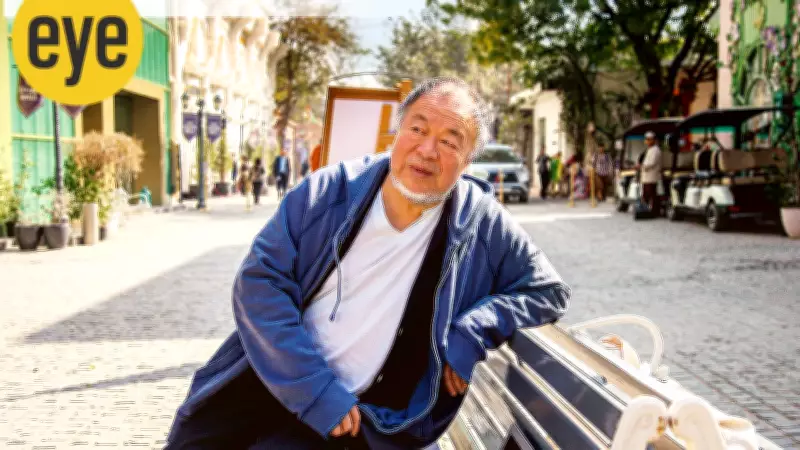
In a powerful statement on the essence of artistic creation, Chinese artist and activist Ai Weiwei has declared that confrontation is indispensable to meaningful artwork. Speaking ahead of his first solo exhibition in India at the Nature Morte gallery in Delhi, Weiwei emphasized that if an artwork fails to evoke dissent or question reality, it becomes essentially lifeless. This perspective underscores his decades-long practice, which intertwines personal experience with political critique, challenging how power influences memory and history.
A Journey from China to Global Stages
Ai Weiwei, a leading figure of the Chinese avant-garde in the 1990s, has frequently clashed with state authorities, emerging as a prominent dissident voice. After leaving China in 2015, he has resided in cities like Berlin, Cambridge, and currently Montemor-o-Novo in Portugal. His work, spanning over three decades, delves into themes of materiality and authority, often reconfiguring historical artefacts to provoke thought. The Delhi exhibition features pieces such as Stone Axes Painted White, which reimagines Neolithic tools, and Lego-based works that transform paintings by Indian modernists SH Raza and VS Gaitonde into pixelated grids.
Confrontation: The Heart of Artistic Expression
In an email interview, Weiwei elaborated on the centrality of confrontation in his practice. He argued that confrontation extends beyond politics to encompass aesthetics, ethics, and moral questions, forming the baseline of any significant artwork. This belief stems from his own experiences, including an 81-day detention in 2011, which he described as both absurd and tragic, reshaping his understanding of freedom and artistic expression. He noted that such ideological mechanisms exist globally, not just in China, highlighting the universal struggle for free expression.

Refugee Crises: A Personal and Global Concern
Weiwei's engagement with global issues is deeply personal, rooted in his childhood as a refugee in China, where his father, poet Ai Qing, was labeled a "rightist" and forced into exile. This background informs works like Safe Passage (2016), Law of the Journey (2017), and the film Human Flow (2017), which address the refugee crisis. He recently visited Ukraine, interacting with troops and creating installations like Three Perfectly Proportioned Spheres and Camouflage Uniforms Painted to respond to the Russian invasion. Weiwei expressed that these works bring him into the lived reality of conflict, advocating for peace and dialogue over violence.
Living "Nowhere": The Artist's Nomadic Existence
Despite holding a Chinese passport, Weiwei describes himself as living "nowhere," often staying in hotels and constantly navigating unfamiliarity. This nomadic existence reflects his view of art as a form of psychological therapy and a portable home. He remains sceptical about his identity as an artist, seeing art-making as his essential luggage in a world without fixed roots.
Digital Spaces and AI: New Challenges for Artists
Weiwei, an early adopter of social media, now views digital platforms as increasingly controlling, likening them to noise that restricts independent thinking. He has also explored AI in works like Ai vs AI (2024), recognizing its potential but warning of dangers in replacing human thought with standardized answers. He believes that genuine freedom of expression is more difficult today, dominated by corporate and ideological influences.
Exhibition Details and Impact
The Delhi solo show aims to connect with Indian audiences by using art as a language to reflect contemporary realities and offer individual perspectives. Weiwei hopes it will foster emotional, political, and critical engagement, bridging cultural divides. The exhibition runs at Nature Morte gallery, featuring a range of works that challenge conventional narratives and invite viewers to question the world around them.