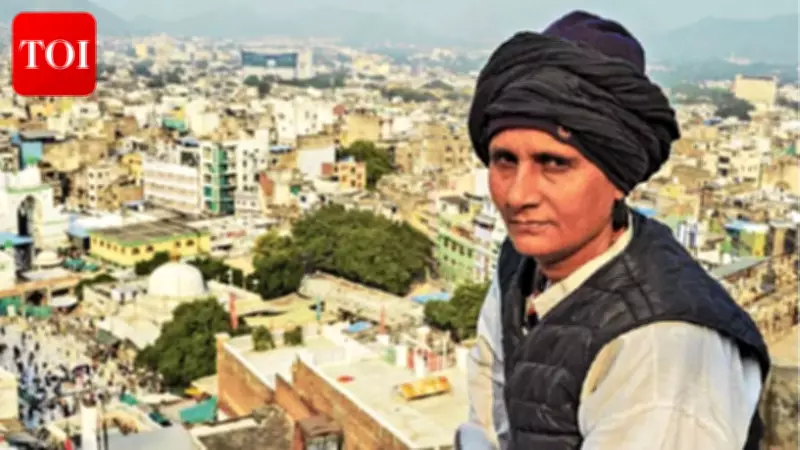
Fauzia Khan: Ajmer's 'Topchi' Woman Cannon Keeper Upholds Mughal-Era Tradition
In the historic city of Ajmer, the serene atmosphere around the revered Ajmer Sharif Dargah is periodically punctuated by a powerful, resonant boom. This distinctive sound, which might startle unsuspecting visitors, is a familiar and cherished signal to locals and regular devotees. It emanates from the ceremonial cannon fired by 37-year-old Fauzia Khan, who has earned the affectionate nickname 'Topchi' for her dedicated role in marking significant religious occasions.
A Tradition Rooted in History and Devotion
Fauzia Khan diligently performs this labor of love annually during the Urs of Khawaja Garib Nawaz, every Friday preceding Jumma prayers, and throughout the holy month of Ramzan. From within the Dargah complex, her cannon blasts announce Sehri and Iftar timings, as well as signal prayer hours, preserving a practice that predates modern timekeeping devices and loudspeaker systems. "This is an act of worship, a responsibility, and also an honour," Fauzia explains, encapsulating her deep commitment.
Dressed in a traditional long kurta and with her face shielded by a dupatta against smoke and sparks, she prepares the cannon with meticulous precision. This tradition traces its origins back to the Mughal era, with historical accounts suggesting Emperor Akbar introduced it to manage prayer schedules during large religious gatherings, particularly the Urs and Ramzan.

Breaking Gender Barriers in a Sacred Duty
Fauzia's journey began early; at just eight years old, she started assisting her father, Mohammad Hafeez Khan, learning the intricate science and profound devotion behind the practice. "My father trusted me. He taught me the science, the respect, and the devotion behind it," she recalls fondly. Following his passing in 2008, many presumed the responsibility would transfer to a male relative. Defying expectations, Fauzia stepped forward, and Dargah officials endorsed her claim, making her Ajmer's first female artillery keeper.
"There were people who said this was not a woman's job," she remembers. "But I had grown up doing it." Her resolve highlights a personal dedication that transcends gender norms, rooted in a lifelong familiarity with the tradition.
The Rigorous Routine of Ramzan and Beyond
During Ramzan, Fauzia's day commences around 2 a.m. She meticulously cleans the cannon, prepares the gunpowder, and positions herself on the terrace. The first blast signals Sehri, followed by a second to denote the end of the eating period. At sunset, the cannon fires again to announce Iftar, guiding the community through their daily fasts.
The cannon she uses today is a handheld model weighing approximately 35 kilograms—a safer alternative to the older, 53-kilogram wheeled version employed before Independence. Fauzia's family adheres to a rotation system: she fulfills the duty for two consecutive years, after which her cousin takes over for one year. For her efforts during Ramzan, she receives Rs 1,500, an amount she notes barely covers the cost of gunpowder, often leading her to supplement expenses from her own pocket. To sustain herself, she operates a small tea-and-snack stall. "People think I probably get a lot of respect and money. I do get respect, but not money," she remarks with a smile.
Challenges, Recognition, and a Vision for Inclusivity
Despite her significant role, Fauzia has received no formal acknowledgment from government or religious institutions. Her foremost wish is to perform Umrah (a pilgrimage to Mecca) and gain recognition for her service. The most substantial opposition she encountered came from within her extended family, yet her dedication never wavered—not even on the day her father died. "His body was at home," she states. "But the cannon had to be fired. Duty comes first. I knew he would want that."
Fauzia emphasizes that her work transcends gender roles or symbolic gestures. "Roles do not belong to men or women. They belong to those who do them with sincerity. I am not doing this for feminism. I am fighting for tradition. And tradition is stronger when it includes everyone," she asserts, championing a vision of inclusivity that strengthens cultural heritage.

Through her unwavering commitment, Fauzia Khan not only preserves a centuries-old Mughal tradition but also redefines it, ensuring that the resonant boom of her cannon continues to echo through Ajmer, uniting devotion, duty, and community in every blast.