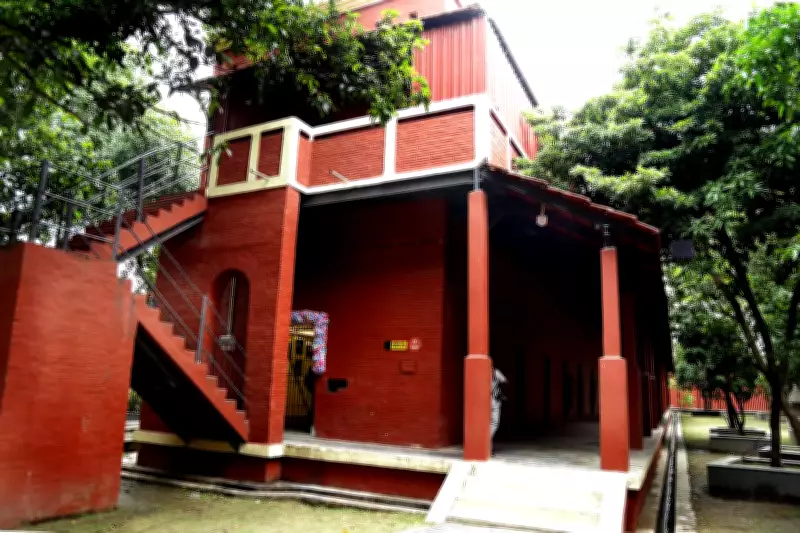
Alipore Jail's Remarkable Journey: From Confinement to Cultural Renaissance
As Calcutta Times marks its 25th anniversary, we examine 25 locations that have undergone significant transformation over the past quarter-century. Among these stands the Alipore Museum—a former colonial prison that has been reinvented as a public history space, steadily evolving into one of Kolkata's most multifaceted cultural destinations.
From Prison to Public Institution: A Century of Confinement
For the majority of its existence, the Alipore complex served not as a public institution but as a place of incarceration. Established in 1906, it functioned as a jail for over a century and continued operating as a correctional home until 2019. The site only reopened as a museum in September 2022, marking a profound shift in purpose.
"The transformation itself represents an act of historical justice," explains museum director Jayanta Sengupta. He emphasizes that a space which once punished India's freedom fighters now honors their legacy. The prison once held prominent figures including Subhas Chandra Bose, Jawaharlal Nehru, Maulana Abul Kalam Azad, Chittaranjan Das, and Kazi Nazrul Islam, while others like Dinesh Gupta faced execution within its walls.

When the museum initially opened, much of the site remained intentionally unfinished, allowing for gradual evolution. The physical structure, while fragile, was recoverable. Conservation architect Partha Ranjan Das notes, "The structures were neglected but not in poor condition," though they required waterproofing, floor repairs, and infrastructure strengthening.
Das stresses that "structurally nothing was changed—the old buildings were retained and adapted." Restoration work revealed hidden arches and architectural details while reinforcing blocks like the hospital wing for public use. The approach prioritized stabilization over reconstruction, with one ward deliberately left unrestored to showcase its original state of decay.
In its early days, the Alipore Jail Museum was still defining its identity—a historic site searching for its public voice.
The Cultural Ecosystem Emerges: Three Years of Transformation
Three years later, the space has begun functioning not merely as a memorial but as a vibrant cultural ecosystem. The initial phase featured small yet significant experiments, with vacant halls hosting lectures, workshops, and exhibitions. The long-running Freedom and Awakening show explored concepts of liberty through artistic expression.
The true turning point arrived when the Bengal Biennale utilized an empty hall as an exhibition venue in 2024–25. This experience demonstrated the site's remarkable adaptability and potential for cultural programming.
Since then, several structural additions have fundamentally changed the museum's operations. Former storage halls have been converted into a fully air-conditioned auditorium and dedicated exhibition gallery, enabling the museum to host institutional programs, film screenings, and curated shows. New galleries with permanent design infrastructure have also been added, facilitating professional exhibitions.
Enhanced Accessibility and Expanded Programming
Accessibility improvements have made the space more inclusive:
- Entrance maps and Braille guides for visually impaired visitors
- Enhanced visitor navigation systems
- Landscaping and improved lighting
- Restored courtyards that soften the prison's austerity while preserving its historic character
Programming has expanded alongside infrastructure development. The museum now hosts:
- Lectures and academic discussions
- Dance festivals and seasonal art initiatives
- Vintage car showcases attracting new audiences
- Literary events and cultural festivals
"What people respond to most is the atmosphere," Sengupta observes. "The history is palpable, but the space is alive and evolving. That balance between remembrance and reinvention defines the museum today."

Visitor Growth and Cultural Significance
Footfall patterns reflect this transformation. Weekends now attract approximately 1,500–2,000 daily visitors, while weekdays draw substantial student groups and researchers. The museum's record of nearly 16,000 visitors in a single day remains, but steady growth rather than sporadic spikes now characterizes its trajectory.
What began as a silent colonial prison has become a dynamic public space where history, culture, and contemporary programming coexist harmoniously.
Why This Transformation Matters
The Alipore Museum represents a significant achievement for several compelling reasons:
- Historical Reclamation: It has transformed a former jail into a public space of remembrance where history feels reclaimed rather than merely displayed
- Architectural Preservation: Visitors can still sense the original prison architecture, creating a visceral rather than abstract experience
- Continuous Evolution: The space continues to develop through new galleries, research projects, and exhibitions that add layers of meaning
- Unique Cultural Venue: It has become one of Kolkata's most distinctive cultural destinations, where art, lectures, and performances unfold within a historic jail complex
Most importantly, the Alipore Museum demonstrates how a city can reinterpret its past—not by erasing history, but by赋予ing it new purpose and relevance for contemporary society.