Amritsar Gurdwara Controversy: Stamped Currency Notes Distributed as Blessings
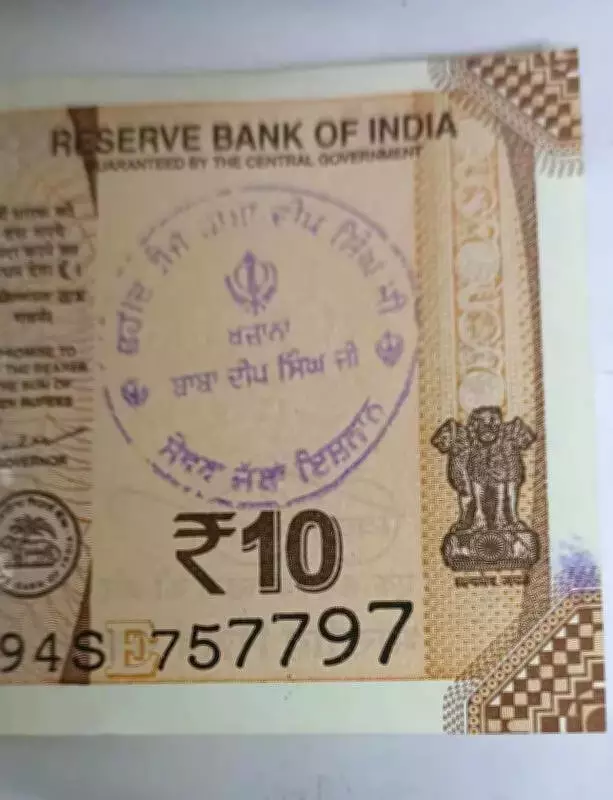
A controversial and unusual practice has emerged at the historic Gurdwara Shaheed Ganj in Amritsar's Chatiwind Chowk area, sparking debate among devotees and religious scholars. Reports indicate that currency notes stamped with the name of a religious organization—"Sevak Jatha Ishnan"—were being distributed to worshippers as a form of blessing, specifically for ‘Gur ghar dian khusian', which translates to the happiness or blessings of the Guru's house.
Ritual Acts and Devotee Reactions
Devotees who received these stamped notes were observed engaging in ritualistic behaviors to seek divine favor. Many reportedly touched the notes to their foreheads or held them close to their bodies, believing this act would help them receive the Guru's blessings directly. This practice, while intended as a spiritual gesture, has raised eyebrows due to its unconventional nature and potential implications.
Insights from Sikh Scholars and Management
Sikh scholar Sarchand Singh brought this issue to light on Tuesday, revealing that the practice has been ongoing at the shrine dedicated to the 18th-century Sikh warrior, Baba Deep Singh. According to Singh, certain individuals or organizations have been actively circulating these stamped currency notes among the faithful. In response, Jatinder Singh, the manager of Gurdwara Shaheed Ganj, acknowledged the situation and stated that the management has already taken steps to curb this activity.

He further noted that similar incidents have occurred in the past at other locations, such as Chote Shaheed Sahib in Luxmansar Chowk, where devotees were also found distributing stamped notes. This suggests a pattern that extends beyond a single gurdwara, highlighting a broader concern within the community.
Banking and Legal Implications
Experts have pointed out significant issues related to the use of stamped currency notes in financial transactions. Officially, banks are required to reject any currency notes that have been defaced, stamped, or altered in any way. However, the reality is more nuanced:
- Smaller denominations or notes of lower quality might occasionally pass through common currency-counting machines without detection.
- The acceptance of such notes largely depends on the vigilance of bank staff, who are trained to identify and reject them immediately.
- High-quality bank currency-counting machines are typically equipped to detect and automatically reject stamped notes, ensuring compliance with banking regulations.
This raises practical concerns for devotees who might inadvertently attempt to use these notes in everyday transactions, potentially facing rejection or legal scrutiny.
Spiritual Critique and Ethical Concerns
Sarchand Singh offered a poignant critique of the practice, emphasizing that true spiritual wealth—referred to as the ‘treasure (khazana) of Naam'—is attained through traditional Sikh practices such as:
- Reciting and understanding Gurbani (Sikh scriptures)
- Engaging in Simran (meditation and remembrance of God)
- Performing selfless service (Seva)
- Upholding righteous conduct in daily life
He argued that stamping Indian currency and treating it as a talisman to carry in pockets or purses deviates from these core principles, potentially reducing sacred practices to mere superstition. This perspective underscores the need for a return to authentic spiritual methods rather than relying on material objects for blessings.
The controversy at Amritsar's Gurdwara Shaheed Ganj highlights a delicate balance between cultural rituals and modern ethical standards, prompting reflection within the Sikh community on how to preserve tradition while adhering to legal and spiritual integrity.