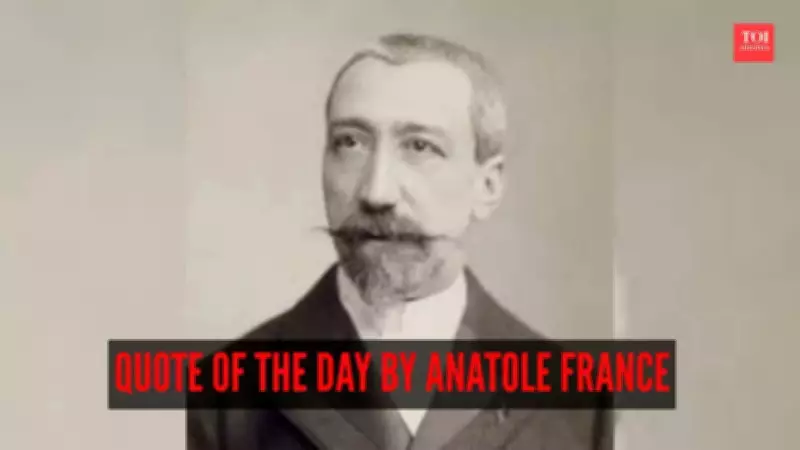
Anatole France: The Literary Giant Who Bridged Dreams and Reality
Anatole France stands as one of the most revered literary figures of late nineteenth and early twentieth-century France. Born François-Anatole Thibault in 1844 in Paris, his formative years were steeped in intellectual richness, thanks to his father's bookstore that specialized in literature and scholarly works. This early immersion in books and ideas profoundly shaped his worldview, fueling a lifelong dedication to writing, philosophical inquiry, and social commentary.
A Legacy of Grace, Irony, and Social Justice
France's literary output is distinguished by its elegant prose, sharp irony, and unwavering commitment to themes of justice and human dignity. His works often delved into complex moral dilemmas, skepticism, intellectual freedom, and empathy for society's marginalized individuals. This profound engagement with humanistic values culminated in his receipt of the Nobel Prize in Literature in 1921, cementing his status as a pivotal influence in European literary history.
Among his most notable writings are "Thais," "The Crime of Sylvestre Bonnard," "Penguin Island," and "The Gods Are Athirst." These masterpieces skillfully blend imagination with incisive satire and philosophical depth, encouraging readers to critically examine societal power structures, belief systems, and the human condition.

The Enduring Wisdom of a Timeless Quote
Today, a quote widely attributed to Anatole France continues to resonate: "To accomplish great things, we must not only act, but also dream; not only plan, but also believe." This statement encapsulates the core of his literary and philosophical outlook, emphasizing the synergy between imagination, inner conviction, and moral courage alongside rational thought and deliberate effort.
At its heart, this quote advocates for a delicate balance between practical action and aspirational ideals. While planning and discipline provide structure, France reminds us that without dreaming and believing, even the most meticulously crafted plans may lack inspiration and purpose. Dreaming fuels creativity, while belief instills the resilience needed to persevere through adversity and setbacks.
Psychological and Emotional Depth in France's Message
The quote carries significant psychological weight, addressing the common reluctance many feel when pursuing greatness due to self-doubt. France's words suggest that belief is not blind faith but an inner confidence that empowers individuals to overcome challenges on their journey to achievement. This perspective highlights that true success is as much an internal transformation as it is an external accomplishment.
Throughout his life and works, Anatole France championed reflection, humanity, and imagination. His quote epitomizes this ethos, asserting that genuine achievement arises from the harmonious interplay of dreaming, planning, action, and belief. In an era often preoccupied with speed and tangible results, France's wisdom serves as a gentle reminder that greatness originates in the mind and heart long before it manifests in reality.