Ancient 'City of Iron' Discovered in Uzbekistan Mountains Rewrites Silk Road History
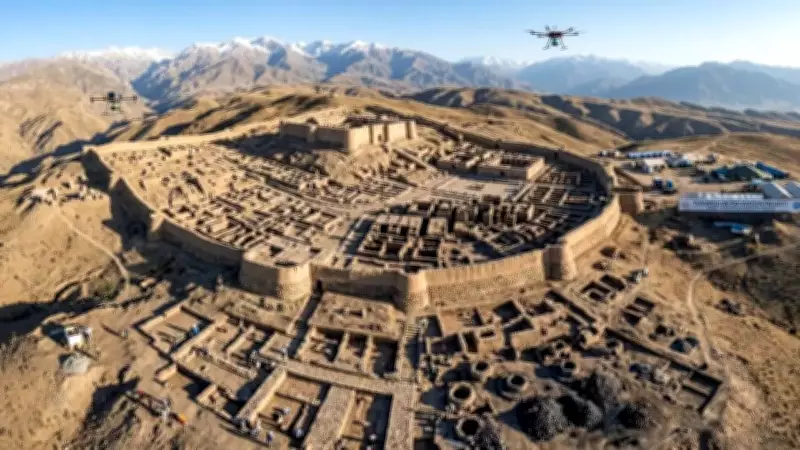
A groundbreaking archaeological discovery in Uzbekistan is fundamentally reshaping our understanding of Central Asian history and the ancient Silk Road. Researchers have uncovered a vast 120-hectare ancient city, named Tugunbulak, situated high in the Malguzar mountains at an altitude of 2,000 meters (6,600 feet). This finding challenges long-held assumptions that significant urban centers along the Silk Road were built exclusively in lowland areas.
Laser Technology Reveals Hidden Metropolis
For centuries, the extensive grounds of Tugunbulak remained concealed beneath grassy mounds, invisible to the naked eye. The breakthrough came when researchers employed UAV-LiDAR (drone-based laser scanning) technology, which effectively 'saw' through the earth to reveal the city's true scale and complexity. This advanced method allowed the team to map the entire 120-hectare landscape in just three weeks—a task that would have taken over a decade using traditional ground surveys.
The LiDAR scans identified over 300 distinct structures, including:

- Multiple watchtowers for surveillance and defense
- Central plazas likely used for public gatherings
- A formidable fortress with walls measuring three meters thick
This research, published in the prestigious journal Nature, was conducted in collaboration with Washington University in St. Louis, demonstrating the revolutionary impact of modern technology on archaeological discovery.
The Mountainous Industrial Powerhouse
What makes Tugunbulak particularly remarkable is its function as a major industrial center. Initial excavations of the central citadel revealed it was much more than a defensive structure—it operated as a massive-scale factory. Archaeologists discovered substantial quantities of iron slag (the waste product of smelting) and numerous furnace remnants, indicating that metallurgy served as the city's primary economic driver.
The study further explains how the mountainous location provided unique advantages for iron production. The fierce mountain winds acted as natural bellows, supplying the high-oxygen airflow essential for large-scale iron and steel manufacturing. This discovery proves that medieval mountain societies were sophisticated industrial hubs, effectively rewriting the history of the Silk Road as a vertical network rather than just a horizontal trade route.
The Rise and Fall of an Iron Empire
The success of Tugunbulak's iron industry sustained the city for hundreds of years, but ultimately, its greatest strength became its fatal weakness. Smelting large quantities of iron required enormous amounts of charcoal, and research indicates that the city's 500-year industrial boom caused extreme deforestation of the surrounding juniper forests.
Without trees to retain moisture and stabilize the soil, the mountainside became highly vulnerable to environmental degradation. The consequences were severe:
- Frequent flash floods devastated the area
- Recurring mudslides made the location increasingly hazardous
- Many residents were forced to abandon their 'Iron Empire'
This environmental collapse provides crucial insights into how ancient industrial activities could lead to ecological disaster and societal displacement.
The Mysterious Cemetery of Tashbulak
Just three miles from Tugunbulak in the same Malguzar mountain range lies Tashbulak, a smaller sister site that presents another archaeological puzzle. This settlement houses a disproportionately large cemetery containing over 400 graves, representing some of the earliest evidence of Islam's arrival in the high-altitude regions of Central Asia.
The astonishing size of this cemetery, compared to the very small scale of Tashbulak and its surrounding villages, suggests the site served as a central point for:
- Religious worship and ceremonies
- Ideological activities for multiple tribes in the region
- Cultural and spiritual gatherings beyond local population needs
This discovery adds another layer to our understanding of how religious and cultural practices spread through mountainous regions during medieval times.

The Tugunbulak discovery represents a paradigm shift in archaeological understanding, revealing that mountainous regions of Central Asia were not merely peripheral areas but active contributors to industrial development and cultural exchange along the Silk Road. This research opens new avenues for exploring how altitude and environment shaped ancient civilizations and their technological achievements.