Ancient Coins and Temple Ruins Unearthed in Rajasthan's Jhunjhunu District
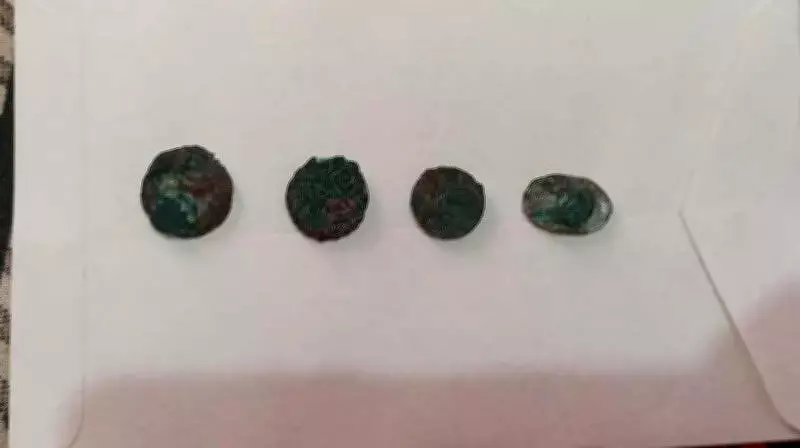
The Department of Archaeology and Museology (DAM) in Jaipur announced on Tuesday a significant archaeological discovery at Tyonda village in Khetri tehsil of Jhunjhunu district. The excavation has revealed copper coins believed to date back to the Chauhan and early Sultunate periods, along with structural remains of a temple estimated to be over 1,000 years old.
Excavation Details and Findings
The discoveries were made during an excavation launched in January, which has now been completed for this phase. Officials reported that the coins were recovered from the same zone where the temple remains were found, suggesting a possible link between religious and economic activity in the area during ancient times.
Neeraj Tripathi, superintendent of the Jaipur Circle at DAM, explained the process: "During the sifting of sand at the excavation site, coins were found buried deep beneath the surface." The coins are currently in a corroded and fragile condition, necessitating a careful conservation process before any identification can be made.

Conservation and Identification Process
Former numismatics expert at DAM, Zafarullah Khan, detailed the conservation steps: "The process includes mechanical cleaning, followed by controlled chemical treatment to stabilise the metal surface. In some cases, electrochemical methods are used to carefully strip corrosion layers without damaging inscriptions."
He emphasized the importance of this scientific approach: "The coins are in a deteriorated state, and scientific cleaning is essential to retrieve inscriptions or motifs. Only after this process will we be able to conclusively identify their origin and chronology."
Historical Context and Significance
Chandra Shekhar Sharma, Head of the Department of History (Medieval) at Meera Girls College in Udaipur, provided historical context: "Between the 10th and 11th centuries, the region was part of a busy trade network under Rajput rulers like the Chauhans." This discovery could offer new insights into the economic and religious dynamics of that era.
The findings highlight the area's historical importance, potentially linking it to broader trade routes and cultural exchanges during the medieval period.
Future Plans and Next Steps
Officials have stated that the next round of excavation is expected to begin in September, continuing the exploration of this rich archaeological site. The ongoing efforts aim to uncover more artifacts and structural evidence that could further illuminate the region's past.
This discovery not only adds to Rajasthan's archaeological heritage but also underscores the importance of preserving such sites for historical research and cultural understanding.