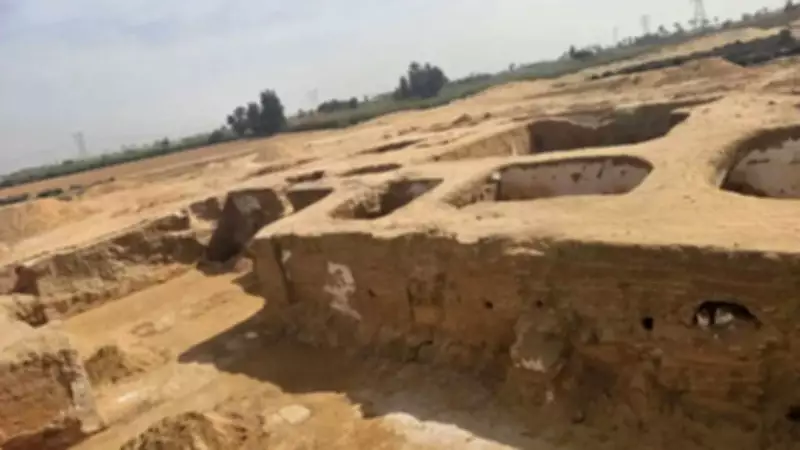
Major Archaeological Discovery in Egypt's Nile Delta
Egypt has once again captured global archaeological attention with the remarkable discovery of a large monastic complex dating back approximately 1,500 years. Located in the fertile Nile Delta region, this significant find provides a rare window into the daily lives and organizational structures of early Christian monastic communities during a pivotal period of religious development.
Unveiling a Structured Monastic Center
The Egyptian Ministry of Tourism and Antiquities officially announced this groundbreaking discovery following extensive excavation work at the Al-Qalāyā archaeological site in Beheira Governorate. Unlike isolated desert monastic dwellings found elsewhere in Egypt, this site represents a major organized center with multiple interconnected spaces designed for both religious practice and community living.
Archaeological teams from the Supreme Council of Antiquities have been conducting systematic excavations at the location since 2023, revealing a complex that stands out for both its scale and sophisticated organization. The structure contains thirteen distinct rooms, each serving specific purposes within the monastic community.

Architectural Features and Daily Life Evidence
The monastic complex demonstrates thoughtful architectural planning with a north-south alignment and a prayer room oriented toward the east, consistent with early Christian worship traditions. A limestone cross embedded in one of the eastern walls further confirms the religious nature of the site.
Key architectural elements include:
- A large reception hall featuring stone benches decorated with intricate botanical motifs
- Individual living quarters for monks alongside shared communal spaces
- Designated areas for kitchen activities, food storage, and teaching functions
- A complete two-meter marble column with decorative capitals and bases
Archaeologists have recovered numerous artifacts that illuminate daily life within the complex, including:
- Pottery fragments and ceramic pieces inscribed with Coptic writing
- Food remains such as bird bones and oyster shells
- Wall paintings depicting monks in traditional early monastic attire
- Geometric patterns and floral motifs in red, white, and black braided designs
Artistic and Inscriptional Discoveries
The site's artistic elements provide valuable cultural and religious insights. One particularly notable wall painting features two deer confined within a circular shape, which scholars interpret as potentially representing harmony and meditation concepts. Another image includes an eight-petaled flower design, adding to the site's symbolic richness.
Perhaps most significantly, archaeologists discovered a limestone funerary stele near an entry point containing Coptic script that references "Apa Kyr, son of Shenouda." This inscription offers a tangible connection to individuals who lived and worshipped within the complex centuries ago.
Understanding Monastic Evolution
This discovery provides crucial evidence for understanding the historical transition in monastic living patterns. Early Christian monasticism typically emphasized solitary asceticism, but this complex demonstrates a shift toward organized communal living.
Hisham El-Leithy, a senior figure associated with the excavation, has described Al-Qalāyā as one of the largest known early Christian monastic gathering sites. The architectural layout—featuring both individual cells and shared spaces—suggests a structured system where monks could maintain aspects of solitude while participating in community activities, learning, and visitor接待.
This transitional model represents an important developmental stage in monastery design, bridging the gap between isolated desert asceticism and the more institutionalized monastic communities that would later emerge throughout the Christian world.

Historical Significance and Future Research
The Al-Qalāyā monastic complex discovery fills significant gaps in our understanding of early organized monastic life in Egypt. By revealing how these communities structured their physical spaces and daily routines, archaeologists can better reconstruct the social and religious dynamics of this formative period.
As excavation and analysis continue, researchers anticipate uncovering additional insights about:
- The specific religious practices conducted within the complex
- Economic activities that supported the community
- Relationships between this monastic center and surrounding settlements
- Broader patterns of early Christian expansion in the Nile Delta region
This remarkable find underscores Egypt's ongoing importance as a source of archaeological discoveries that reshape our understanding of religious history and community development in the ancient world.