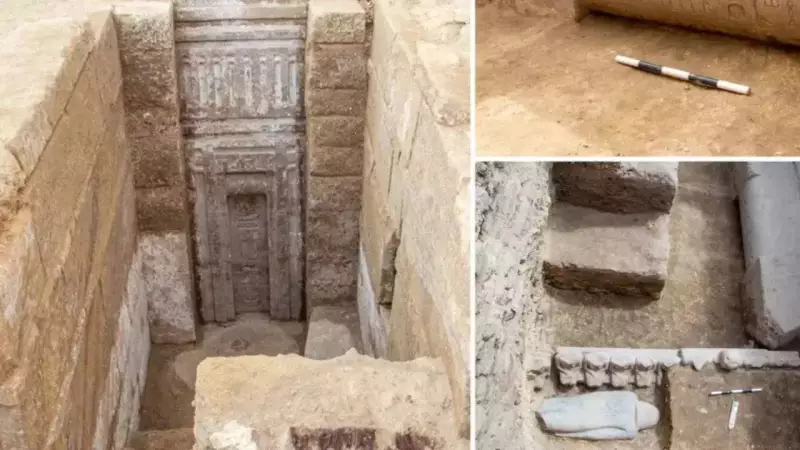
Archaeologists have made a remarkable and puzzling discovery during excavations at the historic Saqqara necropolis, located approximately 25 kilometers south of Cairo, Egypt's capital. The find centers on a tomb dating back 4,000 years, attributed to Prince Waser-If-Re, a significant figure from Egypt's Old Kingdom era. This revelation is sparking renewed interest in ancient Egyptian burial practices and the symbolism embedded within their tombs.
Astonishing False Door of Pink Granite
Among the most striking features unearthed is an enormous false door crafted from pink granite, standing over 14 feet tall and more than three feet wide. Contrary to its imposing appearance, this door was not functional in a physical sense. Instead, it served a profound symbolic purpose in ancient Egyptian spirituality. False doors were believed to act as spiritual gateways, allowing the deceased's soul to move between the earthly realm and the afterlife. The use of luxurious pink granite, a material typically reserved for palaces due to its high cost and difficulty in transport, underscores the prince's elevated status.
Hieroglyphs and Titles of Prince Waser-If-Re
The door is adorned with hieroglyphs carved into the granite, listing numerous titles held by Prince Waser-If-Re. These include hereditary prince, royal scribe, vizier, judge, regional governor, and chanting priest. Such inscriptions reinforce the door's symbolic nature rather than practical use, highlighting the prince's multifaceted roles and importance in the Fifth Dynasty's administration and religious life.

Additional Finds Within the Tomb
Beyond the false door, the tomb yielded an array of other significant artifacts. A collection of thirteen high-back chairs, each featuring a seated statue, was discovered. Archaeologists theorize these statues represent the prince's wives, though two are notably headless. The prevalence of pink granite extends to other furniture pieces, a rarity in single burials, further emphasizing the tomb's opulence.
Another entry within the tomb is topped with a cartouche of King Neferirkare, a pharaoh from the Fifth Dynasty, indicating royal connections. Additional discoveries include a toppled black granite statue over four feet tall and a red granite offering table with inscriptions detailing ritual sacrifices. These elements suggest the site was not merely a burial place but also a venue for ongoing rituals and offerings long after the prince's death.
Evidence of Tomb Reuse Across Centuries
Originally constructed during the Old Kingdom, the tomb shows signs of reuse in later periods. Archaeologists identified inscriptions and statues linked to the 26th Dynasty, demonstrating the site's enduring significance. A black granite statue of a standing male figure, inscribed with names and titles from this later era, exemplifies a common ancient Egyptian practice of repurposing older tombs due to their prestige or spiritual value.
Statues Moved from a Royal Pyramid
One of the most surprising aspects of the discovery is the presence of statues depicting King Djoser, his wife, and his ten daughters. Renowned archaeologist Zahi Hawass posits that these figures were originally housed near Djoser's step pyramid before being relocated to Prince Waser-If-Re's tomb. The reasons for this move remain unclear, prompting plans for further excavations to explore whether political shifts, religious practices, or preservation efforts motivated the transfer.
Collaborative Excavation Efforts
The excavation was conducted through a joint effort by the Supreme Council of Antiquities and the Zahi Hawass Foundation for Archaeological and Heritage. According to official statements from the Egyptian Ministry of Tourism and Antiquities, this tomb may represent one of the oldest monumental tombs of its kind from the Old Kingdom period. Saqqara, long recognized as a crucial burial site and necropolis for the ancient capital of Memphis, continues to yield insights into Egypt's rich history.
This discovery not only enriches our understanding of Fifth Dynasty rituals and beliefs but also highlights the sophisticated craftsmanship and spiritual depth of ancient Egyptian culture. As archaeologists delve deeper into the surrounding area, more revelations about this enigmatic tomb and its historical context are anticipated.