Art Installation 'Palayan' at Delhi University Depicts Migrant Workers' Struggles
A powerful art installation titled 'Palayan' has become the centerpiece of Delhi University's College of Art annual student exhibition, offering a raw portrayal of migrant workers' lives through a meticulously recreated second-class train compartment. The installation by Master of Fine Arts final-year student Sourabh Kumar features authentic clothing collected directly from migrant laborers in Delhi, each garment bearing handwritten fragments of their personal stories.
Authentic Artifacts from Migrant Lives
The installation's most striking element is the collection of real clothing spilling from the train compartment doorway—worn shirts, trousers, and saris that once belonged to migrant workers from Bihar now living in Delhi. These are not mere props but actual garments Sourabh Kumar collected from workers in Shahdara and other Delhi areas. Each piece carries handwritten conversations documenting the workers' daily realities, including discussions about wages, contractors, family responsibilities, village news, and the uncertainty of daily wage labor.
One particularly poignant message written across a pair of jeans reads: "Kitna time se sochat rahe ki laikan ke private school me naam likha di. Ab tankhwa badhi tab na kari"—a father's unfulfilled wish to enroll his children in a private school once his salary increases. Pinned beside the installation is a list of real names of carpenters, painters, and masons, many from Aurangabad, Chapra, and Muzaffarpur in Bihar, who have spent decades moving between village and city in search of work.

Artist's Personal Connection to Migration
Sourabh Kumar, who grew up in Bihar, explained his motivation: "Having witnessed firsthand how migration becomes cyclical rather than temporary for many families, I wanted to capture this continuous movement for survival through labor. The train compartment symbolizes the primary link between home and work, with its compression, crowding, and unhygienic conditions reflecting broader realities of labor migration."
The artist emphasized that for countless workers, migration represents not just physical movement but an ongoing struggle where the train becomes both connection and confinement—a space where hopes and disappointments travel together in overcrowded compartments.
Complementary Installation 'Veerangana' Highlights Those Who Stay
While 'Palayan' focuses on those who leave, another installation titled 'Veerangana' by MFA final-year student Rahul Kumar turns attention to those who remain behind. This complementary work features veiled female figures draped in bright red odhnis inside a fragile structure built with jute, sand, and bricks, representing women in rural Rajasthan who hold households together as family members migrate for work.
Rahul Kumar, who grew up in an army family in Rajasthan, explained: "Migration involves not only physical movement but emotional distance and weight. Since 2014, my mother has lived alone in our village, managing home and land while family members moved away. The repeated female figures in my installation represent a single woman performing multiple roles—caregiver, protector, and provider—with continuous, often unacknowledged labor."
Annual Student Exhibition Details
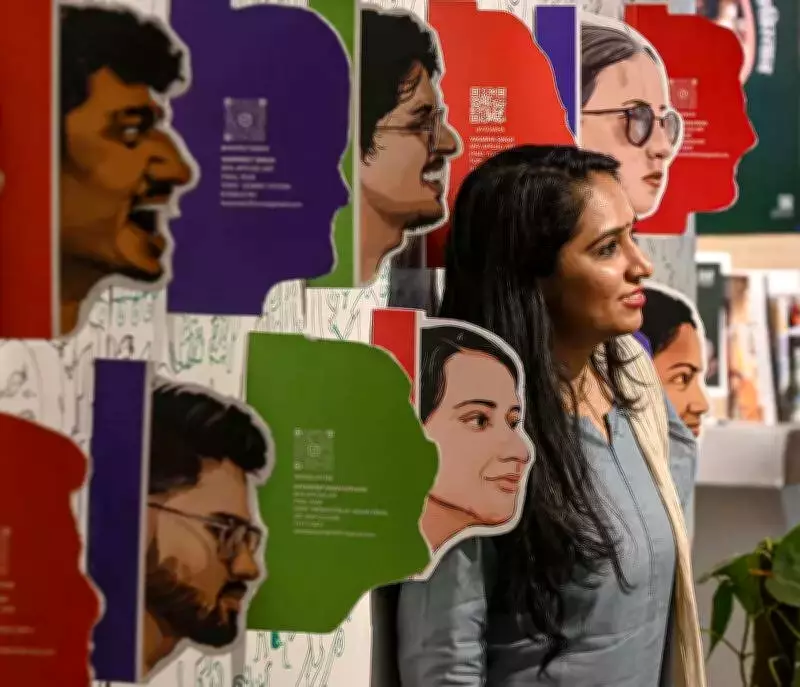
Both installations are part of the College of Art's annual student exhibition, open to visitors until February 28th. The exhibition transforms classrooms and corridors across the campus into galleries showcasing lived realities and personal narratives through works by undergraduate and postgraduate students.
The exhibition operates from 10 AM to 7 PM with free entry for the general public and includes:

- A special student showcase featuring artworks, decorative items made from sustainable materials, and functional design pieces available for purchase
- Live portrait-making stalls where visitors can engage directly with artists
- Classrooms transformed with posters, installations, and experimental displays
- Diverse perspectives on social issues through various artistic mediums
This year's exhibition particularly emphasizes social commentary and personal narratives, with 'Palayan' and 'Veerangana' serving as powerful examples of how student artists are engaging with contemporary issues through their creative practice. The works demonstrate how art can bridge personal experience with broader social realities, creating spaces for reflection on migration, labor, gender roles, and emotional resilience in modern India.