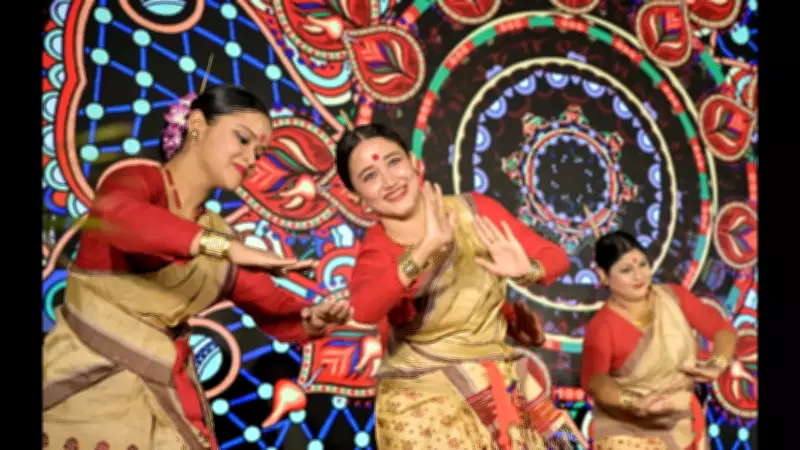
Assamese Community in Pune Unites for Rongali Bihu Celebrations
For Kriti Sharma, a student new to Pune, this year's Bihu was expected to be a quiet affair. Away from home in a new city and college, surrounded by unfamiliar faces with no immediate plans to return to Assam, she had resigned herself to a low-key observance. However, her mood transformed instantly when she discovered a Rongali Bihu gathering organized by ASOMI, an Assamese cultural group in Pune.
"Attending the celebration felt like being at my house in Assam," Sharma expressed, highlighting the emotional impact of the event. The gathering featured vibrant dance performances and other cultural presentations that brought the essence of Assam to life in the city.
Cultural Unity and Community Spirit
The Assamese community in Pune is tightly knit by shared traditions, which were prominently displayed at the recent Bihu celebration. The event included not only cultural performances but also traditional food, fostering a sense of belonging among attendees.

Nimisha Bhagawati, a professor experiencing her first Bihu celebration in Pune this year, emphasized its significance. "It's an important day for us. Even if it's a small gathering, we ensure the spirit of the festival stays alive. It helps the community stay connected," she stated, underscoring the role of such events in maintaining cultural bonds.
Understanding Bihu: A Trio of Celebrations
Bihu celebrations occur three times throughout the year, each with distinct themes. Magh Bihu focuses on food, while Kongali Bihu is more somber, centered on prayers for a bountiful harvest. The spring celebration, known as Rongali Bihu, is particularly joyous.
"The spring celebration is called Rongali Bihu because it's all about spreading happiness, dancing and singing," explained Anamika Buhsan, a chef and community member. This festival also marks the Assamese New Year, taking place in April, with Kongali Bihu in October/November and Magh Bihu in January.
ASOMI's Role in Preserving Culture
The Assamese community in Pune adheres to this calendar but adapts celebrations to their urban setting. Dipankar Rabha, general secretary of ASOMI, detailed their efforts: "In April we celebrate Rongali Bihu, then again in January we have another event, and in between we organise cultural programmes like Sattriya, celebrating the dance forms of Assam."
He added that the group keeps the community spirit vibrant through various cultural events, including a jugalbandi featuring Assamese and Bharatnatyam dancers. These initiatives ensure that traditions are not only preserved but also shared and celebrated collectively.
Rongali Bihu, as a spring festival, embodies renewal and joy, with music, dancing, and feasting at its core. For many Assamese living in Pune, these gatherings serve as a vital link to their heritage, transforming distant celebrations into heartfelt homecomings.