

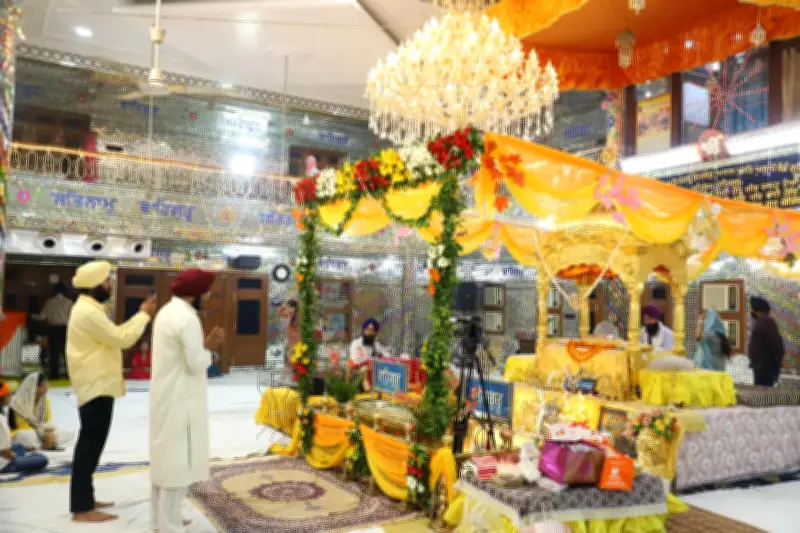
Baisakhi Celebrations in Lucknow: Devotees Throng Gurdwaras for Khalsa Sajna Diwas
On Tuesday, devotees in Lucknow flocked to gurdwaras to celebrate Baisakhi and Khalsa Saajna Diwas, offering prayers and participating in traditional festivities with immense fervour. This significant festival commemorates the establishment of the Sikh Khalsa Panth by Guru Gobind Singh in 1699, while also heralding the Sikh New Year and the vibrant harvest festival of Punjab, where farmers rejoice over the reaping of the rabi crop.
Spiritual Observances at Yahiyaganj Gurdwara
The day at Yahiyaganj gurdwara commenced with solemn recitations from the Guru Granth Sahib, followed by soul-stirring kirtans and hymns that enveloped the premises in a serene and peaceful atmosphere. Many devotees were seen sitting in quiet reflection as ragis melodiously sang verses invoking peace, gratitude, and spiritual devotion.
Head priest Paramjeet Singh elaborated on the importance of Khalsa Sajna Diwas, stating, “The Sikh panth was established with the noble purpose of protecting religion and serving humanity, a principle we uphold today.”

Festive Atmosphere at Naka Gurdwara
At Naka gurdwara, priest Gurpreet Singh shared his insights, saying, “This day serves as a poignant reminder for us to remain thankful and stay grounded in our values.” The celebrations included the serving of lassi as prasad, and a community langar was meticulously organised later in the day to nourish all devotees.
Home Celebrations and Traditional Delicacies
The festive spirit extended beyond the gurdwaras into homes across Lucknow. Charanpal Kaur, a resident of Ashiyana, described her preparations: “I prepared meethe chawal and kada prasad, and together with my children, we decorated our house with lights and flowers to joyfully welcome the new year.”
Similarly, Himanshi Chadda from Naka recounted, “I prepared traditional dishes like makke ki roti, dal makhni, and meethe chawal, and visited a gurdwara to pray for prosperity, joy, good health, and peace for all.”
The celebrations underscored the deep-rooted cultural and religious significance of Baisakhi, blending spiritual devotion with community bonding and traditional culinary practices.






