Bandra's Historic Jewish Cemetery Revived, Reconnecting Mumbai's Community with Heritage
A long-neglected Jewish cemetery nestled within the narrow lanes of Bandra's Kadeshwari Marg is undergoing a remarkable revival, serving as a poignant bridge for Mumbai's shrinking Jewish community to reconnect with a forgotten chapter of its rich past. This small burial ground, spread across a compact plot with approximately 50 graves, had slipped into severe disrepair over decades but is now being meticulously restored through community efforts.
Restoration Efforts Breathe New Life into Sacred Grounds
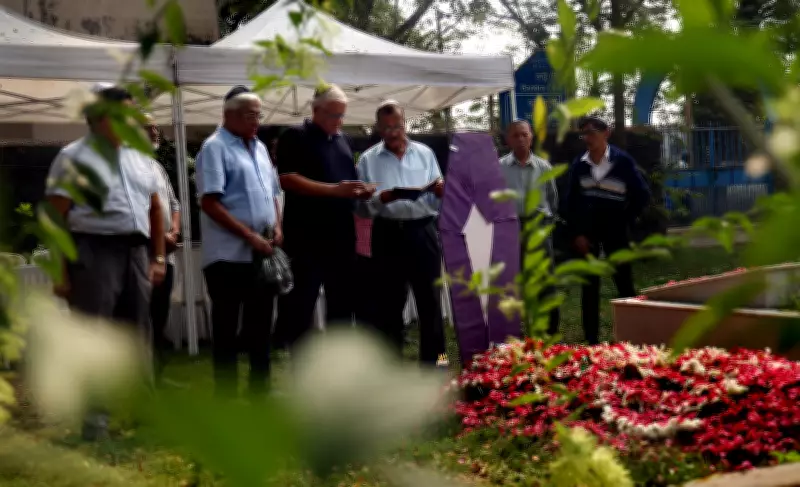
The Bandra Jewish Cemetery recently witnessed a gathering of around 15 people who came together to offer Hashkava prayers, marking the end of the 30-day mourning period for a deceased community member. Another ceremony is scheduled later this month to commemorate a year since another death, when a temporary tombstone will be replaced with a permanent one. Such gatherings hold profound significance for a cemetery that had largely fallen silent, with only four burials occurring between 2000 and 2024 despite the neat rows of graves awaiting use.
The Jewish community in the Mumbai Metropolitan Region comprises approximately 4,000 families, maintaining six cemeteries across the area: Worli, Thane, Panvel, a defunct one in Mazgaon, the Bandra site, and one for Baghdadi Jews in Chinchpokli. Fewer than 50 families are estimated to have direct links to the Bandra cemetery, making its restoration particularly meaningful for those with ancestral ties.

"It was my father's wish to be buried there, as his parents were put to rest there," said Aviva Judah, 56, a Bandra resident whose father became the first person to be buried at the cemetery in five years in February 2025. Gene Samson, whose sister was interred there in January this year, added, "When Joanna's husband died in 2012, she bought a plot beside his grave for herself. Today, we have honoured that wish."
From Neglect to Renewal: A Community's Struggle
By the early 2000s, the cemetery had deteriorated alarmingly, with overgrown weeds, mud, garbage, and rodents making access difficult even during funerals. This neglect mirrored broader challenges faced by Mumbai's dwindling Jewish community, which struggles to maintain ageing religious and cultural spaces in a rapidly redeveloping city.
"When my father-in-law died in 2019, we were faced with the impossible task of burying him here," recalled Jubal Solomon, 64, one of the ten men who formed the "minyan" traditionally necessary for Jewish prayers at the cemetery. "It was monsoon, and the Mount Mary fair was ongoing, so we were frantically looking around for gardeners and cleaners to make the cemetery accessible."
A turning point arrived in late 2022 following the death of the cemetery's former caretaker. This opened the door for brothers Abraham Yehuda and David Ashton to step in and assume responsibility for restoring the site. "There were a lot of complaints about its poor condition," said Yehuda, who had first learned of the cemetery in 2012 and later assisted the caretaker with landscaping. "The graves were buried under rubble and debris, so much so that we removed eight truckloads of it. Rats and even snakes scurried around, with 180 rat holes found. And right in front of the gate, residents of the surrounding area would dump their garbage there, from where it would be picked up by the civic body."
Extensive Cleanup Uncovers Historical Narratives
Beginning in early 2023, Yehuda, with volunteer support, oversaw an extensive cleanup and restoration initiative. Graves were unearthed, washed, and re-lettered; flowering plants were added; creepers lined the walls; pest control measures were implemented; and CCTV cameras were installed. Funded initially by community contributions, Yehuda disclosed that he has spent Rs 11.5 lakh on the restoration so far, with ongoing monthly expenses of about Rs 20,000.

For Yehuda, the effort was driven by reverence for the deceased, but it also unveiled a deeper historical narrative. The cemetery opened in 1942 with support from then Bombay mayor Dr E Moses, founded by Khan Saheb Reuben Samson, Saul Manasseh Haeems, Moses Daniel Abraham, and Ben S Judah for Bandra's Jewish residents. Several founders are themselves buried there, and the cemetery was registered as a trust in 1957.
The gravestones reflect close-knit family ties, with husbands and wives, parents and children resting just plots apart. "In the process of cleaning up the place, we came across two buried graves of newborns from the 1960s," Yehuda noted.
Reconnecting Families with Lost Graves
Perhaps the most poignant outcome of the restoration has been the reconnection of families with graves they had long lost track of. Among them was 80-year-old Tripta Suresh, reunited with her mother's grave after decades. "My mother died in 1968 when I was staying in Bandra for a short duration, and she was buried in the cemetery as a few of her relatives were buried there," said Suresh. "Even way back then, when I was 20, the cemetery was a simple morose place. As I frequented Mumbai rarely, I did not get much of an opportunity to visit my mother's grave. And the last time I did try in the early 2000s, the place was a mess and filled me with dread."
After Yehuda learned of her search through a mutual acquaintance, he helped locate the grave, which had been buried under rubble and weathered by time. "The cemetery has been turned into a lovely place," Suresh remarked after visiting last year.
Yehuda indicated that further work is planned, including constructing a shed for ritual bathing of bodies before funerals and adding basic facilities. This restoration not only preserves physical space but also revitalizes cultural memory for Mumbai's Jewish community, ensuring that this sacred ground remains a testament to resilience and heritage in a changing urban landscape.