Patna's Bangla Mela Unites Bengali Community with Cultural Festivities
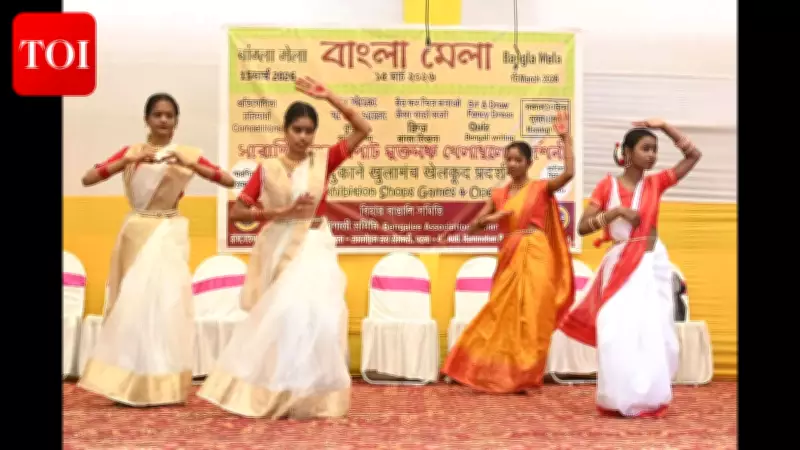
The vibrant sounds of Rabindra Sangeet and the enticing aromas of traditional Bengali dishes filled the air at the annual Bangla Mela, hosted by the Patliputra branch of the Bihar Bengalee Association. Held at the Ram Mohun Roy Seminary in Patna on Sunday, this cultural extravaganza served as a heartfelt celebration of Bengali heritage, drawing participants from across the state.
Honoring Legends and Cultural Traditions
This year's event held special significance as it commemorated the birth centenary of two iconic figures: Salil Choudhury, the legendary music director, composer, lyricist, and writer, and Sukanta Bhattacharya, the renowned Bengali poet and playwright. Their contributions to Bengali arts and literature were highlighted through performances and tributes, adding a layer of historical reverence to the festivities.
Attendees indulged in a feast of classic Bengali cuisine, including staples like dal, bhaat, jhuri alu bhaja, maach-er-jhol, and mishti doi. These dishes were enjoyed alongside live renditions of Rabindra Sangeet and folk songs, creating an immersive cultural experience. Bibhas Dutta, secretary of the Patliputra branch, emphasized, "Bengalis love food, and there is music and festivity all around to bring our community together."

Fostering Unity Among Bengalis in Bihar
The Bangla Mela acted as a crucial gathering point for the Bengali diaspora in Bihar. Bidyut Pal, general secretary of the Bihar Bengalee Association, shared insights into the community's demographics, noting that approximately 13.5 lakh Bengalis reside in the state. This population is divided into 7 lakh generational urban Bengalis and 6.5 lakh resettled refugee Bengalis, collectively making up about 1% of Bihar's total population.
Pal also addressed challenges faced by the community, stating, "Textbooks and study materials are available, but there is a shortage of Bengali teachers." He explained that the association's primary goal is to unite Bengalis and integrate them fully into Bihar's social fabric, akin to Hindi-speaking residents.
However, Dr. Captain Dilip Kumar Sinha raised concerns about ongoing partiality, alleging, "The association was formed so that Bengalis could unite and be as much a part of Bihar as Hindi-speaking people, but partiality towards Bengalis still persists." This highlights the ongoing efforts needed for cultural inclusion and equality.
Engaging Activities and Social Outings
The event featured 25 stalls offering a variety of goods and services, alongside numerous activities designed for all ages. Participants enjoyed:
- Musical chairs and quiz competitions
- Drawing contests and fancy dress events
- Social interactions and networking opportunities
For many local residents, the fair provided a rare and cherished social outing. Chaitali Sengupta Roy, an educator from Nala Road, expressed her delight, saying, "It is a get-together and an opportunity to meet old friends. A day when housewives do not have to cook, so we enjoy it the most." This sentiment underscores the event's role in fostering community bonds and offering a break from daily routines.
Overall, the Bangla Mela in Patna not only celebrated Bengali culture through food, music, and traditions but also reinforced the importance of unity and representation for the Bengali community in Bihar. By honoring historical figures and addressing contemporary issues, the event stands as a testament to the resilience and vibrancy of Bengali heritage in the region.