Bengal Performing Artists Stage Rally Against Unexplained Grant Cuts
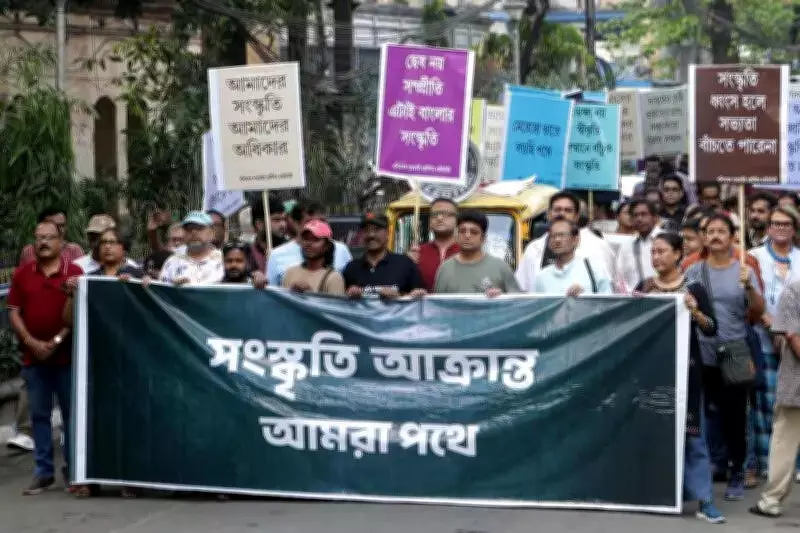
In a significant display of cultural dissent, renowned performing artists from West Bengal, including luminaries such as Soumitra Mitra, Sima Mukhopadhyay, Dulal Lahiri, Arup Ray, and Sanjib Sarkar, organized a rally on Thursday. The protest was directed at the Central government's abrupt suspension and cancellation of a substantial number of Performing Artists Grants, actions taken without providing any justification to the affected artists.
Frustration Mounts as Meeting with Union Minister Yields No Results
The artists' grievances, however, found no resolution during a subsequent meeting with the Union Minister of Culture in Kolkata. What compounded their dismay was the suggestion put forth by BJP Chhattisgarh MLA Bhawna Bohra, who proposed a 15-day 'schooling' program aimed at instigating what she termed the "much-needed change" in Bengal's cultural landscape. This remark was perceived as an overt political intrusion into artistic affairs.
Artists Voice Deep Disappointment and Plan Escalated Protests
Soumitra Mitra, a key organizer of the rally that marched from Tapan Theatre to the Academy of Fine Arts, described the outcome of the ministerial meeting as "deeply disappointing." He revealed, "The ministry initially asked us to appeal, but then proceeded with the drastic decision to cut all grants. We are now compelled to intensify our demonstrations to combat this injustice." Mitra's statement underscores the artists' resolve to challenge the grant cuts through stronger collective action.

Minister's Discussion on Grants and Allegations of Political Agenda
Sima Mukhopadhyay provided further insight into the meeting, noting that the minister addressed issues related to salary grants, as well as applicants who were either in a 'cooled-off' status or had been rejected. The minister advised long-time practitioners to make sacrifices and assured that both cooled-off and newly rejected applicants could reapply, with reasons for rejections to be furnished. Additionally, he cited anomalies involving some Padma Bibhushan and Sangeet Natak awardees, pledging that all future grants would be disbursed directly to recipients' accounts to ensure transparency.
However, Mukhopadhyay alleged a troubling political undertone to the discussions. She claimed the minister urged attendees to assist in bringing about political change in Bengal and referenced MLA Bhawna Bohra's extended stay in the state until the elections. "How can a government dictate how a cultural entity will behave? We were explicitly told that, despite our protests, decisions regarding grants or cooling-off categories would remain unchanged," she asserted, highlighting the artists' perception of governmental overreach.
Broader Implications for Cultural Autonomy in Bengal
This incident raises critical questions about the autonomy of cultural institutions and the potential politicization of arts funding. The artists' rally and the subsequent unsatisfactory meeting underscore a growing rift between the cultural community and governmental authorities, with implications for the preservation of artistic freedom in Bengal. As the artists prepare for more robust demonstrations, the situation remains a focal point for debates on cultural policy and political influence in the arts sector.