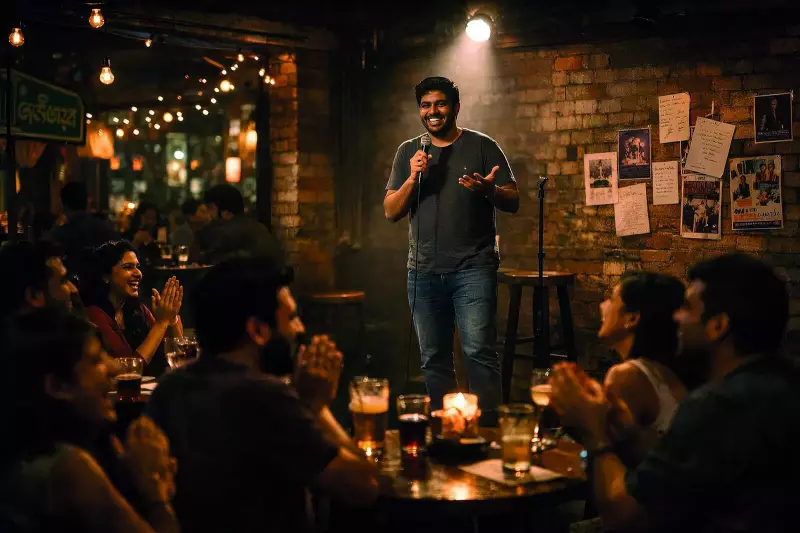
There was an era in Bengaluru when a microphone being switched on in a pub felt more like an unwelcome disturbance than a signal for entertainment. Conversations would halt, and drinks would be paused mid-sip as someone requested attention to tell a few jokes. Fast forward to today, and those same jokes are capable of filling large auditoriums, theatres, and dedicated comedy clubs across the metropolis. As the city's vibrant cultural landscape is celebrated, veteran stand-up comics and artists Ashwin Mathew, Saad Khan, and Kenny Sebastian look back on the remarkable journey of Bengaluru's comedy scene—from a tentative experiment to a full-fledged cultural movement. They explain why the city continues to be the undisputed, beating heart of Indian comedy.
The Pioneering Days: Interrupting Drinks for Laughs
Ashwin Mathew was one of the first to move stand-up comedy out of private gatherings and onto the stages of Bengaluru's pubs in the late 1990s. He recalls a time when the concept was novel. "There was a definite need for stand-up, and people were welcoming, but it wasn't easy," he says. Patrons were often deep in conversation with friends when a comic had to ask for their attention. Out of an audience of fifty, he estimates that forty-five were curious, while the remaining five would shoot him disapproving looks for disrupting their evening. However, the encouragement consistently overpowered the resistance. "Bengaluru has always been welcoming of new talent and new ideas, especially in entertainment," Ashwin notes, crediting this openness for the rapid growth of comedy. It transformed from a sporadic activity into a self-sustaining movement. Now an actor and filmmaker, Ashwin highlights the city's foundational attitude: "I could try stand-up in 1998 because the audience said, this is cool, let's go with the flow. That welcoming nature is still Bengaluru's biggest strength."
Deepening Roots: From Improv Unknowns to Opinionated Voices
Filmmaker and improv artist Saad Khan entered the scene in 2012, when India's comedy ecosystem was still in its formative years. "Back then, improv was almost unheard of. People would call asking if 'improve' was a self-development workshop," he laughs. Despite the unfamiliarity, his debut improv show in Bengaluru was packed—a clear testament to the city's receptiveness. Over the last decade, Saad has observed the scene maturing and diversifying. Comedy, along with music and karaoke, now commands strong artistic spaces. He feels comedy has become more vocal and opinionated, which can sometimes divide audiences, but he sees this as a sign of healthy growth. "The Bengaluru audience understands satire. They're very giving and very receptive," Saad states, recalling performing political satire seven years ago without facing any backlash.

A Metamorphosis: Watching a Forest Turn into a City
For Kenny Sebastian, whose comedic journey is deeply intertwined with Bengaluru, the transformation has been profound. "It's like watching a forest become a city," he describes. When he started, comedy was not even a familiar concept for most audiences. Today, comedians from across India desire to tape their specials in Bengaluru, believing it offers the best and most understanding crowd. Kenny attributes this to the city's unique cultural cocktail: it possesses Delhi's energy, Mumbai's willingness to experiment, and a hint of Chennai's cautious discernment. "Somehow, it all works here," he says. He identifies the young, tech-savvy 18–25 age group, early exposed to global content, as the backbone of this growth. Furthermore, Bengaluru's immigrant culture, fueled by professionals arriving for IT jobs, provided the initial consistent audience that helped build the thriving scene seen today.
Language has never acted as a barrier in this cosmopolitan hub. Ashwin Mathew notes that he freely mixed Malayalam, English, Tamil, and Kannada in his early sets, and the audience enjoyed it all. "Today, a Hindi comedian can do a full Hindi show and still find a solid audience here," he says, reflecting the city's evolving demographics where every linguistic group finds its niche.

The Road Ahead: Niche Formats and Sustained Growth
The consensus among these comics is that comedy in Bengaluru is not a passing trend but a permanent fixture. Saad Khan anticipates the rise of newer and more experimental formats. Ashwin Mathew believes the city will always retain its core of listeners willing to give new performers a chance. Kenny Sebastian points out that the fundamental question has changed: "Earlier, people asked if comedy would last. Now they ask how much it will grow." He predicts a future marked by sharper comedic voices and niche formats like sports comedy, improv theatre, and hyper-specific thematic shows. "There will be something for everyone," he forecasts, indicating an even more exciting and inclusive chapter ahead for Bengaluru's comedy landscape.