Bengaluru's vibrant art scene did not emerge overnight. It grew steadily and organically, nurtured by a network of artist-run studios and private, experimental venues. These spaces fundamentally shaped how art is created, viewed, and debated in the city. Their evolution has been intertwined with Bengaluru's own transformation, including its IT boom, shifting audiences, and the development of new artistic languages.
From Tea and Conversation to Supporting Artists
The foundations were laid in the 1980s with a spirit of open curiosity. Suresh Jayaram, founder-director of 1 Shanthiroad Studio Gallery, recalls spaces like the Kritika Art Gallery near Koshy's, which welcomed anyone interested. "Kaushalya Dayaram would invite people passing by for a cup of tea and show them the art," he says, mentioning exhibitions by legends like M F Husain, Adi Moolam, and Laxma Goud.
This ethos carried into the 1990s. When Premilla Baid founded Gallery Sumukha in 1996, galleries often functioned as extensions of the artist's studio. "It was about supporting artists and hosting exhibitions without worrying about finances," Baid explains. "The focus was purely on the work itself." More than just places to hang paintings, these galleries became classrooms, meeting points, and collaborative hubs for artists, curators, collectors, and the public.

The Enduring Importance of Physical Spaces
Despite the rise of digital platforms, industry insiders strongly believe physical galleries remain irreplaceable. Artist Jaya Javeri states that galleries nurture artists, create context, and build credibility through mentorship and long-term collaboration. Renu George, founder of Gallery Time and Space, emphasizes their role in deepening cultural understanding. "Seeing more art leads to deeper engagement. Conversations with artists explore life culturally, psychologically, and politically," she notes.
Vivek Radhakrishna, founder of KYNKYNY Gallery, acknowledges social media widens access but stresses that intent-driven physical spaces are crucial. "Reputed galleries and curators identify serious talent. Gallery representation remains the strongest industry validation," he asserts. Collector Abhishek Poddar highlights the synergy between institutions, saying partnerships that share resources and programming enable sustained public engagement.
A City's Enthusiasm and a New Generation of Patrons
Today, Bengaluru is culturally vibrant and globally connected. Artist Gurudas Shenoy points to positive signs like more galleries, private initiatives, international exposure, the revival of the Venkatappa Art Gallery, new museums, and global art events. "The city has always supported the arts — that enthusiasm is still intact," he affirms.
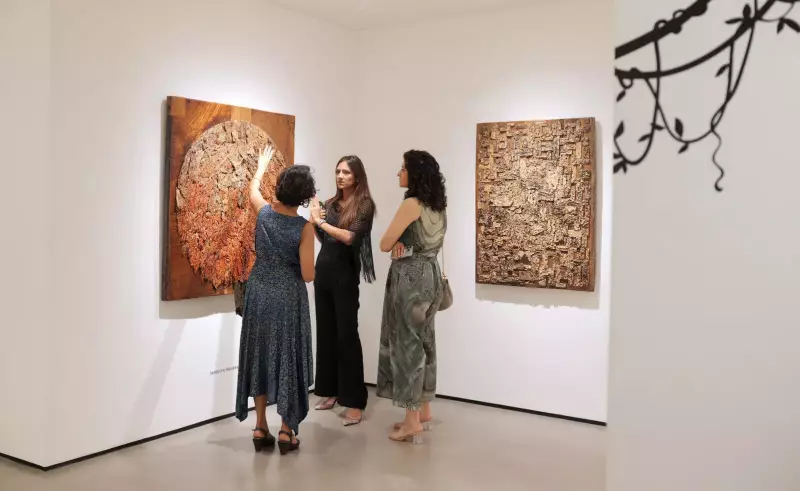
A significant shift is visible in audience engagement. Younger people are now buying art for themselves, not just as investors but as individuals shaping their personal spaces. Renu George finds it encouraging that they are discovering original art is accessible. Premilla Baid observes increased student participation, with walkthroughs and deep Q&A sessions becoming common at exhibitions. Suresh Jayaram attributes this to galleries becoming more welcoming and inclusive spaces.
The city's open-mindedness has encouraged experimentation and helped establish many artists and unusual genres. As Abhishek Poddar summarizes, art is shaped as much by context as by the artworks themselves, with public programming, residencies, and collaborations extending participation.
Iconic Art Spaces in Bengaluru:

- Venkatappa Art Gallery
- National Gallery of Modern Art (Bengaluru)
- Karnataka Chitrakala Parishath
- Rangoli Metro Art Centre
- Gallery Sumukha
- KYNKYNY Art Gallery
- Gallery Time & Space
- Gallery G
- MAP (Museum of Art & Photography)
- 1 Shanthiroad Studio Gallery