Beral Teral Ityadi: A Playful Reimagining of Jamini Roy's Artistic Legacy
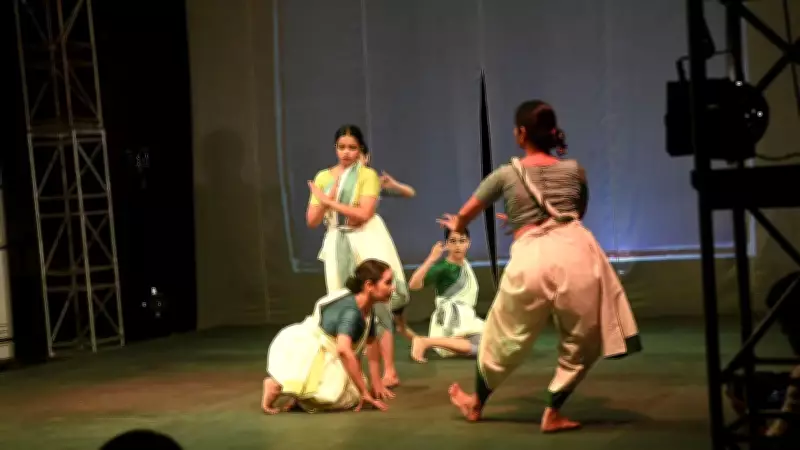
As the city embraces Boishakh with nostalgic fervor, the performance piece Beral Teral Ityadi presents a more playful alternative—an immersive invitation to step into the world of legendary artist Jamini Roy and reimagine it through contemporary eyes. Conceptualized as part of Jamini Babu-r Jonmodin, which celebrates the artist's birth anniversary alongside the Bengali New Year, this groundbreaking work marks the first commission under DAG's innovative Points of Departure programme. Directed by acclaimed dancer-choreographer Vikram Iyengar, the performance is not a mere retelling of Roy's story but a dynamic, thoughtful response to his enduring artistic vision.
From Familiarity to Deep Engagement
"We all grow up seeing Jamini Roy's work," explains Iyengar. "There's a sense of familiarity, but not always a deep understanding. Our goal was to delve into his philosophy, his historical context, and then pose the critical question: how do we relate to his art in today's world?" This approach moves beyond mere homage, aiming to engage with Roy's legacy in a way that is both playful and profound, challenging audiences to see his work anew.
Unpacking Roy's Context and Playful Motifs
The creative process began with a thorough exploration of Roy's artistic journey, particularly his shift from academic styles to a distinctly local and modern visual language shaped by the Swadeshi era. "We didn't want to put him on a pedestal," Iyengar emphasizes. "Instead, we sought to engage with his work playfully, even irreverently, to uncover its essence." This playful spirit is vividly brought to life through recurring motifs in the performance:

- Fish and Birds: Symbolic elements that reflect Roy's connection to nature and folk traditions.
- Cats: A particularly striking motif, described by Iyengar as "not realistic, almost like toys." He adds, "In that abstraction, you see their true essence. We built a whole 'cat world'—mischievous, alive, and full of character."
The performance also turns its attention to Roy's iconic depictions of women, often portrayed as composed and frontal figures. Iyengar reflects, "The moment you turn someone into an icon, you limit what they could be. We asked: what are their hidden lives? Are we looking at them, or are they looking back at us?" This inquiry adds layers of depth, questioning the static nature of iconic imagery and inviting a more dynamic interpretation.
A Performance That Blurs Artistic Boundaries
Difficult to categorize into a single artistic form, Beral Teral Ityadi masterfully blends dance, design, projection, and music into a cohesive whole. "I prefer to call it a performance," says Iyengar. "It's dance-based, but there's so much more happening—a fusion that creates an immersive experience." This sentiment is echoed by participants and observers alike:
- Dancer Sharmila Biswas describes the piece as immersive, noting, "I could see the personalities of cats in the movement. It was a journey; I loved the lighting and the way it evolved throughout."
- Astrid Wege of Goethe-Institut Kolkata praises it as "fresh and perky, while still deeply rooted in tradition."
- Madeleine St John of TRI Art & Culture calls it "a beautiful way to bring visual and performing arts together to honour legacy through contemporary formats."
Revisiting and Reimagining Legacy
In its concluding moments, the performance returns to Roy's signature bold lines and flat colors—clear, direct, and unmistakable. Yet, through innovative movement and imaginative staging, that clarity is gently unsettled, prompting reflection. Beral Teral Ityadi is not merely about revisiting Jamini Roy; it is about seeing him anew, through a lens that is both respectful and revolutionary. By blending tradition with contemporary creativity, this performance piece offers a vibrant, engaging exploration of how artistic legacies can inspire and transform in modern times, making it a must-see for art enthusiasts and cultural explorers.