The Quiet Revolution of Bhajan Concerts in Modern India
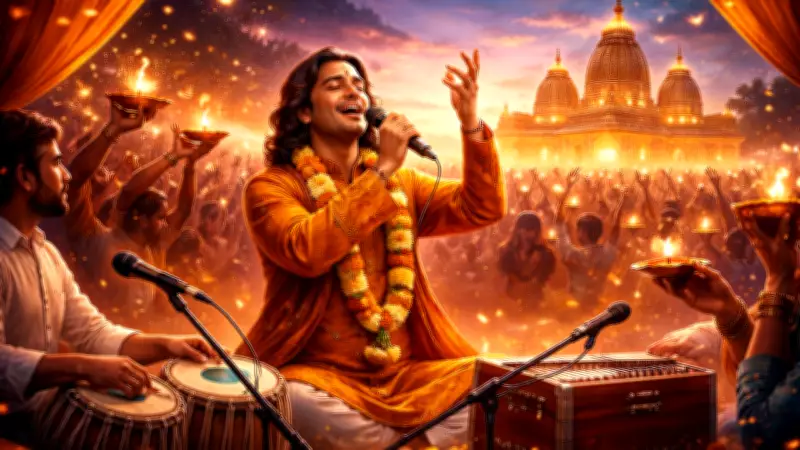
Picture a musical event where there is no jostling crowd, no frantic rush toward the stage, and no overwhelming noise drowning out the melodies. Instead, attendees sit in serene anticipation, moving gently to the rhythm, listening intently as much as they participate in singing. This is not your typical concert—it is the immersive world of bhajan and kirtan gatherings, which are gaining remarkable popularity across India and the global diaspora.
A Shift from Spectacle to Spirituality
In these gatherings, the audience is not driven by flashy performances but by the steady, grounding beats of instruments like the harmonium, tabla, and manjira. The sound from speakers does not overpower; it settles softly, carrying chants and sacred names that resonate on a deeper, almost spiritual level. Attendees often sit with eyes closed, absorbing the music, while others clap softly or rise to their feet, swaying together in an unspoken, collective rhythm.
The artists themselves remain seated, calm and composed, guiding the music rather than performing for applause. The atmosphere is both simple and sacred, with children and grandparents sitting side by side, equally immersed. When the evening concludes, the venue remains orderly, yet something within feels quieter, as if inner clutter has momentarily settled.

Growing Popularity and Digital Influence
Over recent years, devotional and spiritual music events have drawn noticeably larger and younger audiences. Digital streaming platforms report steady growth in devotional music consumption, particularly among listeners under 35. Large-scale kirtan and bhajan events are increasingly hosted in auditoriums and convention centers, moving beyond traditional temples or community spaces.
Organizers and artists attribute this shift to a growing search for experiences that combine music, community, and emotional grounding in fast-paced urban life. This trend has even entered public discourse, with Prime Minister Narendra Modi highlighting it in a recent Mann Ki Baat address. He spoke about the cultural significance of bhajans and collective devotional practices, noting how youth are gathering in cities for events that blend concert-like pomp with spiritual resonance, a phenomenon he termed ‘bhajan-clubbing’.
A Personal Journey into Devotional Music
My introduction to this world came through the music of international spiritual artist Radhika Das. Discovering his work online, I was struck by videos blending traditional Indian kirtan with contemporary arrangements, such as chants of Radhe Radhe Govinda echoing in global venues like London’s Union Chapel. The energy in these videos—where people sang and danced in devotion—sparked a curiosity to experience it firsthand.
When I learned of Das’s India tour, I quickly booked tickets, persuading a friend to join out of curiosity. On the evening of the concert at Delhi’s YashoBhoomi Convention Centre, the atmosphere was anticipatory rather than impatient. Volunteers greeted attendees with tilaks, and the auditorium filled with a warm, welcoming energy.
An Immersive Concert Experience
Das began not with high energy but with stillness, asking the audience to close their eyes and take deep breaths, preparing everyone to be fully present. The chants of Namah Shivaya and Sita Ram gradually transformed the hall, moving people from silence to active participation. Strangers smiled and swayed together, united by rhythm.
Between performances, Das shared reflections on chanting and devotion, often with humor. He narrated a story about a devotee named Patel, who repeatedly postpones spiritual life for worldly duties, only to be reborn as a household dog—still attached to responsibilities. The audience laughed, but the tale prompted quiet self-awareness, highlighting a common human tendency to delay inner reflection.
The Emotional Peak and Lasting Impact
The final performance, Bhajman Radhe Radhe Govinda, became the emotional peak. Das spoke emotionally about Vrindavan and India as his spiritual home, and the audience responded with raised hands, closed eyes, and collective chants. For a moment, the boundary between performer and audience dissolved.

Nearly two hours passed unnoticed, with concerns about late-night travel fading. Afterward, my friend simply said, “I still have goosebumps,” capturing the essence of the evening. For me, it reshaped what a concert could mean—less about entertainment or spectacle, and more about participation and community.
Roots in Tradition and Modern Adaptations
Bhajan concerts may seem modern, but their roots run deep in India’s cultural traditions. Practices like naam sankirtan, popularized by saints such as Chaitanya Mahaprabhu, have long united communities through collective singing. Whether in Maharashtra’s Warkari tradition, local jagrans, or household kirtans, music has served as shared spiritual expression.
This idea resonates in classical literature too. In the Ramcharitmanas, Goswami Tulsidas writes that in an age of distraction, remembrance through divine names offers inner steadiness. Thus, contemporary bhajan concerts are less an innovation and more a continuation—a familiar tradition finding new form for a new generation.
The Future of Devotional Music
What is changing today is the format. Younger audiences are rediscovering these traditions through contemporary presentations, larger venues, and global artists who bridge devotional music with modern sensibilities. As I left the concert, chants of Radhe Radhe Govinda lingered in my mind, suggesting that while the event had ended, a quieter, personal journey had just begun.
In summary, bhajan and kirtan concerts represent a cultural shift toward experiences that offer music, community, and emotional grounding. As Prime Minister Modi noted, this ‘bhajan-clubbing’ trend is capturing the hearts of Gen Z, proving that spiritual music remains a vital, evolving part of India’s cultural landscape.