For a refreshing change of pace, I ventured to the Socorro plateau in Goa, drawn by the promise of spotting raptors soaring on thermal currents. It was a clear, golden afternoon, with pristine blue skies stretching endlessly above. The ochre-orange gravel underfoot deepened in hue as the sun began its descent, while the laterite rock faces mirrored the charcoal patches where grass had been burned away. Settling into my camp chair, the first thing that enveloped me was the profound silence of this vast plain, interrupted only by the faint, melodic tinkling of red-whiskered bulbuls hidden in the scraggly trees behind me.
The Silent Landscape and Its Feathered Inhabitants
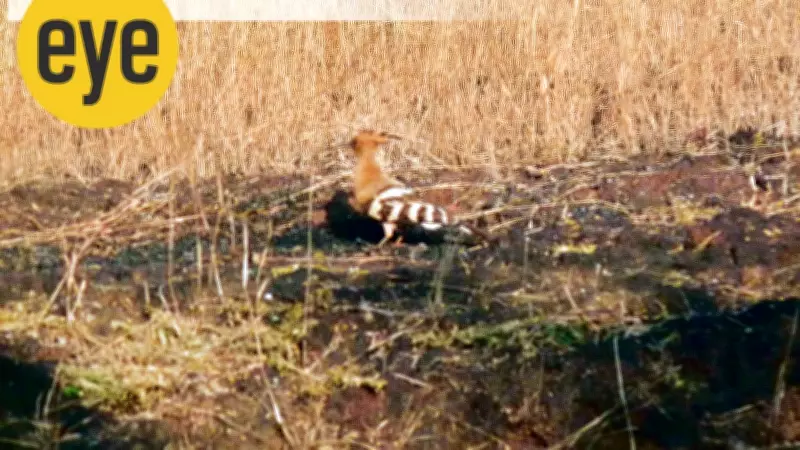
With binoculars in hand, I scanned the expansive blue skies and arid terrain. Initially, the vista appeared empty—not a single bird in sight. Yet, patience proved to be a virtue. As I swept my gaze across the landscape, the first avian residents emerged: a pair of dusty-looking hoopoes. Their salmon-pink plumage, which seemed as though it could benefit from a gentle wipe with a damp cloth, and zebra-like stripes allowed them to blend seamlessly into their surroundings, vanishing when they remained still.
These hoopoes repeatedly disappeared behind a low, round structure in the middle distance, sparking curiosity. Were they scouting for a nesting site or perhaps already gathering materials, even though it was slightly early in the season? Known for their less-than-tidy homemaking habits, hoopoes' nests are infamous for their powerful stench and filth—a natural deterrent that keeps predators at bay from their fledglings. With their distinctive sickle-shaped heads and pickaxe bills, they waddled about, probing the ground before taking flight in their characteristic butterfly-like manner.

A Tapestry of Birds in the Arid Expanse
Notably, the shabby and the shiny coexisted cheek by jowl here. Perched on various bare branches were black drongos, their glossy boot-polish black feathers gleaming in the sunlight. They looked absolutely spiffing, sharp as throwing knives as they launched into topsy-turvy flights to chase after insects. From out of nowhere, an Indian robin made a brief appearance—a silken dark blue-black bird with an exclamation mark tail held upright and a russet rump—before vanishing all too soon. Later, a lone laughing dove repeated this fleeting performance.
A sudden flash of swimming-pool blue caught my eye, quickly shifting to cinnamon: it was the Indian roller. This bristly-looking fellow sported a wicked expression and gorgeous Oxford and Cambridge blues on its wings, appearing as if it were grinning over some schoolboy prank it had just pulled off. Despite these sightings, birds were few and far between this afternoon, unlike the crowded skies of north India, which are sadly now befouled with toxic gas. Here, the air was clear, the breeze fresh and cool, and the silence enveloping.
Raptors in the Sky and Moments of Meditation
With a smile, I realized that one could 'meditate' in this serene environment without any formal technique. Another sweep of the skies revealed nothing at first, but then, almost magically, a dark raptor appeared high above, circling gracefully. Too distant to identify precisely, its wedge-shaped tail suggested it was an eagle of some kind. Suddenly, it folded its wings and dove steeply, gaining speed as it swooped down on something hapless on the ground, though I didn't see it rise again with any prey.
As if on cue, a couple of Brahminy kites arrived, circling above to investigate. As always, I admired and envied the languid grace with which these birds rode the winds, with planet earth spread out below them. Then, another raptor flew across the horizon, its wingbeats heavier and more deliberate than the light, buoyant ones of the Montagu's harrier I had seen previously. Perhaps a long-legged buzzard, it kept its distance, maintaining its mysterious identity.
Raptors are notoriously hard to identify, as many undergo various plumage changes as they mature. A two-year-old bird might wear a completely different outfit than it did a year earlier, and males and females often sport distinct attire, with females typically being larger.

Human Intrusions and Reflections
I seemed to be the only human in this vast blue and russet landscape until voices broke the silence: a small group of trekkers descended the path. They weren't birders—lacking binoculars—and greeted me as they passed by. Soon after, the sacred quiet was further disrupted by the crunch of tires on gravel and the grunt of engines: dog walkers had begun to arrive. One gentleman in a bright red Jeep had a happy black dog in the rear, while another group came in a BMW SUV.
As the sun softened, a herd of goats in brown, black, and white tottered past, snatching at leaves, followed by a semi-hobbled cow and their owner. Birds here had indeed been few and far between, but this scarcity offered a valuable lesson: the fewer the species you encounter, the better you can observe and understand them. Much like a teacher would say, a smaller class allows for deeper knowledge of each student and their potential mischief.
This afternoon, I learned to 'meditate' without needing to sit in lotus position or assume any formal posture. I was simply someone sitting in a chair, gazing into the silent, wide blue yonder—yet another hidden gem that birding has to offer.