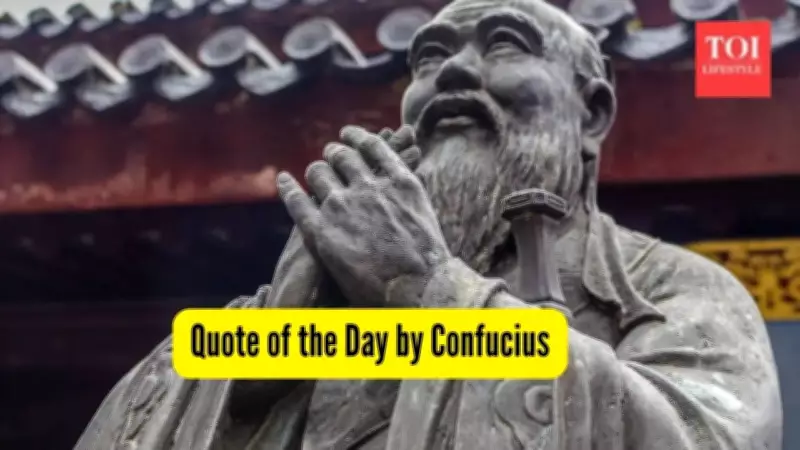
The Life and Times of Confucius: From Humble Beginnings to Lasting Legacy
Confucius, known as Kong Fuzi in Chinese, stands as one of history's most influential thinkers and moral philosophers. Born in 551 BCE in the state of Lu, located in what is now modern China, he lived during the turbulent Spring and Autumn Period. This era of political instability and social disorder profoundly shaped his philosophical outlook, driving him to develop systems for moral governance and harmonious human relationships.
Early Life and Educational Philosophy
Coming from modest origins, Confucius faced significant childhood challenges when his father died young, leaving his mother to raise him in relative poverty. Despite these hardships, he developed an early passion for learning that would define his life's work. Confucius immersed himself in the study of history, poetry, music, and rituals, believing that education represented the fundamental path to both personal improvement and societal advancement.
What made Confucius revolutionary was his conviction that education should be accessible to all people, not merely the wealthy or aristocratic classes. This democratic approach to learning contrasted sharply with prevailing attitudes of his time and established education as a cornerstone of his philosophical system.

Political Aspirations and Teaching Career
As an adult, Confucius held minor governmental positions but grew increasingly focused on transforming societal morality. He developed the radical idea that effective governance emerged not from harsh laws or severe punishments, but from virtuous leaders who modeled ethical behavior for their subjects. During his lifetime, however, few rulers embraced his vision.
Undeterred by repeated rejections, Confucius spent years traveling between states, seeking a ruler who would implement his philosophical principles. Throughout this period, he continued teaching disciples who would later compile his teachings into the seminal text known as the Analects.
Core Philosophical Concepts and Teachings
Fundamental Principles: Ren and Li
Confucian philosophy centers on several key concepts that continue to resonate today. Ren, often translated as "benevolence" or "humaneness," emphasizes kindness, empathy, and compassion toward others. This principle represents the foundation of ethical human relationships in Confucian thought.
Equally important is the concept of Li, which encompasses rituals, proper manners, and social norms that maintain societal harmony. Confucius believed that when people observed appropriate rituals and honored traditions, social order would naturally emerge without requiring coercive measures.
The Centrality of Relationships
Family relationships occupy a privileged position in Confucian philosophy. The philosopher emphasized filial piety—respect for parents and elders—as essential for creating stable societies. He argued that harmonious families naturally produced orderly governments, establishing a direct connection between domestic ethics and political stability.
Confucius further elaborated his relational framework through the Five Fundamental Relationships:
- Ruler and subject
- Father and son
- Husband and wife
- Elder brother and younger brother
- Friend and friend
Each relationship involves mutual responsibilities and respect, creating an interconnected web of social obligations that maintains societal balance.
Self-Cultivation and Moral Development
Personal improvement represents another crucial dimension of Confucian thought. The philosopher advocated continuous moral refinement through self-reflection and disciplined practice. His concept of the Junzi, or "noble person," describes individuals who cultivate wisdom, integrity, and humility through dedicated effort.
Remarkably, Confucius maintained that anyone could achieve Junzi status through perseverance and ethical development, challenging the aristocratic notion that nobility derived solely from birth. This egalitarian aspect of his philosophy empowered ordinary people to pursue moral excellence.

Historical Impact and Contemporary Relevance
Enduring Influence Across Centuries
Although Confucius achieved limited political success during his lifetime, his philosophical system gained tremendous influence following his death. During the Han Dynasty, Confucianism became China's official state philosophy, shaping educational systems, governmental structures, and social values for over two millennia.
Confucian texts formed the basis of civil service examinations that educated generations of scholars and administrators. Beyond China, his teachings profoundly influenced neighboring cultures including Korea, Japan, and Vietnam, transforming family structures, ethical frameworks, and social expectations throughout East Asia.
Modern Applications and Cultural Legacy
Confucian values continue to permeate contemporary Asian societies, where respect for elders, educational emphasis, and social harmony remain culturally significant. Unlike traditional religious doctrines, Confucianism offers practical guidance for ethical living, making it particularly relevant to modern discussions about leadership, personal development, and social ethics.
Today, scholars and practitioners regularly revisit Confucian principles when addressing contemporary challenges in governance, education, and interpersonal relationships. The philosopher's emphasis on moral integrity, lifelong learning, and reciprocal responsibilities provides timeless wisdom for navigating complex modern societies.
The Philosopher's Lasting Significance
Confucius represents far more than a historical philosopher—he embodies the roles of teacher, moral reformer, and cultural architect whose ideas have endured for centuries. His life demonstrates remarkable perseverance in the face of repeated rejection, while his teachings continue to inspire individuals worldwide to pursue virtue, maintain respectful relationships, and commit to continuous self-improvement.
Through concepts like Ren, Li, filial piety, and the Junzi ideal, Confucius created a comprehensive philosophical system that addresses fundamental human concerns about ethics, community, and personal fulfillment. His legacy persists not merely in academic discussions but in the daily practices and values of millions who continue to find meaning and guidance in his ancient yet perpetually relevant teachings.