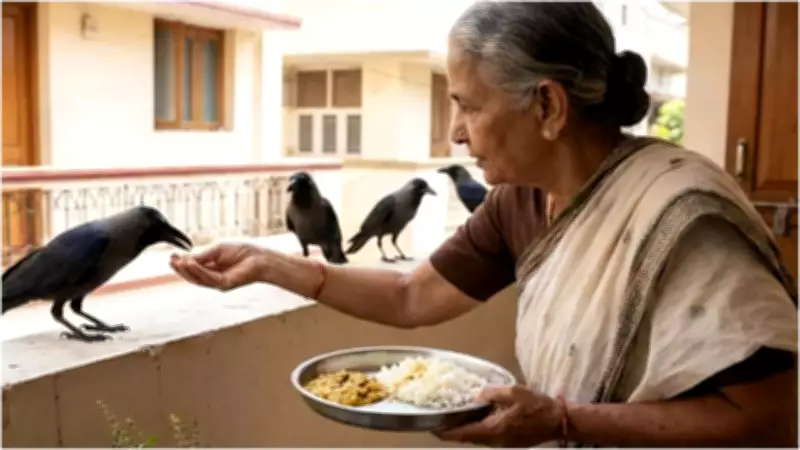
In countless Indian households, the act of feeding crows is deeply embedded in religious traditions, symbolic meanings, and cherished memories. Traditionally, this ritual is most commonly observed during Pitru Paksha or on the tithi, which marks the death anniversary of a departed loved one. However, a growing number of individuals are now embracing the practice of feeding crows every single day. This quiet, almost meditative activity raises an intriguing question: what are the astrological and spiritual implications of feeding crows on a daily basis?
Ancestors' Messengers in Hindu Belief
According to Hindu mythology and folklore, crows are considered symbolic representations of Pitru devatas, the souls of one's ancestors. Religious texts and age-old tales suggest that when a crow consumes food offered with genuine love and devotion, it signifies that the ancestors are content and their blessings have been bestowed upon the family. This belief makes the sight of a crow partaking in the offering during shraddha rituals particularly auspicious and fortunate.
Spiritual scholars emphasize that performing this ritual daily transcends mere remembrance. They argue that it is not confined to specific lunar days but evolves into a profound gesture of reverence and gratitude towards one's forebears. This daily practice fosters a continuous connection with the ancestral lineage, enriching the spiritual journey of the individual.

Astrological Significance of Crows
In Vedic astrology, the crow is closely associated with Shani, or Saturn, a planet that governs karma, discipline, delays, and life lessons. Astrologers often recommend that individuals experiencing challenging periods such as Shani dasha, Sade Sati, or Dhaiya regularly feed crows to mitigate the adverse effects of a malefic Saturn. This practice is viewed as a fundamental karmic remedy that promotes humility, perseverance, and selfless service without expectation of reward.
Experts clarify that daily feeding is not merely about appeasing a planetary influence; rather, it is about cultivating consistency in compassion. Saturn is believed to reward such steadfast dedication over time, transforming the ritual into a tool for personal growth and spiritual alignment.
A Habit of Kindness and Seva
From a spiritual perspective, many who feed crows daily regard it as an act of seva, or selfless service. In urban environments, crows are often overlooked or even viewed as harbingers of bad luck, surviving on the fringes of society. Offering them food with care and intention is thought to reduce one's karmic debts and nurture compassion for all living beings.
Spiritual teachers highlight that the intention behind the offering holds greater importance than the ritual itself. When food is shared mechanically, it may lack deeper meaning. However, when offered with sincerity and respect, it acquires significant spiritual value, enhancing the practitioner's inner peace and connection to the divine.
Caution Against Blind Ritualism
While advocating for daily feeding, experts also caution against imbalance. They advise that the practice should stem from genuine kindness rather than fear of ancestral displeasure or planetary punishment. Excessive ritualism without understanding can lead to anxiety instead of tranquility. Additionally, maintaining environmental balance is crucial—this includes practicing good hygiene, offering appropriate foods like cooked rice or grains, and avoiding overfeeding to prevent ecological disruption.
Beyond Obligation: A Personal Spiritual Practice
Although tradition prescribes crow feeding during specific periods like Pitru Paksha, adopting it as a daily ritual transforms it into a personal spiritual discipline. It shifts from being a duty-bound obligation to an expression of remembrance, gratitude, and harmonious coexistence.
In today's fast-paced urban life, where connections to nature are often weakened, this simple daily act—performed quietly on a balcony, terrace, or windowsill—serves as a powerful bridge. It links the visible and invisible realms, the living and the deceased, and the material and spiritual dimensions, offering a moment of reflection and continuity in an ever-changing world.