Delhi's Jhandewalan Hanuman Mandir: A Towering Testament to Devotion
Delhi, a city steeped in centuries of heritage and culture, serves as a living testament to unwavering faith and spiritual devotion. Among its many sacred sites, the Hanuman Mandir at Jhandewalan stands out as a monumental beacon of bhakti, drawing thousands of devotees daily with its awe-inspiring presence and rich history.
The Colossal Statue of Faith
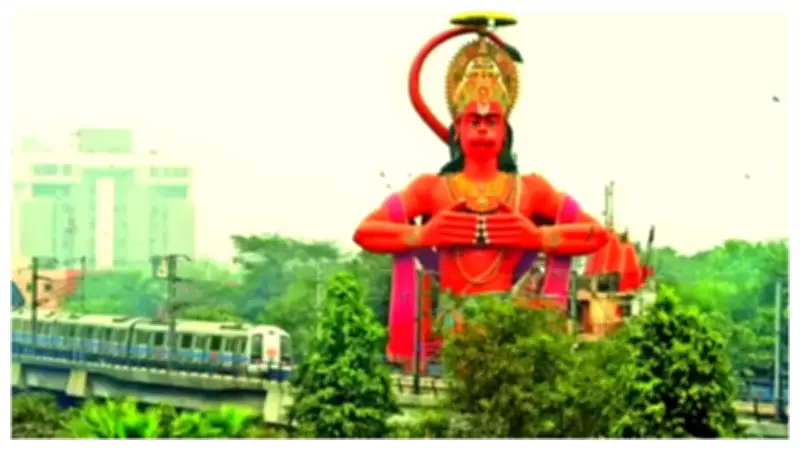
Nestled in the bustling heart of Karol Bagh, the Hanuman Mandir at Jhandewalan is dominated by a majestic 108-foot statue of Lord Hanuman, making it one of Delhi's tallest and most visited temples. This colossal figure, visible from afar, is not merely a religious icon but a masterpiece of divine artistry and architectural precision. Beyond the daily chants, hymns, and throngs of worshippers, the statue embodies a profound manifestation of spirituality, seamlessly blending devotion with structural grandeur.
The Divine Dream Behind Its Creation
According to local legends, the temple's origins trace back to a vivid dream experienced by the late saint Nag Baba Sevagiri Maharaj. During his meditation at the site, Lord Hanuman appeared, urging the construction of a massive murti to protect devotees. Inspired by this divine vision, construction commenced in 1994, driven by pure bhakti and unwavering dedication. Over 13 grueling years, the temple took shape, culminating in its grand unveiling in 2007. Disciples of Baba affirm that the temple was built precisely where a small, ancient Hanuman idol once stood beside Shiva's dhuni, transforming a spiritual dream into Delhi's tallest Hanuman mandir.

The Unique Demon-Maw Entrance
Unlike conventional temple entrances, the Jhandewalan Hanuman Mandir features a strikingly unique gateway designed to resemble the gaping jaws of a slain demon or Rakshasa. With teeth bared and agony frozen in stone, the entrance appears as if Lord Hanuman himself tore it open mid-roar, symbolizing his triumph over evil. This dramatic portal, adorned with bells that dangle like trophies, nods to Hanuman's epic demon-slaying feats. Devotees often express a sense of protection when crossing this threshold, viewing it as a subtle reminder of Bajrang Bali's victory over malevolent forces lurking in plain sight.
The Chest That Reveals Ram-Sita Darshan
The temple beautifully depicts the eternal love and devotion of Lord Hanuman towards Lord Rama and Goddess Sita. During the evening aarti, strategic lighting highlights a remarkable feature: Lord Hanuman's arms and chest appear to crack open, revealing enshrined idols of Ram and Sita that glow radiantly under the lights. This artistic portrayal captivates worshippers, reinforcing themes of loyalty and divine connection central to Hindu mythology.
The Eternal Flame from Jwalaji
On March 30, 2006, temple authorities procured a holy flame from the revered Jwalaji temple in Himachal Pradesh, igniting an akhand jyoti that has flickered continuously ever since. Tucked within a side shrine, this eternal flame defies natural elements like winds and monsoons, drawing childless couples and ailing individuals who seek its unbroken warmth and blessings. Priests attribute its perpetual glow to Hanuman's breath, believed to ward off troubles for all who pray before it.
Architectural and Spiritual Highlights
The temple spans three floors, crowned by a Panchmukhi Hanuman idol with eyes gazing in four directions and towards the sky. Below, a dedicated Shani shrine attracts devotees on Saturdays, where they light oil lamps and chant hymns for peace and prosperity. Intricate carvings throughout the temple depict scenes from the Ramayana battles and Samudra Manthan, with live recitals echoing to foster tranquility and spiritual reflection.
A Metro Commuter's Divine Glimpse
For daily commuters, the Hanuman Mandir serves as a divine landmark visible from the Jhandewalan and Karol Bagh metro stations. This sight transforms routine rush-hour rides into moments of spiritual pilgrimage, offering a serene glimpse of faith amidst urban chaos. The temple's towering presence not only enriches Delhi's cultural landscape but also inspires reverence in the hearts of all who behold it.