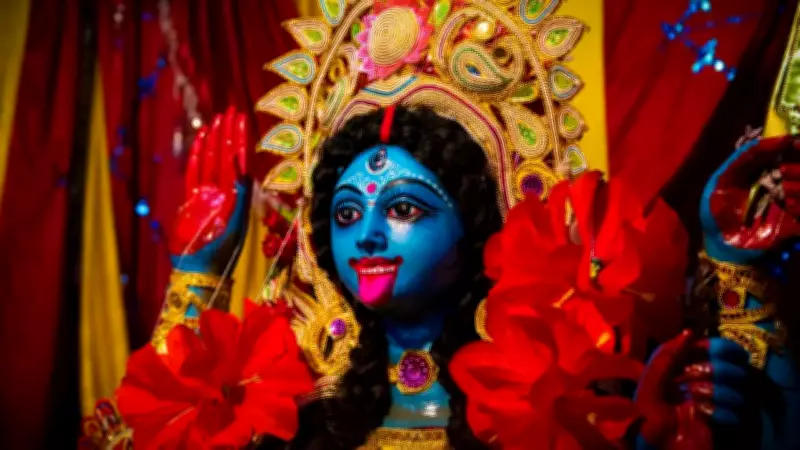
The Land of Divine Shakti: Bengal's Spiritual Heartbeat
In Bengal, the air itself seems to vibrate with a sacred energy, where every flower's bloom, every river's flow, and every whispered chant feels like a direct blessing from the goddess Shakti. For the people of this region, Kali is far more than a fierce deity of destruction; she is revered as 'Maa,' the universal protector who dwells in this heavenly realm and walks alongside her devotees as a nurturing mother. This deep, daily worship draws millions to the powerful Shakti shrines scattered across the landscape, each temple echoing with the might and glory of Maa Kali and the unwavering faith of her children.
Dakshineshwar: A Temple Born from Defiance and Devotion
Constructed in 1855 by Rani Rashmoni, the Dakshineshwar Kali Temple is famously linked to the mystic Sri Ramakrishna Paramahansa. However, its untold origin story reveals a profound struggle. Rani Rashmoni, a widow from a lower caste, faced severe opposition from orthodox priests who refused to serve in a temple she built. In a clever and miraculous move, she circumvented this by gifting the temple to her Guru, making it technically 'Brahmin-owned' on paper while she remained its spiritual core. It was within these walls that Ramakrishna passionately called out for the Mother to reveal herself, often seen feeding the idol his own meals—a seeming madness that ultimately demonstrated the living presence within the stone.
Kalighat: The Primal Power of the Shakti Peetha
Regarded as the most potent of the 51 Shakti Peethas, Kalighat marks the spot where the toes of Sati's right foot are believed to have fallen. Unlike typical full-bodied idols, the Kali image here is strikingly unique: a black stone block adorned with three large orange eyes and a lengthy gold tongue. Hidden lore suggests the original goddess's toe rests inside a secret silver casket within the pedestal, visible only to head priests. Historically, this site was a dense jungle refuge for Thuggee cults and tantric practitioners before evolving into Kolkata's urban center, yet it retains an ancient, untamed energy that feels raw and powerfully primal.

Tarapith: Gateway to the Great Void and Maternal Grace
Located in Birbhum, Tarapith is not merely a temple but a portal to the 'Great Void.' The idol of Ma Tara here is distinctive, depicted nursing an infant Shiva. The untold narrative involves the sage Vashistha, who reportedly journeyed to Tibet to master the 'Cinachara' or Chinese method of Tantra to appease the Mother. He learned that only at this specific Bengal location would she manifest in her maternal form to alleviate the world's poisons. Today, the temple remains inseparable from the adjacent burning ghat, where the revered saint Bama Khepa once lived, illustrating that the Mother is found not in ritual purity but in the transformative fires of the cremation ground.
Kankalitala: The Formless Essence of the Goddess
Often overlooked beside the 'Big Three,' Kankalitala near Bolpur stands as the fourth essential pillar of Kali worship in Bengal. This site commemorates where Sati's waist, or 'Kankal,' fell. The untold beauty here lies in the absence of a traditional idol; instead, the Goddess is represented by a small, sacred water-filled pit that never dries up. Pilgrims worship the sky's reflection in this water, embodying the 'Nirguna' or formless aspect of the Mother. Local legends speak of a stone shaped like a human bone deep within the water, believed to create a direct energetic connection to the Earth's core, making Kankalitala one of Bengal's most serene yet spiritually intense locations.