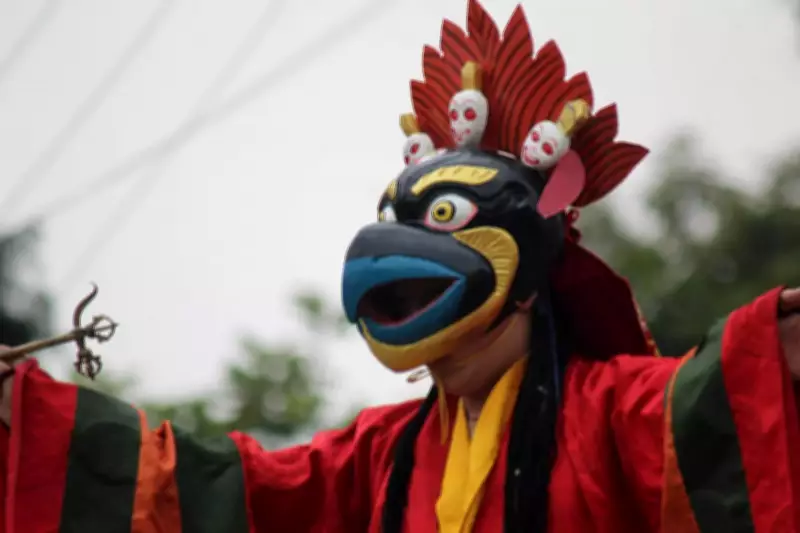
New Documentary Illuminates India's Living Tradition of Ritual Masks
A groundbreaking documentary is casting a powerful spotlight on one of India's most visually captivating yet often overlooked cultural practices: the ancient tradition of ritual masks and the dedicated communities that continue to create and perform with them. Masklore of India, directed by filmmaker Indranil Sarkar, embarks on an extensive journey across diverse regions to document how these masks operate not as mere static craft objects but as vibrant, living ritual instruments deeply embedded in faith, storytelling, and collective community identity.
Regional Diversity of Mask Traditions Across India
Across the eastern regions of India, particularly in rural belts of West Bengal and Odisha, masks continue to animate festival performances that are firmly rooted in rich mythology and deeply held local belief systems. In the lush, riverine cultural landscapes of Assam, unique performance traditions seamlessly blend devotional practice with theatrical expression, creating immersive spiritual experiences.
The documentary further explores how in the majestic Himalayan and northeastern regions, including Nagaland, Arunachal Pradesh, Sikkim, and Uttarakhand, masked rituals remain intricately tied to monastic ceremonies and indigenous cosmologies that have been preserved for generations. Moving further south, the film documents how temple-based traditions in Kerala continue to utilize highly expressive masks in ritual performances connected to local deity worship, maintaining centuries-old practices.

Masks as Active Cultural Vessels, Not Decorative Artefacts
The film powerfully positions these masks not as decorative artefacts for display but as active cultural vessels that breathe life into community traditions. For much of the year, these masks remain carefully stored in homes, shrines, or specialized workshops, awaiting their moment of transformation. During festival seasons, however, they dramatically return to public life, magically transforming performers into gods, demons, and mythic figures from local lore.
In these sacred moments, ordinary village squares become extraordinary ritual stages where music, incense, and ancient storytelling merge with profound devotion. The documentary captures how these performances create communal spaces where mythology is not simply remembered but vividly performed, keeping cultural narratives alive through collective participation.
The Skilled Labour and Hereditary Transmission Behind Each Mask
Through intimate interviews with master artisans and dedicated performers, the documentary foregrounds the meticulous labour behind each individual mask. The film details the entire creative process, from shaping clay or carefully carving wood to painting symbolic features that reflect specific local myths, aesthetics, and spiritual meanings.
Many of these sophisticated craft traditions continue primarily through hereditary transmission, with specialized skills and knowledge being passed down across generations within families and communities. This intergenerational transfer represents a crucial lifeline for preserving these intricate art forms and their cultural significance.
Preservation Challenges Facing India's Mask Traditions
However, the documentary's larger concern lies in the urgent need for cultural preservation. Multiple factors including rural-to-urban migration, changing patronage systems, and the growing commodification of folk art have placed several mask-making traditions at significant risk. Without sustained cultural support or younger practitioners entering these specialized fields, some performance forms face gradual decline and potential disappearance.
By meticulously documenting both the exquisite craftsmanship and the vital ritual contexts in which masks are used, the documentary frames them as essential components of India's fragile intangible heritage. These are practices that survive not in sterile archives but through active, collective participation and community engagement.

A Timely Question About Cultural Loss in Modern India
At a time when rapid urbanization and pervasive digital culture are dramatically reshaping public life across India, the film raises a central, urgent question: what is fundamentally lost when these performative traditions disappear, and with them, the unique communities that have sustained them for centuries?
Rather than presenting masks as mere relics of a disappearing past, the documentary powerfully argues that they remain living expressions of faith, storytelling, and identity. They serve as vital reminders that in many parts of India, mythology is not simply remembered through texts, but actively performed, experienced, and kept alive through these remarkable cultural practices.