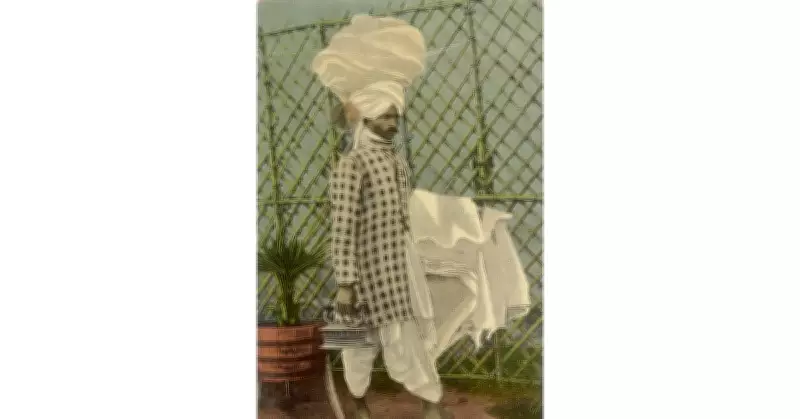
DAG Exhibition Confronts Photography's Role in Shaping Indian Social Identity
A powerful new exhibition at DAG, titled 'Typecasting: Photographing the Peoples of India 1855–1920,' is generating significant discussion in art and cultural circles. Spanning an impressive timeline of nearly sixty-five years, this comprehensive showcase brings together approximately two hundred rare photographs alongside related archival material. The exhibition, which runs from January 30 through February 15, tackles a question that resonates with remarkable contemporary relevance.
The Central Question of Visual Representation
The core inquiry of the exhibition is both historical and urgently modern: How did the medium of photography actively participate in manufacturing the concept of social and racial "types" within the Indian subcontinent? Furthermore, the exhibition provocatively asks why these constructed visual categories continue to persist in our collective consciousness, often in subtle and insidious ways that influence contemporary perceptions.
The period from 1855 to 1920 represents a crucial era in the history of Indian photography, coinciding with colonial rule and the development of anthropological studies. During this time, photography was frequently employed not merely as a tool for documentation but as an instrument for categorization. The exhibition meticulously examines this process, revealing how images were used to create and reinforce stereotypes about various communities, castes, and ethnic groups across India.

A Rich Collection of Historical Imagery
Visitors to the DAG gallery are presented with a carefully curated selection of nearly two hundred photographs that have rarely been displayed publicly. These images, sourced from various archives and private collections, offer a visual narrative of how Indian society was perceived and presented through the colonial lens. The accompanying material provides essential context, helping viewers understand the historical circumstances and ideological frameworks that shaped these photographic practices.
The exhibition does not merely present these historical photographs as neutral artifacts, but rather encourages critical engagement with their legacy. By bringing together such an extensive collection, 'Typecasting' allows for comparative analysis and reveals patterns in how different communities were systematically represented according to predetermined categories.
Contemporary Relevance and Critical Examination
What makes this exhibition particularly compelling is its direct connection to present-day discussions about representation, identity, and visual culture. The curatorial approach explicitly links historical photographic practices to contemporary issues of stereotyping and social categorization. The exhibition prompts viewers to consider how visual media continues to shape our understanding of social identity, often perpetuating classifications established more than a century ago.
The timing of this exhibition, in early 2026, coincides with ongoing global conversations about decolonization, representation, and the ethics of visual documentation. By examining photography's historical role in creating social "types," the exhibition provides valuable historical perspective for current debates about how communities are represented in media and popular culture.
Through its thoughtful curation and critical framing, 'Typecasting: Photographing the Peoples of India 1855–1920' offers more than just a historical survey. It serves as an important intervention in understanding the lasting impact of visual representation on social perception, inviting visitors to reconsider how photography has shaped—and continues to shape—our understanding of Indian society and identity.