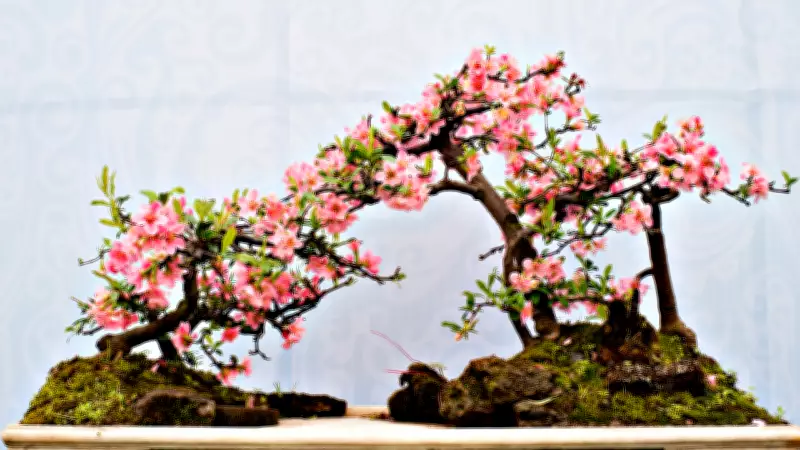
Seeing a bonsai often sparks curiosity about its creation and authenticity. This ancient art form, now a global phenomenon, has a rich history that spans over two millennia. Let us explore its fascinating journey.
The Origins of Bonsai in Ancient China
The art of bonsai dates back over 2,000 years to ancient China, where it was known as "penjing" or "pun-sai." During the Han Dynasty (around 210 B.C.), Chinese elites began cultivating miniature landscapes in containers as a hobby. The earliest documented evidence comes from wall paintings in the tomb of Prince Li Xian (653–684 A.D.) and Prince Zhuang Huai (died 706 A.D.), depicting artistically potted trees. By 700 A.D., special techniques for growing dwarf trees in ceramic containers had been developed.
Transmission to Japan
Bonsai first appeared in Japan during the 12th century Kamakura period. Chinese envoys from the Sui and Tang dynasties brought miniature gardens as part of advanced Chinese culture during the early Heian Period. Buddhist monks, especially Zen monks, learned these techniques while studying in China and brought them back to Japan. The oldest Japanese painting depicting bonsai is the 13th-century "Saigyō monogatari emaki," confirming its presence in Japanese culture by then.

Bonsai as a Symbol of Prestige
For centuries, bonsai remained restricted to monks, aristocrats, and warriors, serving as a symbol of prestige and a meditative practice. During the Edo period, competition over presenting rare plants to garden-enthusiast shoguns led to a gardening boom among daimyo, retainers, and warriors. By the late Edo period, commoners without gardens began cultivating potted plants, making bonsai more accessible.
Global Popularity and Modernization
During the Meiji period (1868–1912), Japan opened to the West, and bonsai gained international popularity. The 1800s saw massive growth, with copper wire invented to shape trees more effectively. By 1941, over 300 Tokyo nurseries exported 150 species worldwide, cementing bonsai's global appeal. During the Taishō period, a decorative method called "natural beauty bonsai" emerged, focusing on a natural appearance rather than artificial decoration. This modern approach defines contemporary bonsai, making it easier to create while preserving its artistic essence.
Today, bonsai is a living art that combines horticulture, patience, philosophy, and aesthetic principles. The word "bonsai" itself is Japanese, meaning "planted in a container," but its spirit carries influences from Chinese culture and Japanese Zen Buddhism. From an elite hobby to a modern decorative art, bonsai continues to captivate people worldwide.