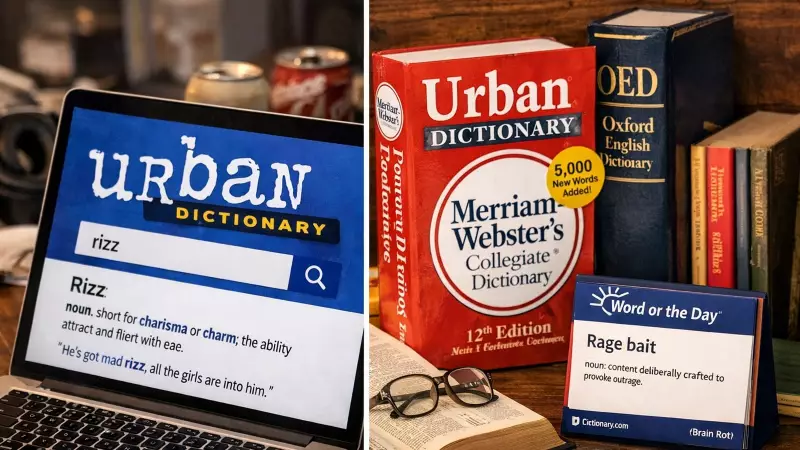
For over two decades, Urban Dictionary stood as the rebellious, crowdsourced answer to formal lexicons. Founded in 1999 by college freshman Aaron Peckham, it became the essential digital home for instant argot, documenting the rapid spread of internet slang into mainstream conversation. Users submitted their own definitions and vivid example sentences, creating a living record of language born in chat rooms, memes, and subcultures.
The Big Dictionary Catch-Up
This dynamic has undergone a dramatic and ironic shift. In November 2025, Merriam-Webster's Collegiate Dictionary released its latest edition, adding over 5,000 new words. This marked the first such major update in two decades and only the 12th since 1898. Significantly, words like "rizz," "doomscroll," and "dumbphone"—once the exclusive domain of online forums and sites like Urban Dictionary—received the official lexicographical seal of approval.
This isn't an isolated event. In December 2024, the Oxford English Dictionary named "brain rot" its word of the year, followed by "rage bait" in 2025. Simultaneously, traditional dictionary brands like Merriam-Webster and Dictionary.com have embraced a humorous, timely presence on social media, actively engaging with the internet's "word of the day." As Peter Sokolowski, editor-at-large at Merriam-Webster, notes, dictionaries are built on trust and expert consensus, a value proposition now being aggressively extended to digital-age vernacular.
The Fall of a Crowdsourced Pioneer
While mainstream dictionaries get hip, the platform that pioneered slang documentation is struggling. Linguist and author Amanda Montell describes the modern Urban Dictionary as a "graveyard taken over by the manosphere or general online troglodytes." What began as a repository for puerile jokes and irreverent snark has, many argue, curdled into a space rife with vicious vulgarity, racism, and sexism.
Experts point to the 2016 U.S. presidential election and the ensuing cultural polarization as a turning point. The site's open, crowdsourced model, once its greatest strength, became a liability. Popular terms were flooded with competing definitions, and the upvote system began elevating not just accurate explanations but also satire, misinformation, and outright offensive content. Jess Zafarris, author of "Useless Etymology," observes that the open model enabled speed but also toxicity, making many entries unhelpful.
A Fight for Relevance and Trust
Urban Dictionary is not defunct. It boasts over 17 million definitions as of 2025 and has introduced features like a promoted advertising system and a revamped voting mechanism to combat bots. In a July 2020 blog post titled "Rethinking the Dictionary," founder Aaron Peckham acknowledged the challenges, promising updated content guidelines and better moderation. He distinguishes between documenting offensive words and endorsing offensive meanings.
Peckham views legacy dictionaries not as competitors but as collaborators. He frames Urban Dictionary as the "breaking news" desk for language, capturing how words live and breathe in real-time, while traditional dictionaries provide the authoritative, historical record. However, the central challenge remains content moderation and "voting authenticity" to restore trustworthiness.
The journey for new words has fundamentally changed since 1999. Today, slang might travel from niche online communities to viral TikTok trends, through media coverage, and finally, for a select few like "hard pass" and "dad bod," into the hallowed pages of Merriam-Webster. As Sokolowski concludes, every word has its own pace. The irony is complete: the institutions Urban Dictionary once parodied are now the trusted authorities on the very slang it sought to champion, leaving the pioneer to grapple with the darker side of the crowdsourced model it popularised.