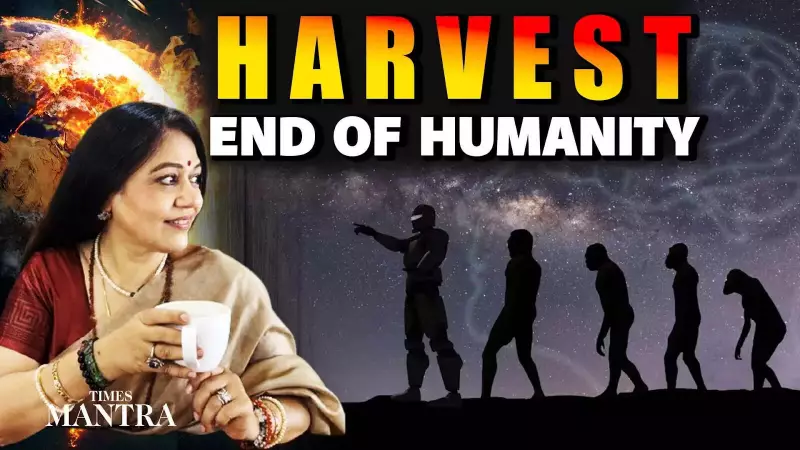
In a compelling article published on December 29, 2025, at 08:20 PM IST for Times Mantra, author and thinker Ginni Aneja delved into a profound and unsettling concept known as 'Harvest.' Her discussion connects this idea directly to prophetic visions concerning the potential end of Earth, weaving together ancient wisdom and contemporary crises.
The Symbolic Weight of 'Harvest'
Aneja's analysis moves beyond a literal interpretation. She positions 'Harvest' as a powerful metaphor for a period of reckoning. This is not merely an agricultural term but a symbolic culmination of humanity's actions on the planet. The article suggests that ancient texts from various traditions contain coded warnings about this cycle, which modern environmental degradation and societal unrest are now bringing to light.
She meticulously explores how this prophecy intersects with today's most pressing global challenges. The 'Harvest,' in her view, represents a time when the consequences of ecological neglect, spiritual emptiness, and social disharmony reach a critical point. It is a call to evaluate the seeds humanity has sown.

Ancient Wisdom Meets Modern Crisis
A key focus of Aneja's writing is the intersection between archaic prophecies and current scientific and social realities. She draws parallels between the warnings found in ancient scriptures and the alarming data on climate change, biodiversity loss, and resource depletion. This fusion creates a stark narrative: our ancestors might have foreseen this juncture through a spiritual lens, which now finds validation in empirical evidence.
The discussion highlights a crucial message about responsibility. The 'Harvest' is not presented as an inevitable, predetermined doom but as a potential outcome based on collective human behavior. Aneja emphasizes that the symbolism serves as a urgent lesson, urging reflection on our role as stewards of the planet.
A Call for Awareness and Action
The final part of Ginni Aneja's exposition is a direct appeal for consciousness and transformation. She argues that understanding the 'Harvest' prophecy is meaningless without subsequent action. The insights are meant to provoke not fear, but a profound sense of duty.
The article concludes by framing these apocalyptic insights as a catalyst for positive change. By examining the symbolic 'Harvest,' humanity can recognize the warning signs and alter its course. It is a plea for integrating spiritual wisdom with practical environmental and social action to shape a viable future for the planet.
Ultimately, Ginni Aneja's piece for Times Mantra serves as a thought-provoking synthesis of prophecy, ecology, and ethics. It challenges readers to look at global crises through a dual lens of ancient foresight and modern responsibility, making a case that the future is still being written.