Khodiye Village's Annual Devchar Wedding: A Unique Goan Tradition
In the serene landscapes of Sattari, Goa, Khodiye village distinguishes itself through a remarkable annual ritual that has been practiced for generations. This unique tradition involves the ritualistic wedding of devchar, a guardian spirit believed by locals to inhabit the village. The ceremony takes place during the month of Paush, which is the tenth month of the lunar calendar, and holds significant importance for the community's social and spiritual life.
The Significance of Karadicho Aajo
The holy spirit celebrated in this ritual is known as Karadicho Aajo, whose presence is believed to reside in a centuries-old tree locally called Ghoting (terminalia bellerica). Villagers regard Karadicho Aajo as the protector of Khodiye, watching over them and intervening during emergencies. This deep-rooted faith forms the foundation of the annual ceremony that precedes all human marriages in the village.
Traditional Rituals and Ceremonial Practices
According to Pundalik Tukaram Gaonkar, a 72-year-old local resident, marriages in Khodiye village can only be solemnized after the annual devchar wedding is performed. The ceremony occurs on either a Sunday or Wednesday during Paush month at Karadi, located within a sacred grove of indigenous trees.

The ritual involves several traditional elements:
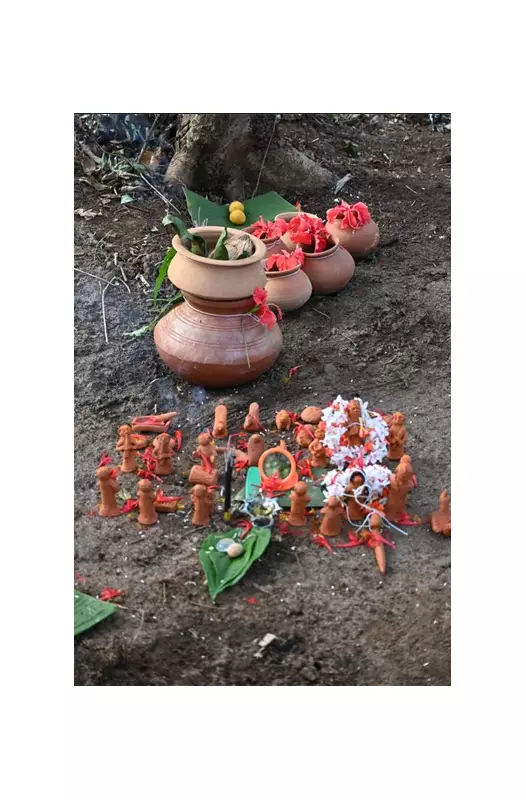
- Clay images representing the bride and groom, along with necessary earthen pots, are sourced from potters in Advai village
- These replicas are adorned with distinct headgears as part of the ceremonial dressing
- Clay images of various animals including tortoise, crocodile, frog, lizard, bird, and cow are placed at the sacred site
- Traditional offerings include comb, mirror, and garlands made from Aboli (Crosendra) flowers presented to the bride image
The entire ceremony follows authentic Hindu marriage rituals, including the chanting of Mangal Ashtaks (sacred hymns). A special sweet dish prepared from rice, jaggery, and dry coconuts is cooked during the occasion and distributed among all participants, symbolizing community sharing and blessings.
Community Beliefs and Compulsory Nature
Villager Sanjay Tendulkar emphasizes the compulsory nature of this ceremony, stating that failure to organize it would expose the community to the wrath of the holy spirit. This belief underscores the ritual's importance in maintaining spiritual harmony within the village. This year, local resident Suresh Gaonkar performed the rituals, continuing the tradition that has been passed down through generations.
Historical Context and Environmental Setting
Every year, villagers assemble at Karadi, which is situated at the confluence of two streams originating from Devasu and Kumbharkhan. The location is considered blessed by Sateri and Sasan deities, adding to its spiritual significance.
Historically, before the onset of iron ore mining in the region, Khodiye village relied solely on agro-horticultural crops for sustenance. During this period, the community's faith in the holy spirit was particularly strong, as they believed Karadicho Aajo would come to their rescue during emergencies and difficult times. This historical context highlights how traditional beliefs have been intertwined with the village's livelihood and survival strategies.
The annual devchar wedding ritual in Khodiye village represents more than just a ceremonial practice—it embodies the community's cultural identity, spiritual beliefs, and social cohesion. As one of Goa's unique traditions, it continues to connect villagers with their heritage while governing important life events like marriages within the community.