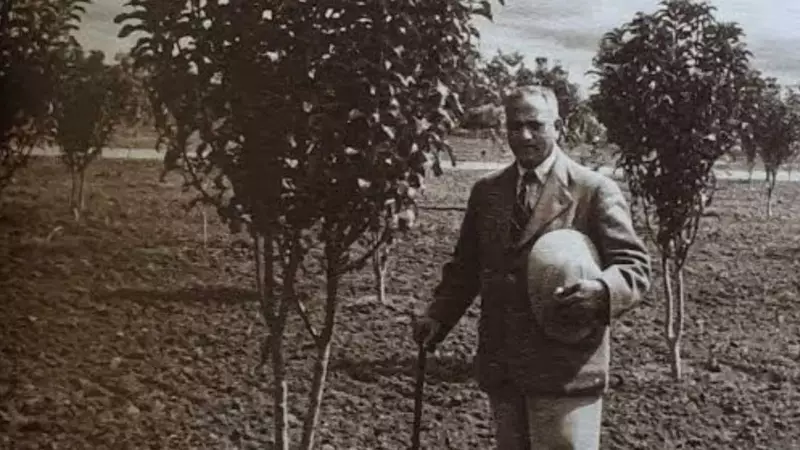
H C Javaraya: The Visionary Who Shaped Bengaluru's Green Legacy and Global Horticulture
In the heart of Bengaluru, at the main entrance to the iconic Lalbagh Garden, stands the Rao Bahadur H C Javaraya Circle. This junction is more than just a traffic point; it is a tribute to the man who, as the first Indian superintendent of Lalbagh, quietly reshaped the city's landscape and left an indelible mark on global horticultural research. H C Javaraya (1889-1946) remains a towering figure in India's horticultural history, blending science, discipline, and experimentation to create a legacy that continues to influence Bengaluru's greenery and beyond.
From Madikeri to Lalbagh: The Making of a Horticultural Pioneer
Born into a family of agriculturists in the pristine environs of Madikeri, it was perhaps destiny that H C Javaraya would become one of India's premier horticulturists. He was part of the early graduating batches from Coimbatore's Agricultural College, now known as Tamil Nadu Agricultural University, where he honed his skills and passion for plants. His grandson, H C Padmanabha, recalls family memories describing Javaraya as a strict and disciplined individual who tolerated no nonsense, whether at home or in official matters. This unwavering discipline would become a cornerstone of his illustrious career.
A Journey Through Royal Gardens and Global Learning
Javaraya's expertise led him to serve as mokhtesar to the Maharaja of Mysore from 1914 to 1918, overseeing the city's various gardens, including the Madhuvana garden. This garden was crucial for supplying flowers for palace pujas, fruits and vegetables for consumption, and even alfalfa grass for royal horses. During this period, Javaraya emerged as a pioneer in fruit cultivation and experimentation, a focus that would define his lifelong contributions to horticulture.

As World War I drew to a close, the renowned German botanist G H Krumbiegel, who had shaped Bengaluru's tree-planting patterns, needed assistance at Lalbagh due to his internment as a citizen of an enemy nation. Javaraya stepped in as assistant superintendent, marking the beginning of his transformative association with Lalbagh. His quest for knowledge took him to the prestigious Kew Gardens in London, where he trained extensively, becoming part of a lineage of Kew-educated superintendents at Lalbagh. Upon Krumbiegel's retirement in 1932, Javaraya ascended to the role of superintendent, making history as the first Indian to hold this position.
Enduring Contributions to Lalbagh and Beyond
Javaraya's tenure at Lalbagh was marked by both tangible and subtle additions that enriched the garden's heritage. While some features, like a fountain in the Glass House and an artificial waterfall, have not survived, others stand as testaments to his vision. The fourth wing of the Lalbagh Glass House, with its frame crafted at Bhadravati's ironworks, and the elegant guardhouse at the West Gate, meticulously relocated from Dewan P N Krishnamurti's residence, are enduring reminders of his meticulous approach.
His influence extended beyond Lalbagh's boundaries. Javaraya played a key role in planting Peltophorum trees across Bengaluru, favored for their bright yellow blooms by Dewan Sir Mirza Ismail. His establishment of the Fruit Research Station at Hesaraghatta laid the groundwork for what would become the Indian Institute of Horticultural Research, cementing his status as a foundational figure in modern horticultural science. Padmanabha aptly describes his grandfather as a fruit man, highlighting his popularization of the Rome Beauty apple varietal and groundbreaking research on apple cultivation, which continues to be cited and applied in places like Switzerland.

A Legacy That Blooms Across Generations
H C Javaraya's legacy is not confined to the past; it thrives in the green corridors of Bengaluru and the global advancements in horticulture. His blend of scientific rigor, experimental zeal, and administrative discipline transformed Lalbagh into a beacon of botanical excellence. As visitors stroll through Lalbagh or admire the city's older trees, they witness the living heritage of a man who dedicated his life to nurturing nature. Javaraya's story is a powerful reminder of how individual passion and perseverance can shape a city's soul and contribute to worldwide knowledge, inspiring future generations to cherish and expand upon his green vision.