Hazaribag's Ancient Megalithic Site: A Window into Tribal Astronomical Genius
In the heart of Jharkhand's Hazaribag district lies a remarkable archaeological treasure that has captivated researchers worldwide. The V-shaped megalithic site located in Pakri–Barwadih within the Barkagaon block represents one of India's most significant centres of archaeo-astronomical interest. First discovered years ago by dedicated explorer and researcher Subhashis Das, this ancient stone arrangement continues to reveal profound insights into our ancestors' understanding of celestial movements.
A Global Attraction for Solar Phenomena
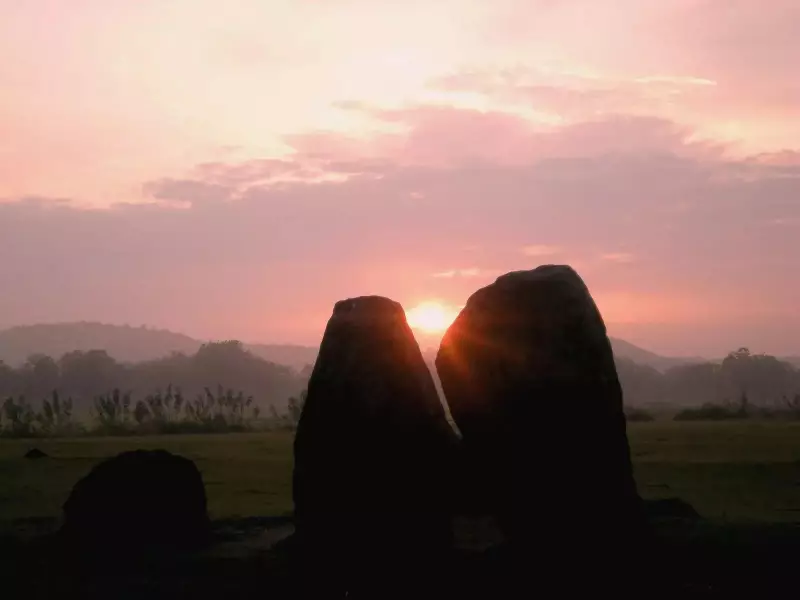
What makes this site particularly extraordinary is its precise alignment with solar events throughout the year. Every March around the 20th or 21st, substantial crowds gather to witness the spectacular spring equinox phenomenon. During this celestial event, the rising Sun passes with remarkable accuracy through a narrow gap between two towering megalithic stones. This precise alignment demonstrates an advanced astronomical comprehension that predates modern scientific instruments by centuries.
Experts note that similar stone alignments connected to solar movements exist across various global locations, suggesting a universal human fascination with cosmic patterns that transcends geographical boundaries. The Hazaribag site stands as a testament to this shared curiosity about the heavens that has characterized human civilization across continents and eras.

Ancient Calendars and Tribal Traditions
Subhashis Das, who has meticulously documented numerous megalithic sites throughout the region, provides crucial context about these ancient structures. Among local tribal communities, such stones were traditionally erected as memorials for the deceased and are known locally as birbiri. However, Das emphasizes that many of these megaliths served dual purposes, with some specifically designed for astronomical observation.
"For ancient tribal societies, these stone arrangements functioned as sophisticated calendars," Das explains. "By carefully observing the Sun's movement through these alignments, they could accurately determine seasons and track time. This was essentially their version of a Panchang, their traditional almanac that guided agricultural, cultural, and spiritual activities throughout the year."
Comprehensive Solar Alignments
The astronomical significance of the Pakri–Barwadih site extends far beyond the equinox alignment. According to Das's research, the megalithic arrangement is precisely oriented to capture not just the equinox sunrise but also the sunrises during both winter and summer solstices. This comprehensive solar tracking capability indicates a remarkably sophisticated understanding of celestial mechanics among ancient tribal communities.
Das draws parallels with other significant archaeo-astronomical sites in India, noting similarities with Hanamsagar in Karnataka where stones were diagonally aligned with solstice sunrises and sunsets. He emphasizes the urgent need for scientific dating of Jharkhand's megalithic structures to better understand their historical context and development.
The continued study of this Hazaribag site promises to reveal more about how ancient societies harmonized their lives with celestial rhythms, blending practical timekeeping with spiritual reverence for cosmic patterns that governed their existence.