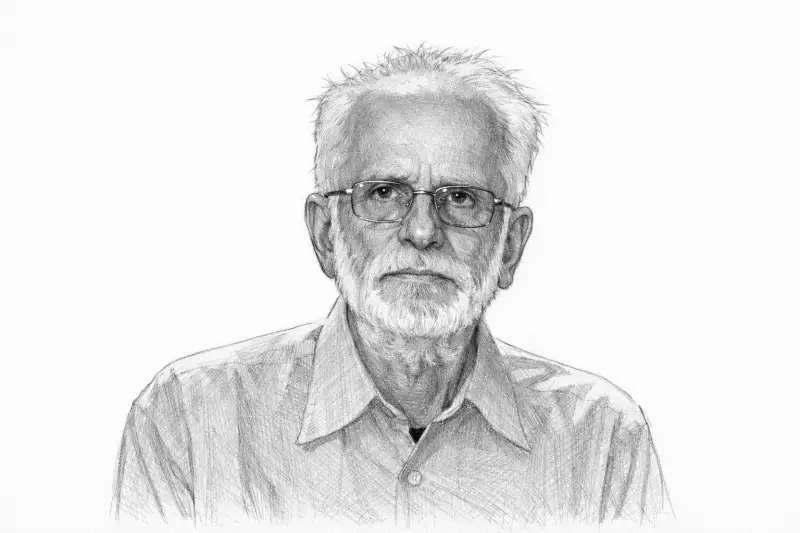
The world of Hindi literature has lost one of its most authentic and influential voices. Author and editor Gyanranjan, who masterfully chronicled the disillusionment and moral conflicts of small-town, lower-middle-class India, passed away in Jabalpur on January 7, 2026. He was 90.
The Architect of Small-Town Realism
Born in Akola, Maharashtra, in 1936, Gyanranjan spent his formative years in cities like Ajmer, Delhi, and Varanasi. He eventually settled as a Hindi teacher at a college in Jabalpur, a city that became his home for the rest of his life. This deep immersion in the rhythms of provincial towns, away from metropolitan centers, became the bedrock of his literary genius.
He broke away from the dominant urban narratives of the Nayi Kahani (New Story) movement that defined the 1950s and 60s. In the early 1970s, alongside writers like Doodhnath Singh, Kashinath Singh, and Ravindra Kalia, he formed the influential group Chaar-yaar, heralding a new wave in short fiction.

His work captured a specific, collective angst. Unlike predecessors such as Nirmal Verma, who explored individual alienation through metaphor, Gyanranjan's characters were products of their stifling socio-economic realities. He found a poetic rhythm in the everyday struggles and contradictions of small-town life.
Iconic Stories of Conflict and Idealism
Gyanranjan's fiction is populated by unforgettable characters trapped in the clash between ideals and harsh reality. In Pita (Father), a son grapples with a father who rejects material comfort, an eternal outsider in a family chasing affluence.
The story Ghanta presents a scathing portrait of a small-town intellectual who compromises his ideals for personal gain, only to face brutal rejection from the powerful elite he seeks to please. Another protagonist in Bahirgaman (Emigration) delivers a biting line that encapsulates a lifetime of suppressed desire: "In order to become a stable man, for the last 25 years I have been living as a tortoise." The story satirizes the 'satellite' intellectuals who commodify their nation's pains from afar.
Through these narratives, Gyanranjan gave voice to a generation of post-Independence youth for whom the initial romance of a new nation had faded, replaced by self-doubt and a search for meaning.
Pahal: A People's Editor and His Legacy
Beyond his fiction, Gyanranjan's monumental contribution was the Hindi literary journal Pahal. He edited the magazine from 1971 to 2008, and again from 2013 to 2021. In an era when major media houses were taking over Hindi periodicals, Pahal stood as a pillar of the independent "small magazine movement."
While progressive in its outlook, Pahal under Gyanranjan was notably inclusive. It refused to pigeonhole writers into ideological camps or limit its pages to a narrow agenda. He dedicated his life to being a people's editor, steadfastly maintaining an outsider's critical voice against the literary and political establishment.
His death arrives at a critical juncture for the Hindi intelligentsia, which faces the challenge of preserving its diverse voice. Gyanranjan's true legacy lives on not in conformity, but in the courageous, everlasting angst of the outsider—a sentiment he captured with unparalleled empathy and artistry. He will be profoundly missed as the champion of a small-town India that rarely found such eloquent expression.