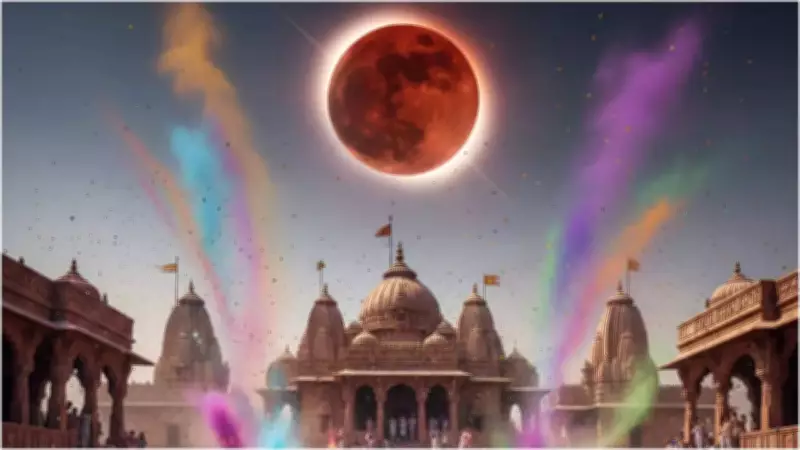
Holi 2026 to Align with Lunar Eclipse: A Cosmic Convergence
As India prepares for the vibrant Holi festival in 2026, the celestial calendar presents a remarkable event: a lunar eclipse, or Chandra Grahan, will occur on the same day as the festivities. This rare alignment infuses the celebration with profound spiritual and astrological significance, capturing the attention of devotees, astrologers, and celebrants alike.
The Astronomical Phenomenon of Lunar Eclipses
A lunar eclipse happens when the Earth positions itself between the Sun and the Moon, casting a shadow that darkens the lunar surface. This event exclusively occurs during a full moon. There are three primary types of lunar eclipses:
- Total Lunar Eclipse: The entire Moon passes through Earth's umbral shadow, often resulting in a reddish hue known as a 'Blood Moon'.
- Partial Lunar Eclipse: Only a portion of the Moon is obscured by Earth's shadow.
- Penumbral Lunar Eclipse: The Moon moves through Earth's penumbral shadow, causing a subtle dimming.
In 2026, observers in India and other regions will have the opportunity to witness this eclipse during Holi, enhancing the festival's astronomical allure.

Spiritual and Astrological Implications
Holi is celebrated on Phalguna Purnima, the full moon day of the Hindu month of Phalguna. The coincidence with a lunar eclipse deepens its spiritual resonance, as eclipses are traditionally linked to the mythological figures Rahu and Ketu, believed to consume the Moon during a grahan. This period is often associated with specific rituals and precautions for spiritual protection.
Astrologers interpret the lunar eclipse on Holi as a time for:
- Emotional transformation and mental purification.
- Releasing past negativity and karmic burdens.
- Encouraging self-reflection and spiritual growth.
In Vedic astrology, the Moon symbolizes the mind, making lunar eclipses influential for emotions, relationships, and mental clarity. The 2026 Holi eclipse is seen as a catalyst for revealing truths, resolving conflicts, and marking karmic shifts.
Ritual Adjustments and Celebratory Practices
The Holi festivities commence with Holika Dahan, a bonfire ritual on the eve of Rangwali Holi, symbolizing the triumph of good over evil. With the eclipse overlapping, religious experts advise aligning rituals with the eclipse's duration and local muhurat timings. Temples may close during the eclipse, as per tradition.
For those celebrating Holi during the Chandra Grahan, guidelines include:
- Avoiding new auspicious activities during the eclipse.
- Refraining from cooking or eating until after the eclipse.
- Engaging in meditation or chanting mantras like the Maha Mrityunjaya Mantra.
- Pregnant women are often recommended to stay indoors.
Post-eclipse, practices involve bathing, purifying homes with Gangajal, and resuming festive activities. Many modern families adapt celebrations to balance tradition with enjoyment, especially if the eclipse is not visible locally.
Color Symbolism and Spiritual Focus
Holi's essence lies in colors, each with spiritual meanings: yellow for prosperity, green for peace, and blue for divinity. During the lunar eclipse, spiritual practitioners emphasize:
- Using natural, plant-based colors.
- Moderating festivities to avoid excess.
- Focusing on renewal and new beginnings.
This aligns with the eclipse's symbolic theme of embracing change and awareness.
Scientific Perspective and Safety Tips
From an astronomical viewpoint, lunar eclipses are natural events without harmful radiation, and they are safe to observe. Scientifically, there is no evidence of food contamination or mandatory activity cessation during a lunar eclipse. However, India's cultural traditions continue to honor these practices.
To celebrate Holi 2026 safely during the Chandra Grahan:

- Check local eclipse timings and plan celebrations accordingly.
- Perform Holika Dahan at the appropriate muhurat, consulting local priests if needed.
- Opt for skin-friendly and eco-friendly colors.
- Dedicate time for self-reflection during the eclipse.
- Resume festive activities post-eclipse, enjoying sweets and playful colors responsibly.
A Unique Cosmic Celebration
The rare alignment of Holi and a lunar eclipse in 2026 offers a distinctive experience for both skywatchers and spiritual seekers. For some, it will be a celestial spectacle under the full moon; for others, a harmonious blend of celebration and ritual observance. Regardless of perspective, Holi 2026 embodies joy, forgiveness, and unity, with colors filling the air and prayers ascending under the darkened Moon, making it a moment for cosmic contemplation and festive revelry.