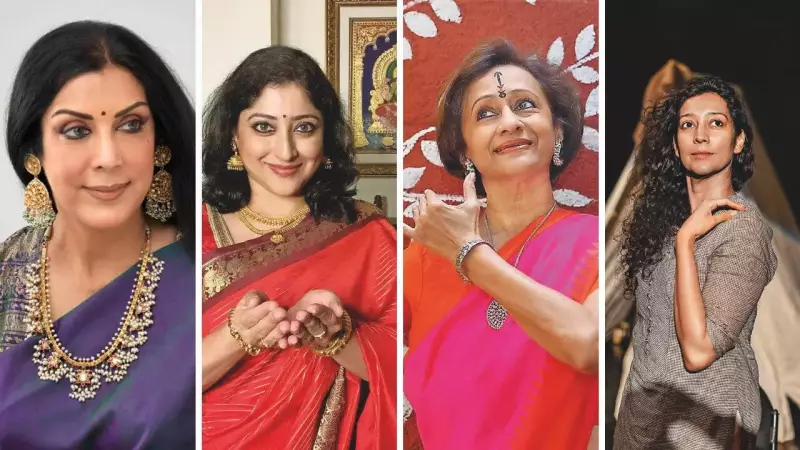
The story of dance in Bengaluru is a remarkable tale of artistic openness, steady evolution, and a growing audience that has matured alongside its performers. From humble beginnings in temple halls, community sabhas, and personal terraces to the rise of professional global studios, the city's cultural fabric has been woven with rhythmic threads of both tradition and innovation. Renowned dancers Lakshmi Gopalaswamy, Padmini Ravi, Vani Ganapathy, and Mayuri Upadhyay reflect on this transformative journey, detailing how classical roots provided a foundation for contemporary expressions to flourish.
From Sacred Practice to Aspirational Career Path
One of the most significant shifts witnessed in Bengaluru's dance landscape is the change in aspiration. Vani Ganapathy highlights that today, numerous young dancers view dance as a viable career, a perspective that was rare in earlier times. However, she notes that this viability often comes with conditions. "Unless an artist is nationally established, sustaining oneself solely through performances is challenging. Teaching often makes it possible, but I never believed in the model of teaching thousands," Vani explains.
Mayuri Upadhyay believes this transformation extends beyond the city's limits. She credits reality shows and the pervasive influence of the internet for altering mindsets across India, calling it a "national evolution" rather than a change confined to Bengaluru. In contrast, Padmini Ravi emphasizes that the city's inherent temperament has been its greatest asset. "We are liberal, broad-minded, and cosmopolitan. Art is growing here because we allow it to breathe," she states.

A Expanding Canvas: Welcoming New Forms and Genres
The influx of contemporary, western, and hybrid dance styles did not displace classical traditions in Bengaluru; instead, it dramatically widened the artistic canvas. Lakshmi Gopalaswamy notes that contemporary dance arrived later, followed by innovative collaborations that fused classical with contemporary vocabularies.
Mayuri Upadhyay praises the city's inclusive culture, stating, "Bengaluru holds space. The fabric expands instead of cutting each other down. It's a curious, encouraging culture." Vani Ganapathy observed a strong influence of western and modern movement languages after moving to the city. She saw artists employing Bharatanatyam elements in novel ways but cautions that using mudras alone does not constitute the classical form. "They are creating their own genres," she points out.
Lakshmi insists on the importance of this distinction, placing responsibility on the audience. "The onus is now on the audience to demand authenticity. That discernment comes when you watch a lot and become a seasoned rasika," she adds.
Building a Cultural Ecosystem: From Intimate Gatherings to Major Festivals
Long before it became a tech hub, Bengaluru possessed a hungry appetite for diverse art forms. Lakshmi Gopalaswamy recalls that the city always gave equal importance to Hindustani, Carnatic, and Western classical music. This openness paved the way for landmark cultural movements.
The concept of large-scale dance festivals was introduced by pioneers like Lalita Srinivasan, who brought iconic dancers from Delhi and Madras to Bengaluru's stages. Platforms such as Kinkini, Nrityagram, and Vasantha Habba fundamentally reshaped the city's cultural calendar. Lakshmi fondly remembers the dedicated audiences who "would stay up all night in the cold of Hesaraghatta," calling that era a significant chapter in the city's dance history.
Padmini Ravi highlights a unique aspect of Bengaluru's art scene: the generosity of its artists. "Here, artistes organise festivals themselves, invite other artistes, and ensure they are taken care of. That generosity is rare elsewhere," she says.

In the early days, performance venues were few and far between. Lakshmi lists Ravindra Kalakshetra, Chowdiah Memorial Hall, and Town Hall as the primary spaces, with Chitrakala Parishath hosting festivals. This scarcity created an intimate ecosystem. "If there was an arangetram of a promising dancer, everybody in the city knew about it. Teachers would bring students voluntarily. An arangetram was treated like a full-fledged performance," she recalls. Padmini, who moved to Bengaluru in the late 1970s, remembers a close-knit world with few but prominent teachers, many carrying the strong Mysore Bani or having migrated from Chennai.
Adaptation and Decentralization: Dance Finds a Home Everywhere
Before the proliferation of studios, dance adapted to any available space. Mayuri Upadhyay shares, "It started in people's homes—living rooms, garages, community halls. My own company started on a terrace with just a tape recorder." She credits this "ability to work with what we had and turn it into a space of learning and exchange" as a key driver of the city's artistic growth.
As Bengaluru geographically expanded, its dance scene decentralised. Lakshmi observes that it is no longer centred around a few major venues. Numerous small spaces and studios now facilitate intimate performances, a setting particularly beneficial for forms like Bharatanatyam. Venues like Medai, Bangalore International Centre, Ananya, and neighbourhood studios across Jakkur, Malleswaram, and south Bengaluru have created new, engaged cultural nodes.
Reflections on Depth in the Age of Speed
With scale has come a rapid pace, leading to introspection among seasoned artists. Lakshmi Gopalaswamy admits that the sheer volume of events today exceeds her capacity to watch everything. She senses a shift in intent, noting, "Art today often tries to grab eyeballs. For me, art is a calmer joy—when your heart opens watching good dance."
Vani Ganapathy echoes this concern in the context of social media. "You see a one-minute reel and think that is dance. Dance can't be emulated. It has to be you," she asserts. She observes that while fame can come faster now, it may not be deeper, concluding philosophically, "What is sustainable will sustain. The rest will fall away."
Despite these challenges, there are hopeful signs. Lakshmi finds encouragement in seeing young audiences sitting on the floor to watch classical dance at venues like Seva Sadan, a testament to the enduring, deeper joy that true artistry can inspire.