India Art Fair 2024: A Global Inflection Point for South Asian Art and Identity
If Bridget Riley's profound assertion that "Perception is the medium" holds true, then the recently concluded India Art Fair served as an unparalleled platform for experiencing and engaging with art. The fair not only opened up vital dialogues but also offered innovative perspectives on lived realities through art and design, making it an essential destination for art enthusiasts to absorb, reflect, and participate in the evolving cultural landscape.
International Spotlight on South Asian Art
In her inaugural address, Fair Director Jaya Asokan emphasized the significance of the moment, stating, "International attention on South Asian art has reached an inflection point, and India Art Fair meets that moment." This sentiment was echoed throughout the event, which attracted a diverse array of visitors and participants from around the globe.
One of the standout features was The Charpai Project, an outdoor installation curated by Ayush Kasliwal and Ramayudh Sahu in collaboration with multidisciplinary artist Goji. This interactive piece invited contemplation by allowing visitors to recline on traditional charpais, everyday objects synonymous with rest and conversation across India, fostering a unique blend of relaxation and artistic engagement.

Visitor Experiences and Artistic Innovation
Nilanjan Bhowal, a Delhi-based architect who attended with his family, praised the fair's layout, noting, "The display was refreshing and interactive, with more open space offering visual relief. Many new international galleries participated, and the focus on promoting younger artists was especially encouraging."
Inakshi Sobti, CEO of Asia Society India Centre, added, "It was a wide, expansive collection of works, and it was wonderful to see powerful voices from new and young artists. The range of materials and the spirit of experimentation on display made the experience especially compelling."
Exploring Art and Identity Through Diverse Mediums
The fair placed a strong emphasis on art and identity, with numerous exhibitions delving into themes of culture, displacement, and empowerment.
- Haal Mukaam: Current Address by Girjesh Kumar Singh used salvaged bricks and mortar from demolished constructions to explore impermanence, displacement, and the concept of journey.
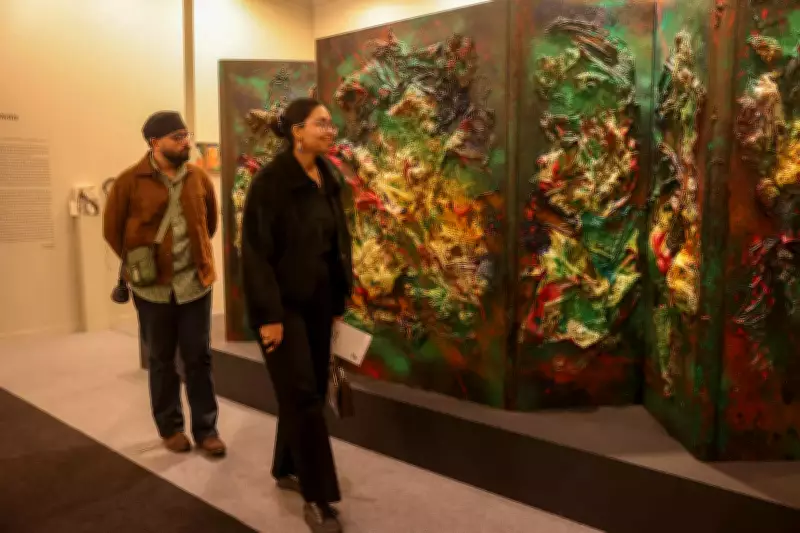
- Thai artist Pannaphan Yodmanee, presented by Galerie Geek Art, merged Buddhist iconography with contemporary mixed media, using rocks, minerals, cement, jute, spray paint, and gold leaf to create richly textured, meditative landscapes.
- Chandrasekhar Koteshwar's Extensions in Bronze reflected his deep engagement with terracotta and bronze, exploring the tension between weight and fluidity.
- Subodh Gupta's Drift of a Star invited viewers to experience intimacy and vastness simultaneously, as familiar objects like spouted jugs and buckets resembled a constellation in motion.
Global Voices and Cultural Celebrations
The fair also featured international artists who brought unique perspectives on identity and heritage.
- Kenyan artist Thandiwe Muriu examined themes of identity, culture, and female empowerment through her photographic works, using ankara (wax) and the East African kanga fabric as a canvas to redefine and celebrate her culture.
- Indigenous Australian artist Grace Lillian Lee honored her ancestors in The Winds of Guardians, using traditional weaving techniques of Torres Strait to form contemporary art pieces.
- Kingsley Gunatillake's Chronicles of a Wounded Book turned books into battlefields by burning edges and carving trenches, with tiny copper soldiers symbolizing the landscapes of war, protest, and resolution in Sri Lanka over the years.
Conceptual and Textural Explorations
Other notable works included The Sky Below, presented by Karishma Swali and the Chanakya School, which drew from the Sanskrit concept of ākāśa—an all-encompassing presence—using woven textiles and sculptural forms to highlight collective authorship, women-led making, and evolving craft practices.

Icelandic-Danish artist Olafur Eliasson's The Collective Consequences of Focus on Focus featured a cluster of glass spheres that appeared white from the front, filled with vivid reflections of viewers and surroundings. From one side, reflections took on a deep red tone, while from the other, the spheres appeared black, creating a dynamic perceptual experience.
The India Art Fair 2024 successfully positioned itself as a critical hub for artistic dialogue, blending traditional and contemporary elements to showcase the vibrant and diverse voices shaping the global art scene today.