Ireland as Imperial Laboratory: Jane Ohlmeyer on India-Ireland Colonial Ties
Historian Jane Ohlmeyer, a leading expert on early modern Ireland and empire, recently shared profound insights into the long and uneasy connections between Ireland and India under British rule. Speaking at the Jaipur Literature Festival, she reflected on Ireland's dual position as both colonised and complicit, shedding light on shared imperial structures, Irish participation in empire, and the enduring politics of historical memory.
Ireland's Dual Role: Victim and Perpetrator
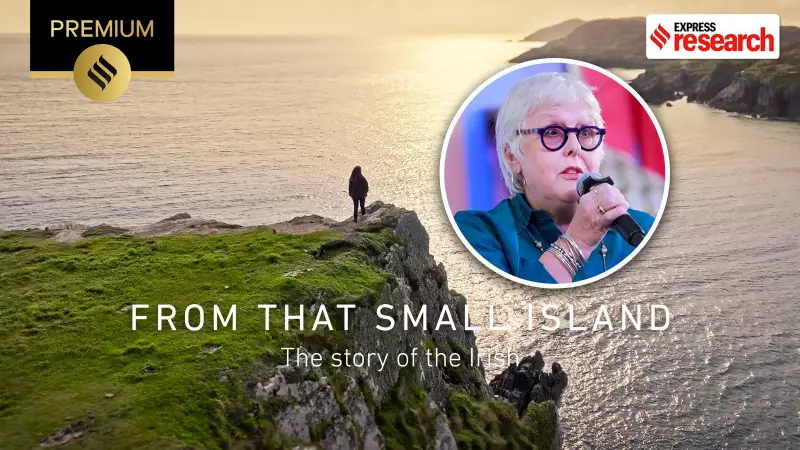
Ohlmeyer, who served as a historical consultant on the documentary From That Small Island: The Story of the Irish, emphasised that Ireland was not merely a colony but a laboratory for the Empire. Ireland provided a testing ground for policies later exported to India, including educational curricula, coercive policing models, and political governance structures like viceroys and presidencies. She noted that many bureaucrats serving in India were Irish or trained in Ireland, highlighting a significant yet often overlooked aspect of imperial history.
The Irish experience under British rule was marked by complexity. While Ireland was one of the oldest colonies, its people were both victims and active perpetrators of imperialism. By the 19th century, about two-thirds of the White soldiers in the British army in India were Irish, often driven by economic necessity rather than ideological commitment. Ohlmeyer pointed out that Ireland's biggest export, historically, has been people, supplying not only soldiers but also indentured servants to places like the Caribbean.

Shared Histories and Resistance
The connections between Ireland and India extend beyond imperial structures to ideas of resistance. Ohlmeyer discussed how Irish political experiences influenced Indian freedom struggles, particularly in Bengal. However, this shared history also includes darker episodes, such as the Amritsar massacre, where figures like General Reginald Dyer and Lieutenant-Governor Michael O'Dwyer had Irish backgrounds. This complicates Irish narratives of colonial victimhood, requiring historians to approach these stories holistically and without judgment.
Ohlmeyer warned against weaponising history, stressing the importance of understanding complexity and nuance. She cited artefacts like the Koh-i-Noor diamond as examples of contested histories, noting that while the Irish were complicit in taking things from India, they also suffered expropriation, with a third of Ireland's landmass taken for colonists.
Legacy of Partition and Modern Connections
Partition serves as a poignant link between Ireland and India, with the same legislation used to divide Ireland later applied to India and Pakistan. Ohlmeyer expressed hope, noting that Ireland is now discussing reunification, potentially offering a model for other divided regions. She reflected on her upbringing in Belfast during the Troubles, highlighting how far Ireland has progressed economically and socially.
In contemporary Ireland, the Indian community plays a significant role, with about 165,000 people, roughly 3% of the population. Ohlmeyer emphasised that most Indian immigrants are well-assimilated and respected, contributing to sectors like health services and technology. While acknowledging isolated racist incidents, she underscored the overall inclusion and cultural enrichment, with celebrations like Diwali and Holi becoming part of Irish society.
Ohlmeyer's insights remind us that history is multifaceted, urging a nuanced understanding of colonial pasts to foster reconciliation and progress.