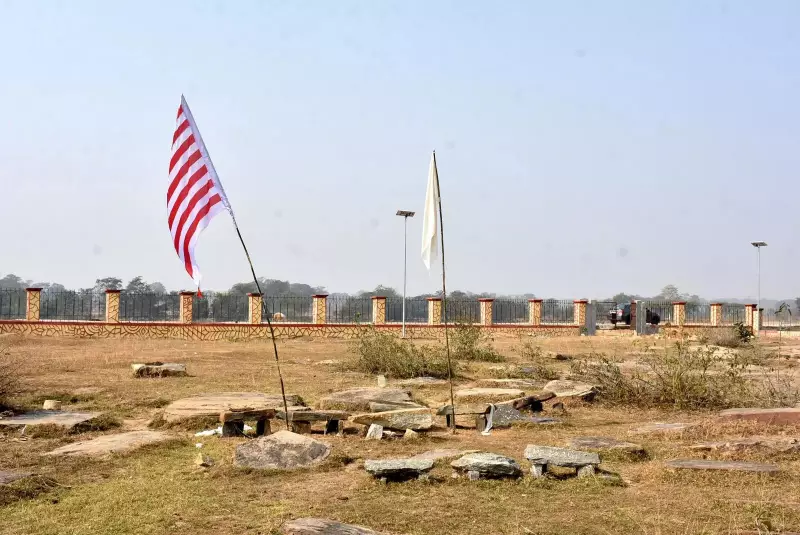
A dusty road winding through Chokahatu village in Tamar block, approximately 80 kilometers from Jharkhand's state capital, leads to a remarkable location where time seems to stand still. Thousands of rocks of diverse shapes and sizes are scattered across the landscape, creating a unique and ancient vista.
At first glance, this seven-acre expanse might appear as just another rocky terrain. However, a closer inspection reveals its extraordinary nature. This quiet tribal-dominated hamlet is home to a megalithic site that dates back an impressive 1,000 years.
Ancient Burial Traditions Preserved in Stone
The site features numerous stone tombs and memorials, some of which appear to have been erected in recent years. These stone monuments reflect burial customs and rituals that have been practiced for several centuries. To this day, these rituals maintain significant importance for the local community.

Each carefully placed stone tells a story of generations who lived here, remembered their departed loved ones, and preserved their cultural traditions through these enduring symbols. The natives of Chokahatu, belonging to the Munda tribe, erected these stone structures of varying sizes.
Unique Stone Formations and Cultural Significance
The structures include large horizontal burial slabs and dolmen-like formations supported by short upright stone pillars. Many resemble stone tables and are known as Sasandiris in the Mundari language. These were raised in memory of departed community members, reflecting a long-standing funerary tradition.
Researchers have described the Chokahatu megalithic site as the largest in the Indian subcontinent. Sudhir Singh Patar, the village priest (pahan), explained that the custom of erecting stone tombs has been followed by the Munda community since time immemorial.
"When a member of the Munda tribe dies in our village, the family collects the ashes and bones after cremation and, within 10 days, installs a stone slab at the Harsalli (burial site) in memory of the departed soul. This tradition, practiced from ancient times, continues to this day," he said.
Preservation Challenges and Neglect
Despite its rich historical and cultural significance, Patar expressed concern about the lack of preservation efforts and upkeep by authorities. "Except for erecting a boundary wall three years ago, no significant steps have been taken to protect this place. As a result, the site is now filled with dirt, filth, waste materials, and even human excreta, posing serious threats to this approximately 1,000-year-old heritage," he added.
Jharkhand: A Treasure Trove of Megalithic Sites
Beyond Chokahatu, numerous megalithic sites commissioned by various tribal communities exist across 24 districts of Jharkhand. These include sites by the Mundas, Hos, Asurs, and Oraons, each with distinctive features.
Every tribal village in the state has a burial ground with diverse names such as hargarhi, hargarha, harsalli, and jangarha. These sites feature an assortment of varied megalithic architectures that differ according to tribal traditions, the social status of the deceased, cause of death, and other factors.
"Unlike other megalith sites in India and many parts of the world, the stones of Jharkhand are not remnants of a forgotten world. They are living witnesses, recording ancestry, astronomy, and human resilience across millennia," said Subhashis Das, an independent researcher and author who has studied Jharkhand's megaliths for over three decades.
Unique Features Across Different Districts
West Singhbhum, Khunti, Lohardaga, Hazaribag, and Chatra districts also host several megalithic sites with unique characteristics:

- The sites in Chaibasa (West Singhbhum) are among the rarest, where stone burials can be found not in secluded places but inside the city itself
- Members of the Ho tribe install stone burials in their courtyards in memory of family members, unlike practices elsewhere
- Megaliths found in Hazaribag and Chatra have astronomical importance, highlighting the rich astronomical knowledge of ancient people
- In Khunti, vertical stones measuring up to 8-10 feet can be witnessed
Conservation and Recognition Challenges
While the Mudumal megalithic site in Telangana was added to India's tentative list of UNESCO World Heritage Sites in 2025, Jharkhand's megaliths still lack basic upkeep. This neglect stems mainly from apathy from state authorities and lack of public awareness.
Dr. Ranjit Kumar Singh, head of the geology department and principal of Model College Rajmahal in Sahebganj, emphasized: "The megaliths are not mere stones; they carry history. Proper scientific study of these structures can reveal vital information about ancient times. However, neither such studies have been carried out in the state, nor have any initiatives been taken to create awareness to safeguard these sites. As a result, many are losing their originality due to various factors, including climate change."
Chandan Tiwari, a travel vlogger from Jharkhand, noted: "There are numerous such sites in the state that possess immense potential to transform into tourist destinations, which in turn would boost the rural economy and generate livelihoods."
Government Initiatives Begin to Take Shape
As Chief Minister Hemant Soren led a delegation to Davos and the UK, the state's megaliths were among their top agendas for exploring ways to obtain the prestigious UNESCO World Heritage Site designation.
A delegation led by State Tourism Minister Sudivya Kumar met with experts to explore conservation, restoration, and scientific management strategies for the state's megalithic and monolithic heritage. Meanwhile, Jamshedpur West MLA Saryu Roy has submitted a proposal to State Assembly Speaker Rabindra Nath Mahto to allow his private member's bill on the Jharkhand Geo-Heritage (Fossil) Bill during the upcoming budget session next month.
These initial steps represent the beginning of what could become a comprehensive effort to preserve Jharkhand's ancient stone heritage for future generations while recognizing its cultural and historical significance on both national and international platforms.