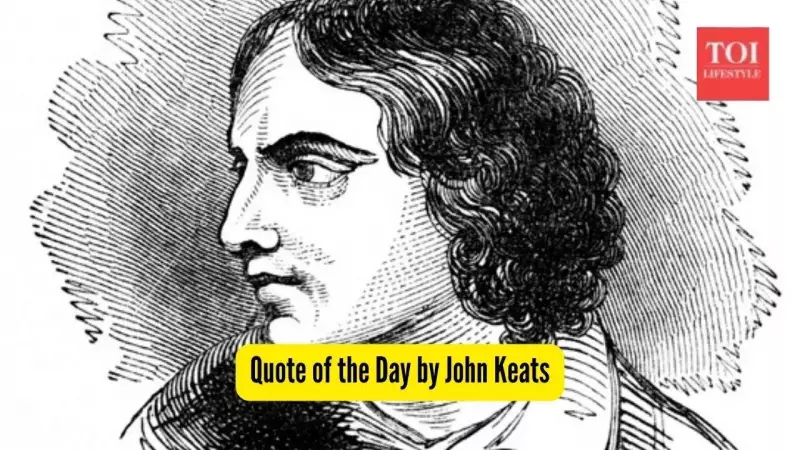
The Tragic Genius of John Keats
John Keats stands as one of the most cherished and revered figures in the Romantic poetry movement, celebrated for his ability to transform profound personal suffering into works of extraordinary beauty and emotional depth. His life story, marked by tragedy and unfulfilled love, continues to captivate literary enthusiasts and scholars alike, serving as a poignant testament to the human spirit's resilience in the face of adversity.
A Life Cut Short by Suffering
Born in London in 1795 to a mother who worked as a stable-hand and a father employed as a stable-keeper, Keats experienced hardship from an early age. The loss of his parents during his youth cast a long shadow over his formative years, setting the stage for a life punctuated by personal loss and physical affliction. He initially pursued a career as an apothecary-surgeon, undergoing rigorous training in the medical field, but ultimately abandoned this path to dedicate himself entirely to the art of poetry—a decision that would define his legacy.
Keats's existence was tragically brief, ending at the tender age of 25, yet within this short span, he achieved a depth of creative expression that few poets have matched. His life was intensely lived, filled with both artistic passion and relentless physical pain, primarily due to tuberculosis—a disease that had already claimed the lives of his mother and brother, and would eventually take his own.

Pain as the Catalyst for Artistic Brilliance
Throughout his life, Keats was haunted by persistent pain, but this very suffering sharpened his perception of the world, enabling him to capture fleeting moments of beauty and transform them into enduring art. His poetry often grapples with the tension between transient joy and inevitable decay, a theme that resonates deeply with readers across generations.
Among his most celebrated contributions are the famous Odes, including "To a Nightingale," "On a Grecian Urn," "To Autumn," and "Ode on Melancholy." These works masterfully illustrate how beauty can be simultaneously breathtaking and agonizing, precisely because it is ephemeral. In "To a Nightingale," the bird's song serves as a poignant contrast to human suffering, while "On a Grecian Urn" explores the tantalizing perfection of frozen moments that remain forever out of reach.
Another notable work, "La Belle Dame sans Merci," presents a chilling fairy tale that delves into love's potentially destructive power. The poem depicts a knight ensnared by a mysterious woman whose "wild wild eyes" and "lily on thy brow" lead him to a desolate moor, where he is drained of vitality. This narrative mirrors Keats's own feverish and consuming love for Fanny Brawne, experienced alongside the physical torment of his deteriorating health.
Love as the Ultimate Religion
Keats's personal philosophy placed love at the center of human existence, elevating it to the status of a sacred belief. In his iconic lines, he expressed a worldview that rejected traditional religious martyrdom in favor of devotion to love:
"I have been astonished that men could die martyrs for their religion—I have shuddered at it, I shudder no more. I could be martyred for my religion. Love is my religion and I could die for that. I could die for you. My Creed is Love and you are its only tenet."
These words, among the most memorable in his body of work, reveal a poet who saw love as the sole legitimate reason for ultimate sacrifice. For Keats, fanaticism or blind religious faith paled in comparison to the transformative power of genuine affection. He believed that love should govern human actions and emotions, standing above all other motivations and faiths.
Through these profound reflections, Keats conveyed a powerful message: in a world often driven by conflict and division, love remains the highest cause, capable of inspiring the greatest sacrifices and offering the most meaningful purpose. His poetry continues to remind readers that love, in its purest form, transcends all other emotions and has the potential to rule not just individual hearts, but the world itself.

A Legacy of Beauty Born from Agony
John Keats's life may have been brief and filled with sorrow, but his artistic output has achieved a form of immortality. His ability to channel personal anguish into verses of stunning beauty ensures that his voice endures, speaking to each new generation about the complexities of love, loss, and the fleeting nature of existence. In turning his pain into poetry, Keats created a timeless legacy that continues to inspire, move, and resonate with readers around the globe.