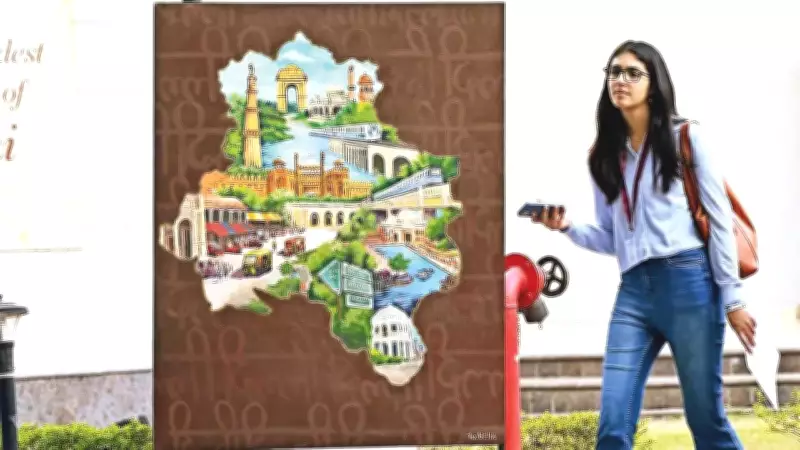
Kahaani Dilli Ki Festival Immerses Visitors in Delhi's Rich Cultural Tapestry
As attendees entered the vibrant bazaar at the Kahaani Dilli Ki festival held at Travancore Palace, they were immediately enveloped by the aromatic scent of shamama attar, setting the tone for a sensory journey through the capital's heritage. The recently concluded two-day event brought the city's many facets to life through an array of installations, artworks, panel discussions, and live performances, offering a deep dive into Delhi's historical and contemporary identity.
A Multisensory Experience of Delhi's Essence
The festival grounds featured captivating photographs of Delhi's urban villages, drawing attention to the city's evolving landscape. Colorful durries from Mirzapur added warmth and texture to the space, while a dedicated installation showcased spices sourced directly from Khari Baoli, one of Asia's largest spice markets. A live food station served sheermal, a traditional flatbread, accompanied by paneer, pickle, kasoori methi, and jeera, allowing visitors to savor authentic flavors.
Curated and conceptualized by Sara Abdullah Pilot and Aishwarya Jha of Indophile, with support from the Ministry of Culture, the festival assembled scholars, walk leaders, and cultural practitioners dedicated to documenting Delhi. The core vision was to provide an immersive experience that highlights the city's culture and lived heritage in an engaging and accessible manner.

Dilli Bazaar: A Hub of Artisanal Craftsmanship
The Dilli Bazaar, curated by Mohammad Anas Khan, founder of UnZip Delhi, served as a central attraction, bringing together craftspeople from Old Delhi, embroidery practitioners, terracotta artists, and attar makers from Kannauj. Additionally, a hakeem from Purani Dilli offered gheekwar halwa, sharing fascinating anecdotes about the area's history.
Anas recounted a compelling story about a royal hakeem who played a pivotal role during the 1857 uprising. This hakeem, who had once cured the Maharaja of Patiala with a special halwa containing gheekwar (aloe vera) and Unani ingredients, later requested the Maharaja's intervention to save Ballimaran from destruction by East India Company forces. Through negotiations, the locality was spared, preserving its cultural legacy.
Artistic Performances and Archival Exhibitions
The festival's program was rich with artistic expressions. Day one featured a kathak recital titled Ishq-e-Dilli by Gauri Diwakar and her troupe, set to songs like Phool Rahi Sarson Sakal Ban, followed by a musical performance by Fareed Hasan Khan. The evening concluded with a soulful performance by Deveshi Sahgal.
On the second day, Rahul Ram and his band Indian Ocean took the stage, along with Sonam Kalra, delivering memorable acts that resonated with the theme of cultural celebration. A vintage photo booth allowed attendees, including renowned author and historian William Dalrymple, to capture retro-style portraits as keepsakes.
Visitors also explored a photography exhibition curated by Mahatta Photo Studio, which displayed rare archival images of Delhi, offering glimpses into the city's past and its enduring character through visual storytelling.
Preserving Culture in an Era of Homogenization
Speaking about the festival's inspiration, Aishwarya Jha emphasized its foundational belief: "Delhi is not one city but many – historic, mythical, modern, lived, and imagined." She highlighted the urgency of cultural preservation in times of increasing homogenization, noting that many traditions risk being lost. The festival draws inspiration from a spiritual mentor, affectionately called Mother, with the vision to safeguard and present culture in an engaging way.
Sara Abdullah Pilot added that the event serves as a means to protect and preserve Delhi's heritage through diverse mediums such as dance, art, handicrafts, and recipes from the city's myriad communities. Together, they aimed to create a platform where visitors could traverse Delhi's various eras, taste its culinary delights, listen to its music, and encounter the stories that shape its unique identity.

Through initiatives like Mother Edible Archives, a restaurant and art project, the festival also presented a sensory-led exploration of Delhi's spice traditions. Chef Anumitra Ghosh Dastidar hand-picked whole spices from Khari Baoli, further enriching the experiential aspect of the event.
Overall, the Kahaani Dilli Ki festival successfully celebrated the capital's multifaceted heritage, fostering a deeper appreciation for its cultural diversity and historical depth among all who attended.