

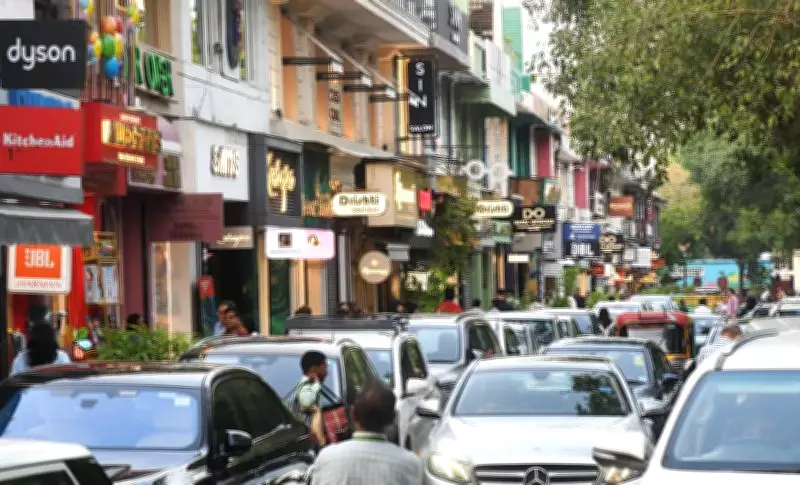
Khan Market at 75: A Living Chronicle of Delhi's Evolving Identity
As Khan Market, one of Delhi's most iconic and upscale shopping destinations, marks its 75th anniversary, it stands not just as a commercial hub but as a vibrant testament to the National Capital's profound transformation over the decades. Established in 1949, this market has silently observed and adapted to the sweeping changes in Delhi's social, economic, and cultural landscape, evolving from a modest post-Partition settlement to a globally recognized symbol of luxury and cosmopolitan life.
From Humble Beginnings to High-End Haven
The story of Khan Market begins in the aftermath of India's Partition in 1947. It was conceived as a rehabilitation project for refugees, particularly those from the North-West Frontier Province, who were resettled in the area. Named after Khan Abdul Jabbar Khan, a prominent political figure, the market initially housed small shops catering to everyday needs. In its early years, it served as a community center for displaced families, offering essentials and fostering a sense of belonging in a new city.
Over the decades, Khan Market underwent a remarkable metamorphosis. By the 1980s and 1990s, it began attracting a more affluent clientele, including diplomats, bureaucrats, and expatriates, due to its proximity to government offices and embassies. This shift catalyzed the entry of high-end boutiques, international brands, gourmet restaurants, and specialty bookstores. Today, it is renowned for its luxury offerings, from designer apparel and fine dining to artisanal products, making it a preferred destination for Delhi's elite and tourists alike.

Witness to Delhi's Changing Tides
Khan Market's journey mirrors Delhi's own evolution from a city grappling with post-independence challenges to a bustling metropolis with global aspirations. It has seen the capital expand beyond its historical cores, embrace economic liberalization in the 1990s, and emerge as a center of power, culture, and commerce. The market's architecture and ambiance have adapted too, blending colonial-era structures with modern renovations, yet retaining a nostalgic charm that appeals to old-timers and newcomers.
Socially, Khan Market reflects Delhi's growing diversity and cosmopolitanism. Once a hub for refugee communities, it now hosts a mix of traditional family-run businesses and contemporary chains, symbolizing the coexistence of heritage and modernity. Its streets, lined with cafes and shops, buzz with conversations in multiple languages, highlighting Delhi's role as a melting pot of cultures.
Challenges and Resilience in a Dynamic City
Despite its prestige, Khan Market has faced challenges common to urban centers, such as rising rents, traffic congestion, and competition from newer malls and online platforms. However, its resilience lies in its ability to reinvent itself while preserving its unique character. Shopkeepers and residents often share anecdotes of the market's past, from simpler times when it was a quiet neighborhood spot to its current status as a bustling commercial landmark.
As Delhi continues to grow, with infrastructure projects and demographic shifts, Khan Market remains a constant—a place where history and progress intersect. Its 75-year legacy is not just about commerce but about storytelling, capturing the essence of a city in flux. From serving refugees to hosting celebrities, it has become an integral part of Delhi's identity, offering a glimpse into how urban spaces can evolve while honoring their roots.
Looking Ahead: The Future of an Icon
As Khan Market steps into its next chapter, questions about sustainability and preservation arise. Efforts to maintain its heritage value amidst commercialization are ongoing, with discussions on balancing growth with conservation. For many, it remains a beloved landmark, evoking memories of Delhi's changing times and promising continued relevance in the years to come.
In summary, Khan Market at 75 is more than a market; it is a living archive of Delhi's journey. Its story—from a post-Partition initiative to a luxury destination—encapsulates the resilience, adaptation, and dynamism of the National Capital, making it a fitting symbol of India's urban evolution.






