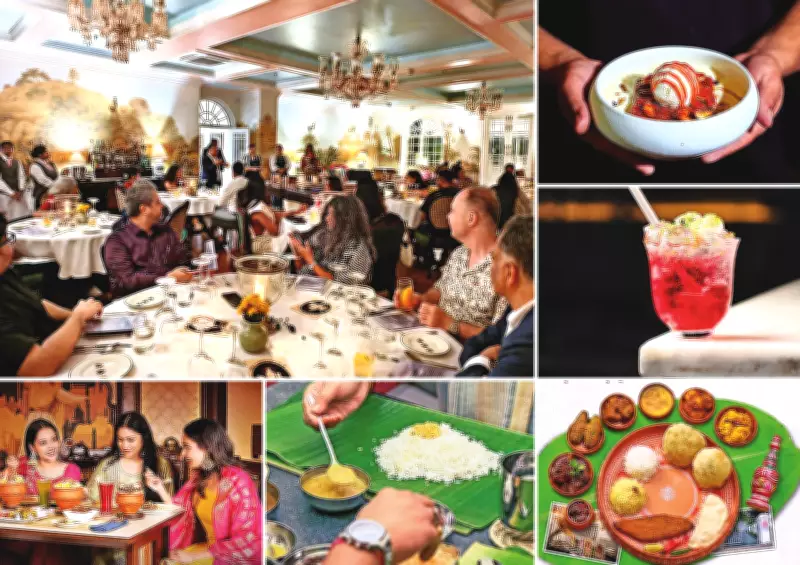
Kolkata's Nightlife Evolution: From Dining Rituals to Intimate Bars
On any given evening in Kolkata, a night out now rarely unfolds in a single act. It might begin with small plates and conversation at a restaurant, stretch into cocktails at an intimate bar, and end with music, and the kind of long adda the city is famous for. The way Kolkatans wine and dine out has changed dramatically over the past decade, and even more so since the pandemic. From cocktail rooms to ingredient-driven restaurants and immersive dining, the city’s food and beverage landscape has evolved into something far more layered and sophisticated.
The Mood, Vibe, and Dining Room Experience
Alongside changing tastes, the mood inside dining rooms has also shifted significantly. Chef Auroni Mookerjee, hailed as a formidable culinary disruptor, believes the post-pandemic era has made restaurants more relaxed and community-driven. "The mood at dining rooms now is lighter and happier," he says. Today’s diners are also seeking experiences that go beyond the plate. "When people go out, they want joy from the entire environment," Mookerjee explains. "Music, energy, atmosphere – every sense needs to have a good time."
That sense of connection is increasingly visible in the way meals are shared. "Food has become more interactive," he says. "Sharing plates, grills, dumplings – people want to connect not just with their table but with the kitchen and the bar as well." Dining rooms aren’t so serious anymore – there’s more camaraderie, more community, and more joy, as Chef Auroni Mookerjee emphasizes.

Food as Memory and Storytelling
For some restaurants, the emotional connection runs deeper. At Amar Khamar Lunch Room, which celebrates indigenous ingredients and traditional foodways, dining is often tied to personal memories and family moments. "What touches us most," says Raina Talukder, head of brand, "is when families choose our space for meaningful celebrations." She recalls occasions where multiple generations have gathered around the table.
"We’ve had a mother celebrating her 67th birthday and a grandmother celebrating her 82nd — brought in by children and grandchildren who had dined with us earlier," she says. "It shows how dining out is becoming a way of connecting people with food, stories, and heritage." Now, evenings start slower. The first half of the night is about connection, good plates, and thoughtful drinks. There’s a special kind of pace, as noted by Abhimanyu Maheshwari.
A More Curious, Globally Exposed Diner
As Kolkata’s nightlife evolves, so does its dining culture, shaped in part by travel and global exposure. "We increasingly meet guests who’ve dined at places like Gaggan in Bangkok or explored regional cuisines across India," says Argha Sen of experiential dining platform Gormei. "That has raised expectations — people now want deeper stories behind food." Diners are exploring Japanese and Korean flavours with new enthusiasm.
Co-owners of Momo I Am and Soy Yum, Reevu Wangdi and Pravakar Yonzone, believe dining in Kolkata has shifted from quick bites to a culinary ritual. "For a long time, east Asian food in Kolkata was defined through Tangra-style Indo-Chinese cooking," says Reevu. Pravakar adds, "But today there’s curiosity about authentic regional flavours – ramen, kimchi, fermentation – and the real depth of these cuisines."
Tipsy Sips and Night-Outs with More Intention
Despite change, Kolkata’s instinct to gather endures. Dining rooms and bars mirror its adda culture, where conversation flows as easily as food and drink, with people lingering longer. "This is a city that processes life through conversation — politics, cinema, heartbreak, cricket. A bar becomes an extension of that cultural rhythm," says Rituparna. "Younger people head out far more often now, and it’s heartening to see groups of women leading the way," says Rudradipta Mukherjee, owner of Little Bit Sober. "People aren’t just ordering anymore — they lean in, ask bartenders about ingredients."

Dheeraj Maniyar, Partner at AMPM Kolkata, adds, "Places where you can listen to a live band, sip a cocktail, meet friends, and stay for hours end up feeling like a social living room that strikes a chord." A night out today is more deliberate – people choose their drinks carefully and treat the evening as something meant to be shared, as Rudradipta Mukherjee observes.
A Legacy That Still Holds Strong
While new bars experiment, some institutions continue to anchor Kolkata’s nightlife. Few capture its social history like Broadway Hotel, whose bar has been part of the city’s life for nearly nine decades. Owner Raghav Sehgal says it has hosted everyone from freedom fighters and musicians to corporate professionals and students. "Broadway has seen Calcutta become Kolkata. It has always been a melting pot — young students, artists, old regulars, everyone sharing the same bar." Recently refurbished, the space balances modern comfort with its old-world charm. "Our approach was simple — bring Broadway back without stripping its identity," he says, adding that live music has also returned.
A Gastronomical Tapestry of Tradition and Reinvention
Even as Kolkata embraces global cuisines, its culinary traditions remain strong. When Swaminathan Ramani launched 6 Ballygunge Place with friends, Bengali cuisine restaurants were rare. "Many believed Bengali food couldn’t be produced at scale because of its complex home-style processes," he says. "We showed that it could be done while staying true to tradition." The restaurant continues to draw loyal diners.
At the same time, chefs continue to reimagine classics. Shiladitya Chaudhury, co-owner of Oudh 1590, says this has helped reshape how Kolkata views biryani. "Earlier, diners were exposed to just chicken and mutton variants. We introduced handi, raan, jheenga, and even Awadhi palak biryani." Together, they reflect a culture rooted in tradition yet open to reinvention. "Bengalis’ passion for food hasn’t changed at all; whenever people have time or a holiday, dining out is still the first thing they want to do," adds Swaminathan Ramani.
The Rise of the Intimate Bar Scene
For years, Kolkata’s nightlife was defined by club nights and lounges, but newer bars are shifting toward intimacy and craft. Abhimanyu Maheshwari, co-founder of Conversation Room and Yokocho, says, "We wanted to bring conversation back — an everyday drinking space, but elevated in craft." Nutcase, opened in 2025, took a similar route. "We wanted something small, deliberate, and personal," says co-founder Rituparna Banerjee. "Guests today ask about ingredients and techniques — a drink has to justify itself."
"Guests now expect atmosphere, design, and storytelling around what they’re drinking. They stay longer and treat a night out as an experience," says Rajan Sethi, MD of Bright Hospitality, AMPM. This evolution highlights how Kolkata’s nightlife has become a blend of tradition, innovation, and community, creating a vibrant tapestry that continues to grow and adapt.