Major Archaeological Discovery: Stone Age Tool-Making Site Uncovered Near Vellore by University Students
In a significant archaeological breakthrough, postgraduate students from the University of Madras have discovered a previously unknown Stone Age tool-making site near Vellore in Tamil Nadu. The discovery, made at the foot of Leoragiri Hill where the villages of Karigiri, Puthur and Erathangal converge, promises to shed new light on ancient human activity in the region.
Discovery and Site Details
The archaeological site was identified during explorations conducted by Srimalini V and Kavya B, postgraduate students from the Department of Ancient History and Archaeology at the University of Madras. Their fieldwork was conducted under the expert guidance of Dr. J Soundararajan, head of the department.
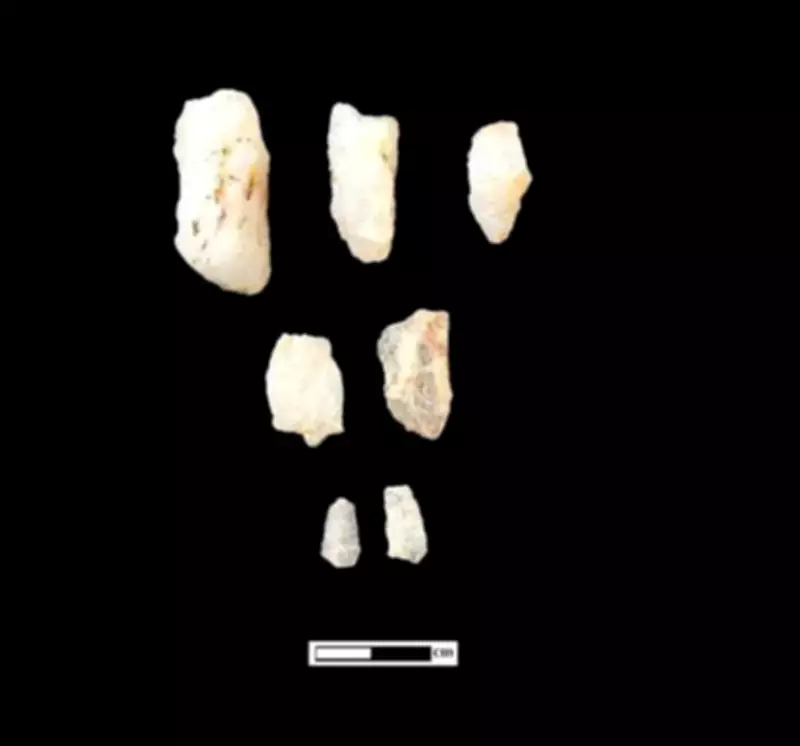
At the site, researchers have uncovered a remarkable collection of artefacts including:

- Multi-platform cores made from quartz material
- A miniature handaxe of significant archaeological interest
- Various points and notched tools
- Retouched flakes showing evidence of human modification
- Microliths crafted from quartz
- Extensive debitage indicating tool manufacturing activity
Historical Significance and Period Classification
According to Jinu Koshi, excavation in charge at the Department of Ancient History and Archaeology, University of Madras, the artefacts represent a crucial transitional period in human technological development.
"The miniature handaxe, core and flakes we've discovered represent the transition period from the Lower Palaeolithic to the Middle Palaeolithic period," Koshi explained. "This particular set of artefacts displays characteristics consistent with both the Middle Palaeolithic and Microlithic periods, making it especially valuable for understanding technological evolution."
The site reveals what researchers describe as "deep temporal depth" of human activity, extending back several thousand years and suggesting prolonged occupation or repeated use by ancient populations.
Tool-Making Center Hypothesis
Srimalini V, one of the student discoverers, emphasized the site's potential significance as a manufacturing center. "This location could very well have served as a tool-making center," she noted. "We're finding a huge repository of stone tools here, with implements of different sizes that clearly indicate systematic manufacture rather than casual use."
Further supporting this interpretation is the stratigraphic distribution of tools at the site and the absence of blades among the discovered implements. Researchers have also noted evidence that ancient tool-makers utilized different stone sources for their creations, suggesting sophisticated material selection practices.
Technical Analysis and Future Research
Jinu Koshy provided additional technical details about the discovery: "The large flakes removed using prepared core technique strongly suggests these stone tools belong to the Middle Palaeolithic period. However, we're planning further studies and scientific dating to confirm this preliminary assessment."
The research team has expressed particular interest in conducting more extensive explorations to establish precise dating for the site. This would help place the discovery within the broader context of human technological development in South India.
Regional Archaeological Context
This discovery builds upon earlier explorations by researcher K Kumar, who had previously identified prehistoric sites in the undivided Vellore district. While the villages where the current discovery was made now fall under different administrative districts, this represents the first recorded discovery of its kind specifically from the Vellore area.
Notably, previous studies in the region had not mentioned quartz finds of this nature, making the current discovery particularly significant for understanding the complete archaeological record of Tamil Nadu's prehistoric periods.
The University of Madras team continues their analysis of the site, with plans for more detailed excavations and scientific testing that could provide unprecedented insights into ancient human life and technological development in southern India.