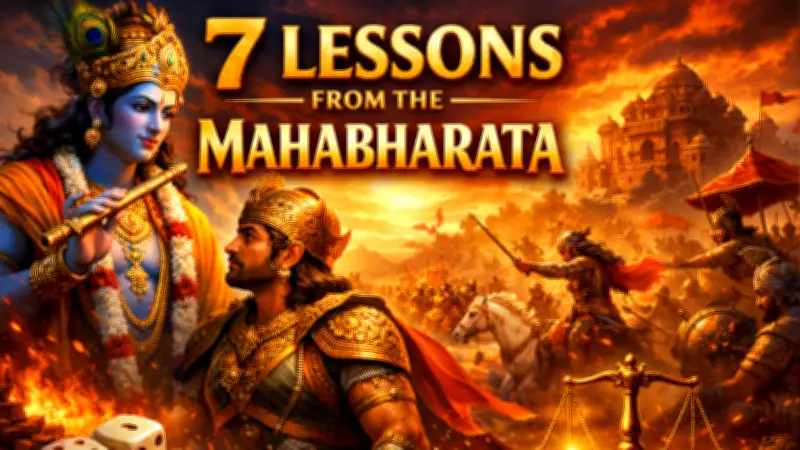
7 Timeless Lessons from the Mahabharata for Modern Life
The Mahabharata, an ancient Indian epic composed thousands of years ago, is far more than a historical tale of war. It serves as a profound mirror to human nature, presenting complex characters grappling with moral dilemmas, ambition, loyalty, grief, and consequences that feel strikingly relevant even in today's fast-paced world. What makes this epic timeless is not its grand scale of conflict but its deep understanding of the human mind, offering insights into leadership, relationships, ethics, and inner turmoil that continue to resonate. Here, we delve into seven key lessons from the Mahabharata that remain deeply applicable to contemporary life, providing guidance for personal and professional challenges.
Dharma is Rarely Simple
One of the most powerful teachings of the Mahabharata is that dharma, or righteous duty, is rarely black and white. Even the wisest individuals in the epic struggle to determine the right course of action when responsibilities collide. Many decisions arise from conflicting duties, such as loyalty to family versus justice, personal vows versus societal welfare, or silence versus truth. The story emphasizes that ethical living is not about adhering to rigid rules but involves thoughtful discernment and careful consideration of circumstances. In modern life, difficult choices often lack perfect answers, highlighting the importance of intention, awareness, and accountability in navigating moral complexities.
Silence in the Face of Injustice is Also a Choice
Some of the most tragic moments in the Mahabharata occur not because wrongdoing went unnoticed, but because those who knew better remained silent. This lesson feels especially pertinent today, in workplaces, families, and societies where people often avoid speaking up to preserve comfort or avoid conflict. The epic teaches that neutrality during injustice indirectly strengthens wrongdoing, and moral courage sometimes lies not in grand actions but in refusing to look away. By encouraging individuals to take a stand, this principle underscores the need for active engagement in promoting fairness and justice.

Ego Quietly Destroys Wisdom
The downfall of many powerful characters in the Mahabharata stems not from a lack of intelligence or strength but from unchecked ego. Pride clouds judgment, turns advice into insult, and transforms disagreements into irreversible conflicts. In contemporary life, ego continues to fracture relationships, workplaces, and leadership structures, demonstrating that wisdom loses its power when humility disappears. True strength, as shown in the epic, lies in self-awareness, the ability to listen, reconsider, and step back when pride takes control, fostering healthier interactions and decisions.
Actions Always Carry Consequences
A recurring theme throughout the Mahabharata is the inevitability of consequences. Choices made in moments of anger, jealousy, or ambition ripple outward, affecting generations and reinforcing a principle deeply aligned with karma. The narrative illustrates that actions do not exist in isolation; words spoken carelessly, promises broken, or decisions taken without foresight eventually return in unexpected ways. In today's fast-paced world, where immediate gratification often dominates decision-making, this lesson serves as a crucial reminder to think beyond the present moment and consider long-term impacts.
Power Without Ethics Leads to Collapse
The Mahabharata presents power as a responsibility rather than a privilege, emphasizing that leadership devoid of fairness and compassion ultimately destabilizes both ruler and kingdom. Modern parallels are easy to see, whether in politics, corporate leadership, or personal authority. Authority sustained by fear or manipulation may succeed temporarily, but it rarely endures. Ethical leadership, grounded in integrity and empathy, remains the only lasting foundation for trust and stability, offering a blueprint for sustainable success in various spheres of life.

Emotional Control is Greater Than Physical Strength
The epic repeatedly contrasts physical might with emotional mastery, showing that anger, envy, and impulsiveness often cause more destruction than weapons ever could. Today, emotional regulation is increasingly recognized as a core life skill, essential for relationships, careers, and mental well-being. The Mahabharata reminds us that conquering one's inner turmoil is the highest form of victory, highlighting the importance of managing reactions and fostering inner peace in a chaotic world.
Destiny and Effort Must Work Together
One of the most profound philosophical insights of the Mahabharata is the balance between fate and personal effort. While circumstances may not always be within human control, responses always are. The epic does not promote helpless acceptance; instead, it encourages action aligned with purpose, portraying success and failure as outcomes shaped by both destiny and human perseverance. This perspective offers comfort in uncertain times, reminding us that while we cannot control everything, meaningful effort is never wasted and can lead to positive outcomes.
By reflecting on these lessons, individuals can draw inspiration from the Mahabharata to navigate modern challenges with greater wisdom and resilience.