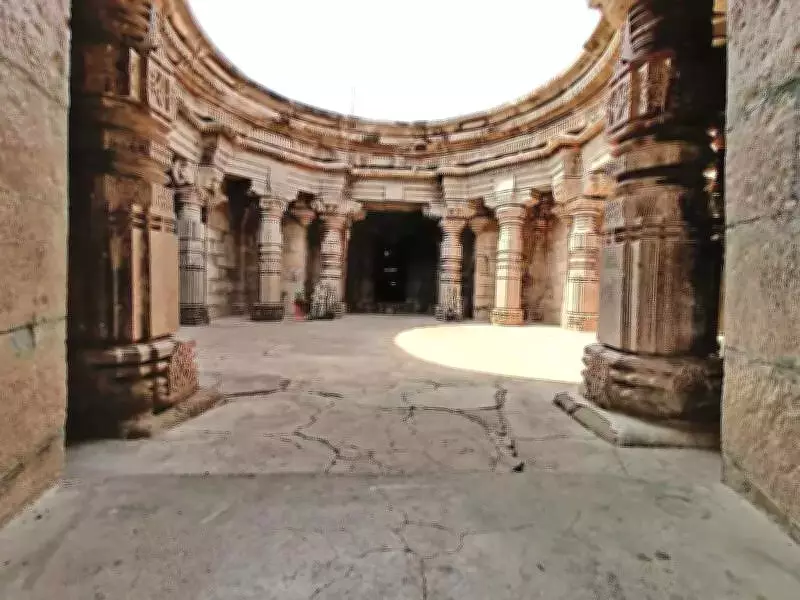
Mahashivratri Illuminates Amravati's Historic Anandeshwar Shiv Temple
Mahashivratri has brought renewed focus to the Anandeshwar Shiv temple in Lasur, a lesser-known 13th-century shrine located in the Daryapur tehsil of Amravati district. This ancient temple is celebrated for its austere beauty and remarkable engineering finesse, standing as a testament to India's rich architectural heritage.
A Monument of National Importance
Perched on the banks of the Purna River near a small hill, the basalt-rock temple is an Archaeological Survey of India (ASI)-protected monument of national importance. Built during the Yadava dynasty and locally attributed to Raja Ramchandra, the temple showcases the distinctive Hemadpanthi construction style associated with Hemadpant. This method involves interlocking stones without any binding material, a technique that has ensured the structure's survival across centuries.
Unique Architectural Design
The temple's plan is notably distinctive, featuring a tridal, three-petal layout with three sanctums, which departs from the more common single-sanctum design. A Nandi mandapa with finely carved pillars—adorned with elephants, chain motifs, and detailed ornamentation—leads into the sacred core. Additionally, a swarga mandap, or open hall, enhances the spatial drama of the complex.

Spread across approximately 3,500 square feet of stone construction, the temple's pillars and sculptural detailing reflect Chalukya influence. In the morning, the dark stone and measured light create a quiet, meditative atmosphere that devotees and visitors often describe as its defining character. The material itself, grey-black basalt, is not found locally, sparking discussions about its transport from elsewhere, with some scholars disputing this attribution.
Development Challenges and Restoration Efforts
Despite its cultural significance—positioned about 14 km from Daryapur and 35 km from Akola on the Daryapur–Akola road, and a familiar stop for travelers from Buldhana, Akola, and Amravati—the site's development has progressed slowly. In March 2021, the state government included Lasur among eight temples selected for restoration, conservation, and development.
A government resolution dated May 6, 2022, granted administrative approval of Rs 14.75 crore for the first phase, within an overall estimate of Rs 32.46 crore. This phase covered conservation of the main temple and allied works in the complex. The Maharashtra State Road Development Corporation (MSRDC) submitted the proposal and later appointed a contractor on June 5, 2025, though work has yet to commence.
Political and Local Advocacy
MP Balwant Wankhade, the former Daryapur MLA who has pursued the project since 2021, has criticized MSRDC for not adhering to the terms and conditions of the approval and has sought meetings to push for an early start. He previously urged the district administration to add basic visitor infrastructure, such as a compound wall, entrance gate, drinking water, lavatories, and facilities like a vipashyana centre and shantivan, while protecting the campus's natural calm and original structure.
Lasur sarpanch Ranjana Jadhav and her husband Amol have also slammed MSRDC. "The temple is under ASI, a central government agency, while the funds were sanctioned by the state government. ASI stopped work when it started last July," Amol Jadhav told TOI, adding, "It is now learnt that the work will restart in eight days time."
Mahashivratri Arrangements and Visitor Experience
In the absence of amenities, the burden of Mahashivratri arrangements falls on the village and the temple trust. Thousands of devotees arrive, and essentials are managed through local contributions, highlighting the gap between the temple's national-importance status and the on-ground visitor experience. The development plan proposes works on adjacent e-class land and a compound wall to prevent encroachment, with ASI permissions sought under applicable rules.

Key Features of the Anandeshwar Shiv Temple
- Main sanctum with a tridal, three-sanctum plan
- Nandi mandapa with finely carved pillars featuring elephants and chain motifs
- Hemadpanthi, mortarless construction using interlocking stones
- Swarga mandap (open hall) within the complex layout
- Grey-black stone material, with debate over sourcing and composition
- ASI designation as a monument of national importance, reflecting Yadava-era artistry and engineering