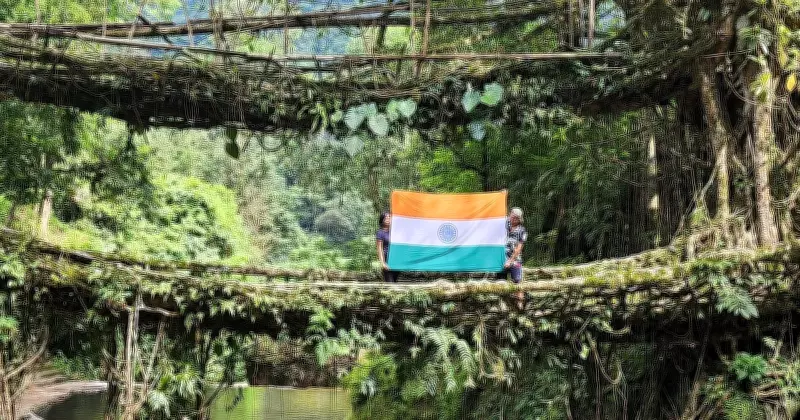
Meghalaya's Living Root Bridges Advance Toward UNESCO World Heritage Recognition
In a significant development for India's cultural and natural heritage, Meghalaya's remarkable living root bridges have moved closer to achieving UNESCO World Heritage Site status. The formal proposal for this coveted designation was officially submitted to the United Nations Educational, Scientific and Cultural Organization this week, marking a crucial step in the recognition process.
Formal Submission of the UNESCO Dossier
The dossier containing the comprehensive proposal for World Heritage status was presented to Lazare Assomo Elounfor, the director of UNESCO's World Heritage Centre, on Wednesday, January 28, 2026. The submission was made by Vishal V. Sharma, India's ambassador and permanent representative to UNESCO, during a special arrangement ceremony that underscored the importance of this initiative.
This formal submission represents years of meticulous documentation and preparation by Indian authorities, who have worked to demonstrate the unique value and global significance of Meghalaya's living architecture. The bridges, created through generations of careful cultivation by indigenous communities, represent an extraordinary fusion of human ingenuity and natural processes.

Cultural and Spiritual Significance
The living root bridges of Meghalaya hold profound cultural and spiritual meaning for local communities, who have maintained and nurtured these structures for centuries. According to heritage experts, this spiritual relationship between the people and the bridges plays a vital role in their ongoing protection and preservation.
This deep-rooted connection ensures that the bridges are not merely viewed as functional structures but as living embodiments of cultural heritage and ecological wisdom. The communities' traditional knowledge and sustainable practices have been instrumental in maintaining these bridges while preserving the surrounding ecosystem.
Ecological Importance and Conservation
Beyond their architectural marvel, the living root bridges contribute significantly to ecological wellbeing in the region. These structures:
- Promote biodiversity by creating unique habitats for various plant and animal species
- Prevent soil erosion through their extensive root systems
- Maintain watershed integrity in the ecologically sensitive region
- Serve as sustainable alternatives to conventional construction methods
The UNESCO recognition would not only acknowledge the cultural significance of these bridges but also highlight their importance as models of sustainable living and ecological harmony.
Regional Context and Tourism Potential
Meghalaya, known for its pristine natural beauty, has been gaining attention for several remarkable features including the Umngot River, often cited as Asia's cleanest river, and various clean villages that demonstrate exceptional environmental stewardship. The living root bridges represent another dimension of the region's unique relationship with nature.
If granted World Heritage status, these bridges would join an exclusive list of protected sites globally, potentially boosting sustainable tourism while ensuring enhanced protection measures. The designation would also provide international recognition for the traditional knowledge systems that have created and maintained these living structures across generations.
The UNESCO evaluation process typically involves thorough assessment by expert committees who examine the proposal's merits against established criteria for cultural and natural heritage. The submission represents India's commitment to preserving and promoting its diverse heritage while contributing to global conservation efforts.